Koi varieties, 8 classic types.
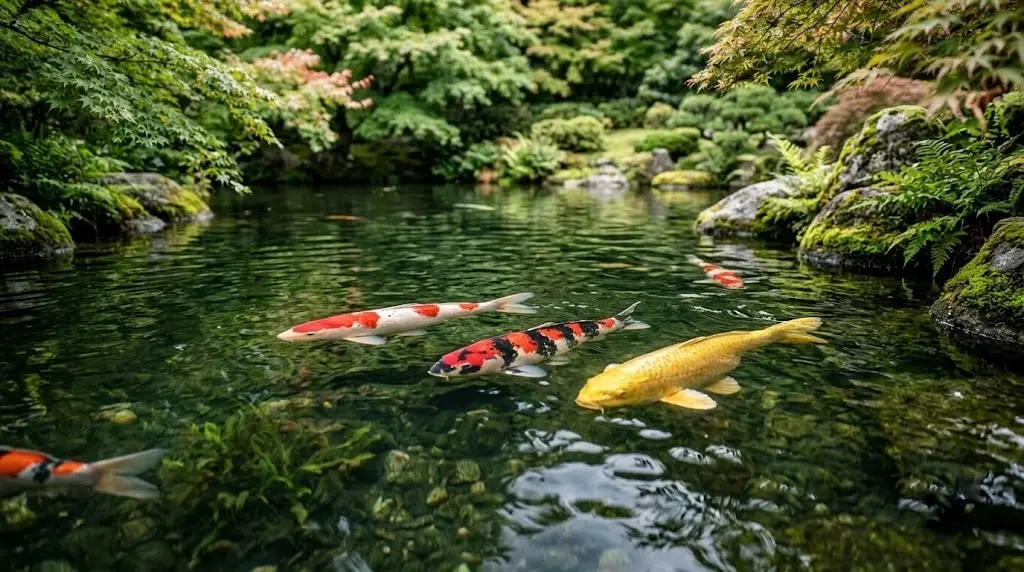
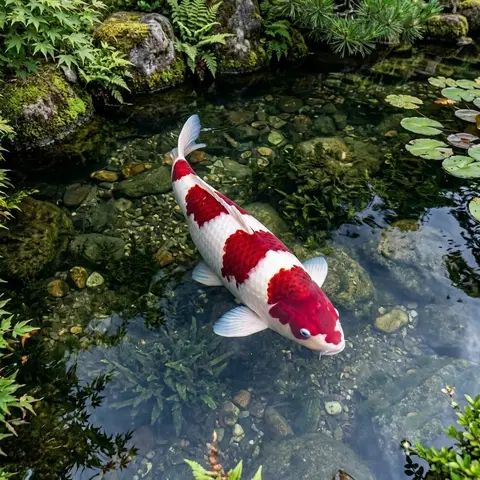
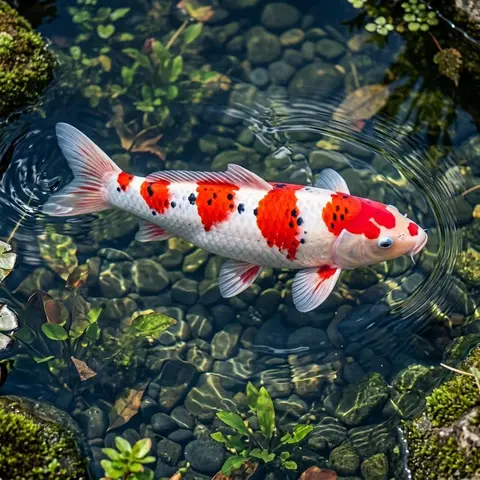
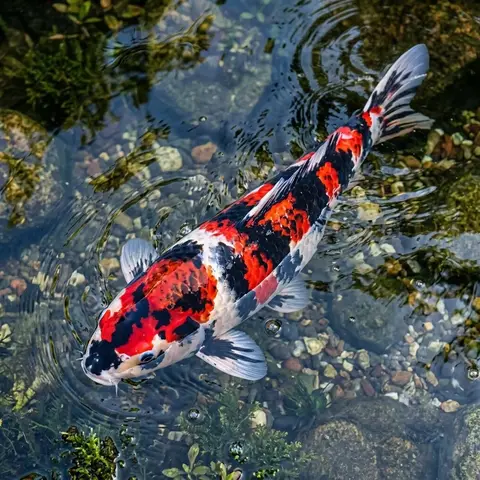
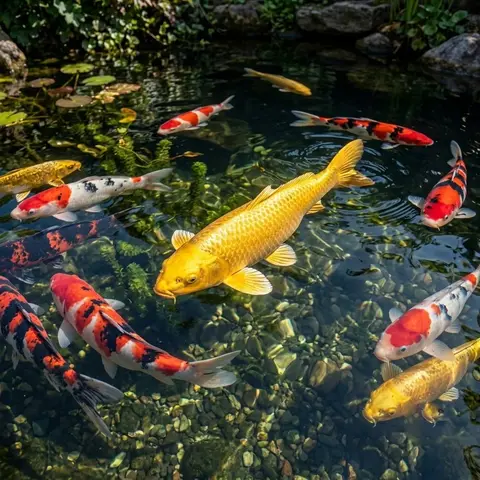
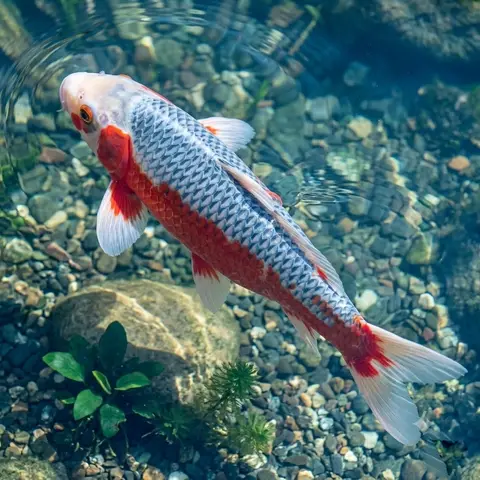
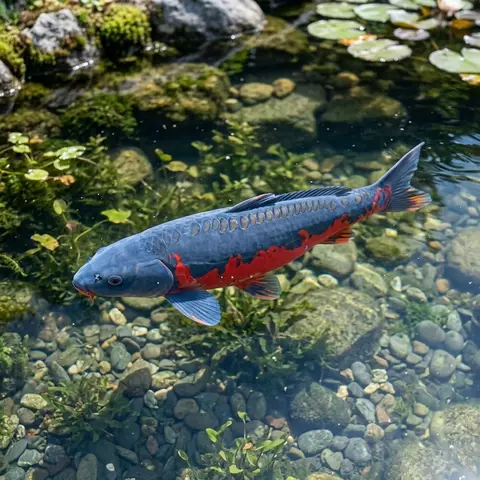
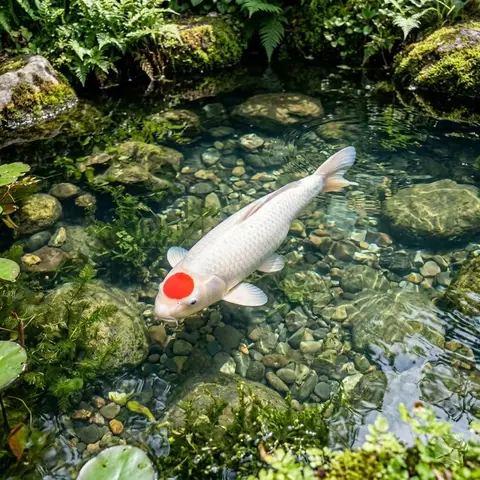
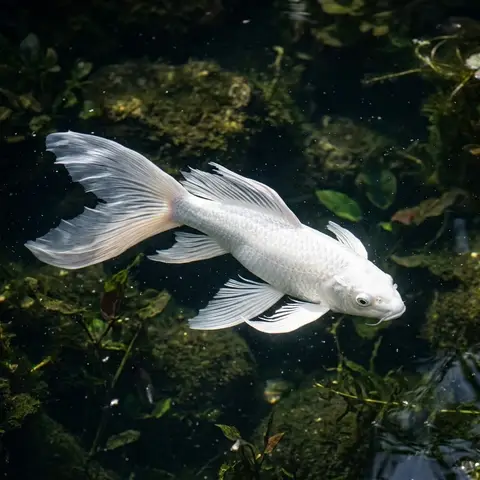
Koi are not a species you buy once - they are varieties you learn to read. The classics here run from the Gosanke trio (Kohaku, Taisho Sanke, Showa) that dominates every show bench, to single-color Ogons, blue-backed Asagi and Shusui, the red-capped Tancho, and longfin Butterfly koi that purists still argue about. All of them share one non-negotiable: a real pond. A well-kept koi passes 60 cm (2 feet) and lives for decades, so plan thousands of liters and serious filtration before you plan colors. The trade-off is cost and patience - good water costs more than good fish, and a young koi's pattern keeps shifting for years, sometimes into something better, often not. They suit pond owners who enjoy that long game; there is no aquarium version of it.
What do koi eat?
Koi are omnivores and eat a wide variety of foods, peas, lettuce and watermelon among them. Koi food is made to be nutritionally balanced and to float, which brings the fish to the surface where you can check them for parasites and ulcers; koi are bottom feeders by nature, so some foods mix floating and sinking pieces (Wikipedia).
| Give | Avoid |
|---|---|
| A balanced koi food, floating or a floating and sinking mix (Wikipedia) | Feeding when the water is below 10°C (50°F): in winter their digestion slows nearly to a halt (Wikipedia) |
| Peas, lettuce or watermelon as extras (Wikipedia) | Expecting the appetite back before the water warms in spring (Wikipedia) |
| Food from the hand once they know you: koi recognise the people who feed them (Wikipedia) | More food than the fish eat in two to five minutes, the RSPCA's measure for pet fish |
Koi do best at 15-25°C (59-77°F); below 10°C (50°F) their immune system is very weak, and through the winter they eat very little, perhaps only nibbles of algae from the bottom (Wikipedia). In small ponds, keep the water oxygenated over winter as well.
Pond gear for koi
Links go to Amazon or a partner brand's own store and may earn us a commission at no extra cost to you. As an Amazon Associate we earn from qualifying purchases. An Amazon link leads to a type of gear and you choose the exact product; a card that names a store leads to that partner's own shop.