Borzoi
The Borzoi is a tall, silky, aristocratic sighthound from Russia, once known as the Russian Wolfhound for its historic role coursing wolves across the vast estates of the nobility.
🗓️ Last reviewed: July 2026
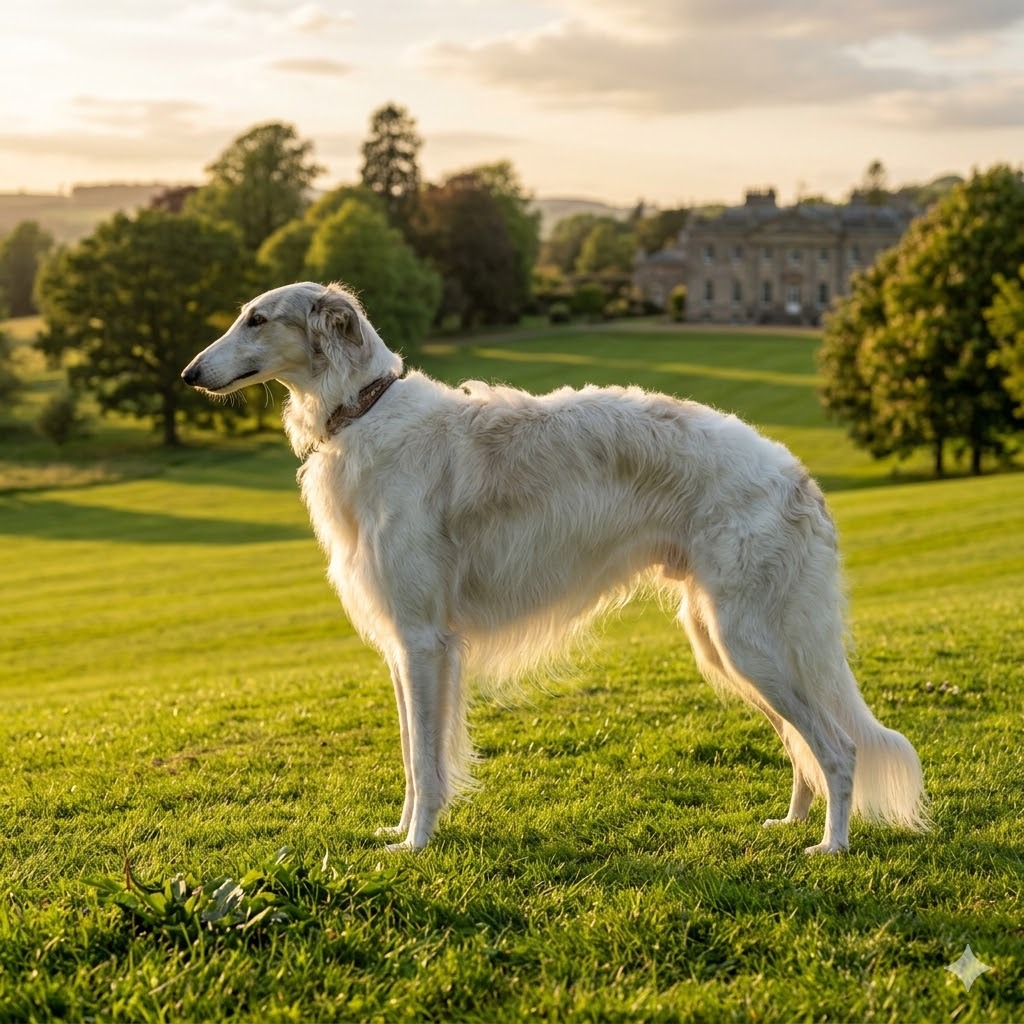
Overview
The Borzoi is a tall, silky, aristocratic sighthound from Russia, once known as the Russian Wolfhound for its historic role coursing wolves across the vast estates of the nobility. Combining breathtaking elegance with quiet, gentle manners, the Borzoi is a calm and dignified companion indoors and a stunning, sight-driven athlete outdoors. Beneath the flowing coat and refined profile is a powerful sprinter built to chase at astonishing speed. Sensitive, aloof, and deeply loyal, the breed needs gentle handling, secure fencing, and freedom to run safely - and, like all sighthounds, must never be off-leash where wildlife might bolt.
History & Origins
The Borzoi was developed in Russia over several centuries, reaching its height among the aristocracy of the 17th to 19th centuries. Russian nobles kept vast kennels of these hounds on their country estates and staged spectacular hunts in which mounted hunters and packs of Borzoi coursed wolves, hares, and foxes across open steppe. The name "borzoi" derives from a Russian word meaning "fast."
These grand hunts were elaborate affairs of great prestige, and the breed was refined for speed, courage, and the strength to hold a wolf until the hunters arrived. Borzoi were treasured possessions of the ruling class and were sometimes given as royal gifts to European courts.
The Russian Revolution devastated the breed at home, as it was closely tied to the aristocracy whose estates were destroyed. Fortunately, Borzoi had already been exported to Western Europe and the United States, where enthusiasts preserved them. The breed was recognised by the AKC in 1891. Today the Borzoi is kept mainly as an elegant companion, show dog, and lure-coursing athlete, still carrying the grace and dignity of its noble past.
Appearance
Tall, long, and elegant, the Borzoi is one of the most glamorous of all breeds. Adults stand 68-85 cm (27-33 in) at the shoulder and weigh 25-48 kg (55-105 lb); males are considerably larger than females. The body is long and narrow, with a deep, narrow chest, arched loin, tucked waist, and long, fine legs built for a powerful, flowing gallop.
Key features:
- Coat: long, silky, and often wavy or curly, with feathering on the neck, chest, legs, and tail.
- Colour: almost any colour or combination, including white, gold, red, brindle, grey, black, and various patterns.
- Head: long, narrow, and refined, with a barely perceptible stop and a Roman-nosed profile.
- Eyes: dark, almond-shaped, and gentle, with a soft, far-seeing expression.
- Ears: small, fine, and usually folded back along the neck, rising when alert.
- Tail: long, low-set, and carried in a graceful curve, well feathered.
The overall impression is one of aristocratic elegance, curves, and quiet power - a hound made for effortless, sweeping movement.
Temperament & Character
The Borzoi is calm, gentle, and dignified, notably quiet and undemonstrative for such a large, athletic dog. Indoors it is a serene, almost cat-like companion, content to lounge gracefully for much of the day, forming a deep but understated bond with its family.
The breed is sensitive and thoughtful, responding poorly to harsh words or rough handling and thriving on calm, respectful treatment. It is intelligent but independent, bred to make split-second decisions at a gallop far from its handler, so it can seem aloof or stubborn rather than eager to please.
With strangers the Borzoi is polite but reserved, rarely outgoing. With children it is gentle and tolerant but prefers calm, considerate company and is not a rough-and-tumble playmate. Its defining working trait is a strong, sight-triggered prey drive: sudden movement can spark an instant, powerful chase, so secure containment is essential.
Care
Coat & Grooming
The long, silky coat needs regular attention - brushing several times a week, and more often during seasonal shedding, to prevent tangles and mats, especially in the feathering behind the ears, on the legs, and on the tail. Baths are needed occasionally, and the coat is relatively easy to keep clean between times.
Despite the coat, the lean build means the Borzoi still appreciates warmth and a soft, cushioned, draught-free bed. Check the ears weekly, keep nails trimmed, and brush the teeth several times a week.
Exercise & Activity Needs
The Borzoi is the quintessential sprint-then-nap sighthound - explosive and thrilling when running, but a calm, laid-back couch potato the rest of the time. Adults need around 60 minutes of daily exercise, including a chance to gallop safely.
Because of the powerful, sight-triggered prey drive, off-leash freedom is only safe inside fully enclosed, wildlife-free areas with high, secure fencing - a Borzoi at full speed covers ground astonishingly fast and will not respond to recall in chase. Lure coursing is a natural, joyful outlet. Long leash walks and gentle enrichment complete its needs without over-taxing this laid-back breed.
Health & Lifespan
Average lifespan is 9-11 years.
The Borzoi is generally healthy but, as a large, deep-chested breed, has some particular concerns. Points to watch:
- Bloat (GDV) - a serious risk in this deep-chested breed; feeding management matters.
- Anaesthetic sensitivity - typical of lean sighthounds; use an experienced vet.
- Cardiac conditions - some heart issues occur; screening is worthwhile.
- Osteosarcoma and other cancers - seen in the breed.
- Cold and injury - the fine skin and lean build mean chilling and coursing injuries are possible.
With responsible breeding and careful management, most Borzoi lead comfortable, elegant lives.
Feeding & Nutrition
Adults typically eat around 4-6 cups of quality food per day, split into two meals, adjusted for size and activity - this is a large breed with a big appetite when active, though it is not a heavy eater for its size. The Borzoi should look lean and racy, with ribs lightly covered and a clear waist and tuck.
Feed a complete, balanced diet suited to a large, active dog. Because bloat is a real risk in this deep-chested breed, avoid vigorous exercise within an hour of meals, feed two smaller meals rather than one large one, and use a raised or slow-feeder approach if advised by your vet.
Pros & Cons
Pros
- Stunningly elegant and aristocratic.
- Calm, quiet, and gentle indoors.
- Undemanding on exercise for such an athletic dog.
- Deeply loyal, if understated, with family.
- Generally clean and mannerly in the home.
Cons
- Strong, sight-triggered prey drive - unsafe off-leash near wildlife.
- Needs tall, secure fencing.
- Shorter lifespan than smaller sighthounds.
- Sensitive - only for calm, gentle handlers.
- The long coat needs regular brushing, and bloat is a real risk.
Best Suited For
- Calm, patient owners who value a gentle, dignified companion.
- Homes with tall, secure fencing and space to run safely.
- People who appreciate an elegant, quiet, low-drama house dog.
- Lure-coursing and sighthound enthusiasts.
Not suited for homes without secure fencing, owners wanting an off-leash trail dog in wildlife areas, harsh or impatient handlers, or busy households that would overwhelm a sensitive, aloof dog.
Borzoi puppy growth chart
A typical growth curve for a large breed like the Borzoi, estimated from its adult weight of 25-48 kg. Puppies vary with sex, genetics and diet, so treat this as a guide - for your own puppy, use the puppy weight predictor.
| Age | Typical weight | % of adult |
|---|---|---|
| 2 mo | 5.5-10.6 kg | 22% |
| 3 mo | 8.3-15.8 kg | 33% |
| 4 mo | 10.8-20.6 kg | 43% |
| 6 mo | 15-28.8 kg | 60% |
| 9 mo | 20-38.4 kg | 80% |
| 12 mo | 23-44.2 kg | 92% |
| Adult | 25-48 kg | 100% |
Borzoi - frequently asked questions
Are Borzoi calm indoors?
Yes. Despite their size and athleticism, Borzoi are notably calm, quiet, and almost cat-like at home, happy to lounge gracefully for much of the day.
Can a Borzoi be let off the leash?
Only in fully enclosed, wildlife-free areas. The sight-triggered prey drive is strong, and a Borzoi at full speed will not respond to recall once it locks onto moving quarry.
Do Borzoi need a lot of grooming?
Their long, silky coats need brushing several times a week, and more during seasonal shedding, to prevent tangles and mats in the feathering.
Are Borzoi good with children?
They are gentle and tolerant but prefer calm, considerate company and are not rough-and-tumble playmates. They suit households with older, respectful children best.
Why are they called Russian Wolfhounds?
The breed was developed by the Russian aristocracy to course wolves across open country, and "Russian Wolfhound" was long used as its name in the West.
🧠 Test yourself: guess the dog
Three clues from our quiz bank, each about another of our dogs. Can you name them?
Clue 1.This tiny toy spaniel takes its French name from the butterfly that its large, fringed, upright ears resemble.
It's the Papillon - read the full profile →
Clue 2.Unmistakable for its egg-shaped head and tiny triangular eyes, this muscular breed was once a long-running beer mascot.
It's the Bull Terrier - read the full profile →
Clue 3.This low-slung herding dog with a famously docked or naturally short tail was the beloved breed of Queen Elizabeth II.
It's the Pembroke Welsh Corgi - read the full profile →
💛 Adoptable Borzois near you
Real dogs of this breed (and close mixes) waiting in shelters and rescues right now, live from Petfinder. We have no affiliation and earn nothing - if someone catches your eye, the link goes straight to their shelter. New to adopting? Start with our adoption guide.
Widget not loading (some ad-blockers hide it)? Search directly on petfinder.com.