Bouvier des Flandres
The Bouvier des Flandres is a large, rugged herding and cattle-droving dog from the Flanders region straddling northern France and Belgium.
🗓️ Last reviewed: July 2026
Overview
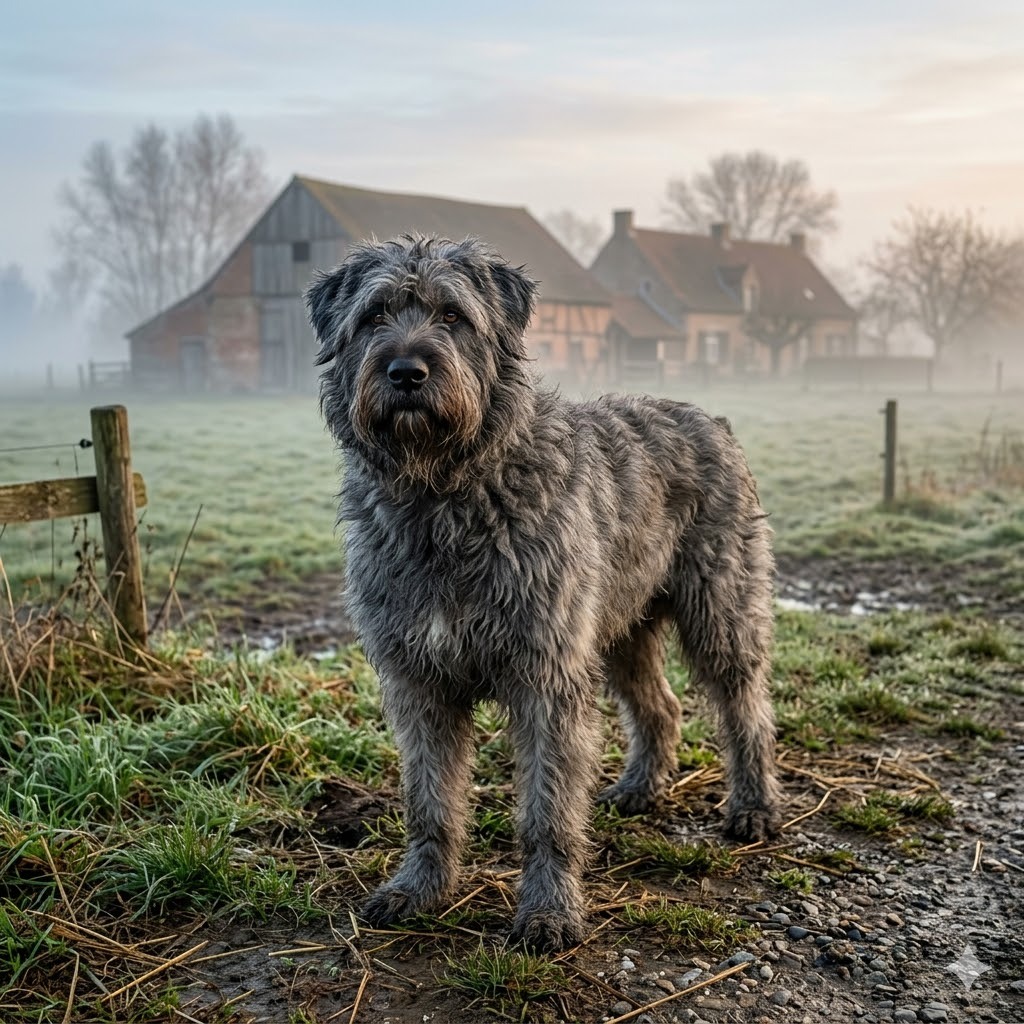
The Bouvier des Flandres is a large, rugged herding and cattle-droving dog from the Flanders region straddling northern France and Belgium. Powerfully built and cloaked in a tousled, weatherproof coat, the Bouvier looks imposing but carries itself with an unmistakable air of calm, thoughtful confidence. This is a dog bred to work all day - driving cattle, hauling carts, and guarding the farm - and that heritage shows in a steady, level-headed temperament paired with real substance. Males typically weigh 35-50 kg (77-110 lb), making the Bouvier a genuine heavyweight that needs both a job to do and an owner prepared for serious grooming.
History & Origins
The Bouvier des Flandres developed on the farms and monasteries of Flanders, the fertile agricultural belt shared by northern France and western Belgium. The name simply means "cowherd of Flanders." For centuries these dogs were all-purpose farm workers - driving cattle to market, turning butter churns and mill wheels, pulling carts, and standing guard over property and livestock. Function came first, and early Bouviers varied widely in size, colour, and coat.
World War I nearly destroyed the breed. Flanders became one of the most devastated battlefields of the war, and the farms that sustained the Bouvier were ruined. The dogs found new work as military messengers and ambulance dogs, but numbers collapsed. A Belgian army veterinarian, Captain Barbry, is credited with helping preserve the breed through a dog named Nic de Sottegem, shown in 1920 and considered a foundation sire.
A breed standard was drawn up in the 1920s, and the Bouvier was recognised by the American Kennel Club in 1929. Today the breed works in herding, protection sport, search and rescue, and service roles, while also serving as a devoted family guardian.
Appearance
Large, compact, and powerfully constructed. Males stand 62-68 cm (24.5-27.5 in) and weigh 35-50 kg (77-110 lb); females are smaller. The overall impression is of a squarely built, muscular dog of great substance without coarseness.
Key features:
- Coat: double coat with a harsh, dry, tousled outer layer and a fine, dense undercoat - weatherproof and shaggy.
- Colour: fawn through grey, brindle, or black; a small white star on the chest is permitted.
- Head: large and impressive, accentuated by heavy eyebrows, a full beard, and a moustache that give the classic Bouvier expression.
- Eyes: dark, oval, with a bold, alert look.
- Ears: set high; traditionally cropped, but natural (drop) ears are now common and preferred in many countries.
- Tail: traditionally docked; natural tails increasingly common where docking is banned.
Temperament & Character
Calm, confident, and steady. The Bouvier is a thinking dog rather than a reactive one - deliberate in its responses and not easily rattled. With family it is deeply loyal, affectionate, and gentle, often forming a close bond with the whole household while remaining watchful of its surroundings.
The breed is naturally protective. A well-raised Bouvier is discerning rather than aggressive, sizing up situations before acting. Early socialisation is essential to channel that guarding instinct into sensible discrimination rather than suspicion of everyone.
With children the Bouvier is typically patient and gentle, though its size means supervision around small children is wise. It tends to be aloof but polite with strangers and can be dog-selective without proper socialisation.
Care
Coat & Grooming
The Bouvier's shaggy double coat is high-maintenance. It needs brushing several times a week to prevent the dense undercoat and harsh outer coat from matting, particularly around the beard, legs, and hindquarters. The beard traps food, water, and debris and needs regular cleaning.
Most owners have the coat professionally groomed and hand-stripped or clipped every 6-8 weeks to keep it neat and manageable. The breed sheds modestly for its size but requires that consistent maintenance to stay comfortable. Clean ears weekly, trim nails every 3 weeks, and brush teeth several times weekly.
Exercise & Activity Needs
A working breed with real stamina. Adults need at least 60-90 minutes of daily exercise - long walks, hikes, structured play, or work. A bored, under-exercised Bouvier becomes restless and may develop destructive or nuisance behaviours.
The breed thrives with a job. Herding, cart-pulling, protection sport (IGP), obedience, agility, and tracking all suit its capable, willing nature. Mental engagement matters as much as physical output; this is an intelligent dog that needs its brain occupied.
Health & Lifespan
Average lifespan is 10-12 years.
Common concerns:
- Hip and elbow dysplasia - screen breeding stock.
- Bloat (GDV) - a genuine risk in this deep-chested breed.
- Subaortic stenosis - a heritable heart condition.
- Hypothyroidism.
- Glaucoma and cataracts.
- Certain cancers in older dogs.
Buying from a breeder who screens hips, eyes, and heart is important for this breed.
Feeding & Nutrition
A large, active Bouvier typically eats 3-4 cups of quality food per day divided into two meals, with amounts adjusted for size, age, and workload. As a deep-chested breed, the Bouvier benefits from feeding in two smaller meals rather than one large one, and from avoiding vigorous exercise within an hour of eating to reduce bloat risk.
Keep the dog in lean, muscular condition - excess weight strains the joints of a heavy dog. Slow-feeder bowls help fast eaters, and fresh water should always be available.
Pros & Cons
Pros
- Calm, confident, deeply loyal family guardian.
- Intelligent and versatile working dog.
- Steady, level-headed temperament.
- Impressive presence and natural protectiveness.
- Weatherproof coat suited to cold, wet climates.
Cons
- High grooming demands and regular professional upkeep.
- Large, powerful dog that needs a job and space.
- Independent streak requires experienced handling.
- Bloat and joint issues to manage.
- Shorter lifespan than smaller breeds.
Best Suited For
- Experienced owners who want a large working guardian.
- Active, rural, or suburban homes with space.
- Owners prepared for serious grooming and exercise.
- Sport or working homes (herding, protection, obedience).
- Families with older children and time to socialise the dog.
Not suited for first-time owners, sedentary households, small apartments, or people unwilling to commit to the coat and the daily activity this breed needs.
Bouvier des Flandres puppy growth chart
A typical growth curve for a large breed like the Bouvier des Flandres, estimated from its adult weight of 35-50 kg. Puppies vary with sex, genetics and diet, so treat this as a guide - for your own puppy, use the puppy weight predictor.
| Age | Typical weight | % of adult |
|---|---|---|
| 2 mo | 7.7-11 kg | 22% |
| 3 mo | 11.6-16.5 kg | 33% |
| 4 mo | 15.1-21.5 kg | 43% |
| 6 mo | 21-30 kg | 60% |
| 9 mo | 28-40 kg | 80% |
| 12 mo | 32.2-46 kg | 92% |
| Adult | 35-50 kg | 100% |
Bouvier des Flandres - frequently asked questions
Are Bouviers des Flandres good family dogs?
Yes, for the right family. They are loyal, gentle with their people, and protective, but their size, grooming needs, and exercise requirements make them best for active, committed homes.
How much grooming does a Bouvier need?
A lot. Expect brushing several times a week plus professional grooming every 6-8 weeks. The beard needs frequent cleaning, and the coat mats easily if neglected.
Are Bouviers aggressive?
No, not when properly raised. They are naturally protective but should be discerning and calm. Early socialisation is what turns the guarding instinct into sensible judgement rather than indiscriminate suspicion.
Do Bouviers shed a lot?
For their size they shed relatively modestly, and much loose hair is caught in the coat - which is precisely why regular brushing is essential. They are not a low-maintenance breed.
Is a Bouvier a good first dog?
Generally no. The combination of size, strength, independent thinking, grooming, and exercise demands makes the Bouvier better suited to experienced owners.
🧠 Test yourself: guess the dog
Three clues from our quiz bank, each about another of our dogs. Can you name them?
Clue 1.Bred to herd small livestock on windswept northern islands, this nimble dog is an eager, vocal worker.
It's the Shetland Sheepdog - read the full profile →
Clue 2.This low-slung herding dog with a famously docked or naturally short tail was the beloved breed of Queen Elizabeth II.
It's the Pembroke Welsh Corgi - read the full profile →
Clue 3.A high-drive, short-haired working dog often mistaken for a German shepherd, it needs a serious job and tons of exercise to stay balanced.
It's the Belgian Malinois - read the full profile →
💛 Adoptable Bouvier des Flandress near you
Real dogs of this breed (and close mixes) waiting in shelters and rescues right now, live from Petfinder. We have no affiliation and earn nothing - if someone catches your eye, the link goes straight to their shelter. New to adopting? Start with our adoption guide.
Widget not loading (some ad-blockers hide it)? Search directly on petfinder.com.