Chow Chow (Canis lupus familiaris)
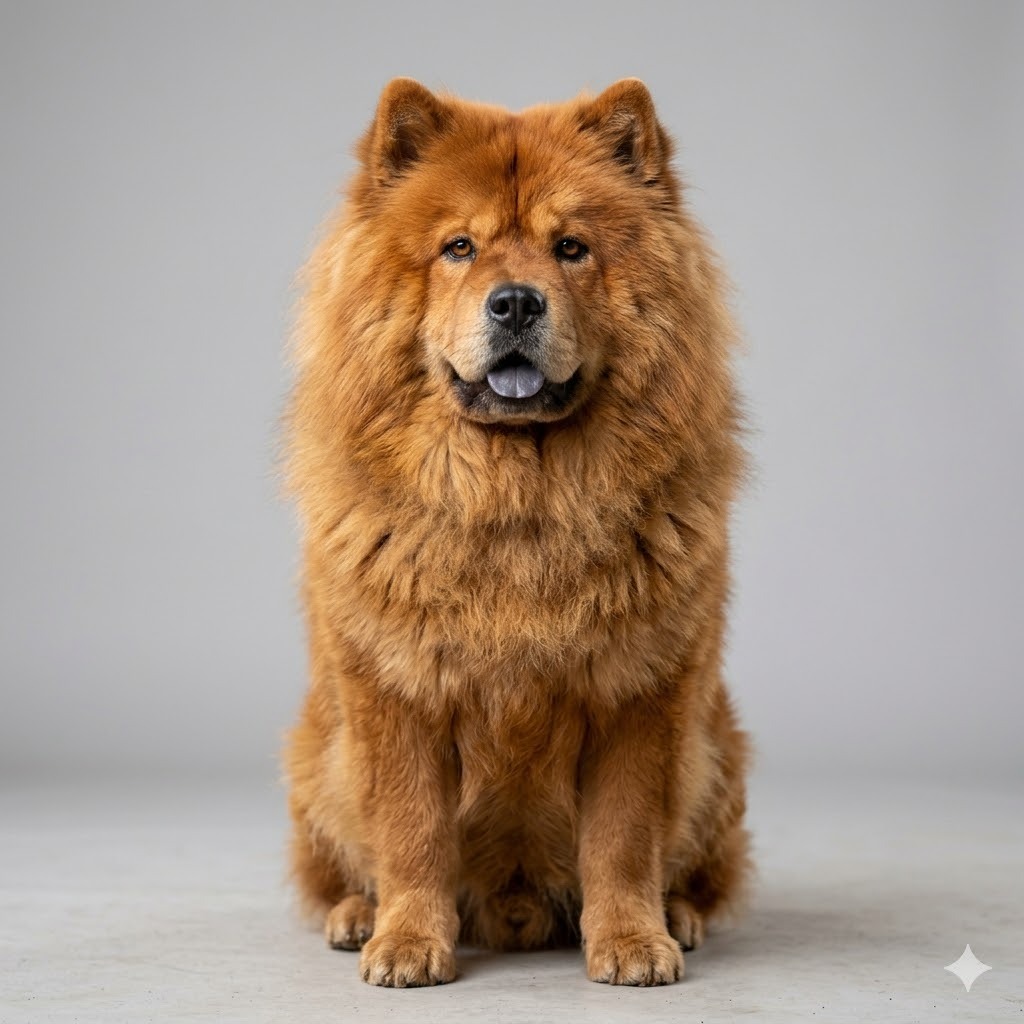
The Chow Chow is an ancient Chinese breed instantly known for its lion-like mane, deep-set scowling expression, stilted gait, and famous blue-black tongue.
🗓️ Last reviewed: June 2026
Overview
The Chow Chow is an ancient Chinese breed instantly known for its lion-like mane, deep-set scowling expression, stilted gait, and famous blue-black tongue. Dignified, aloof, and intensely loyal to its own people, the Chow behaves less like a typical dog and more like a cat - independent, clean, undemonstrative, and selective about affection. It bonds strongly with one or two people, tolerates a handful more, and treats the rest of the world with cool indifference. Beautiful and self-possessed, the Chow is also one of the more challenging companion breeds, demanding early socialisation, respectful handling, and an owner who appreciates a proud, autonomous dog rather than an eager-to-please one.
History & Origins
The Chow Chow is one of the oldest recognised dog breeds, with roots in China going back thousands of years. Ancient artefacts and pottery from the Han dynasty depict dogs of distinctly Chow-like type, and the breed is widely considered one of the more primitive, wolf-adjacent breeds genetically. In its homeland it was a true working dog: a hunter, a guardian of temples and homes, a sled and cart puller in the north, and, in harder times, a source of fur and meat - history that some find uncomfortable but which is part of the honest record.
The unusual name has no clear origin in Chinese. It is generally thought to come from pidgin-English trade slang used by British merchants in the eighteenth and nineteenth centuries, a catch-all term for miscellaneous goods brought from the East, which became attached to the dogs shipped to Britain.
The breed arrived in Britain in the late 1800s and gained a notable boost in popularity when Queen Victoria took an interest in it. The American Kennel Club recognised the Chow Chow in 1903. Throughout the twentieth century it became a fashionable companion, though its strong-willed nature has always meant it suits a particular kind of owner.
Appearance
A medium-sized, powerfully built, square dog with a thick coat that exaggerates its bulk. Adults stand roughly 43-51 cm (17-20 in) and weigh about 20-32 kg (45-70 lb). The overall impression is of a compact, leonine, dignified animal.
Key features:
- Coat: comes in two types - the more familiar rough coat (abundant, dense, and standing off the body with a pronounced ruff or mane around the head and shoulders) and the smooth coat (short and dense without the ruff).
- Colour: solid shades including red, black, blue, cinnamon, and cream.
- Tongue: the hallmark blue-black tongue and dark mouth tissue - a defining breed feature.
- Expression: deep-set, almond-shaped eyes and heavy folds give a characteristic scowling, dignified look (the deep folds can restrict peripheral vision, which affects how the dog perceives sudden approaches).
- Gait: distinctive stilted, stiff-legged movement caused by very straight hind legs.
- Head: broad and flat with a short, broad muzzle and small, rounded, erect ears.
Temperament & Character
The Chow is reserved, dignified, and famously cat-like in personality. It is deeply loyal to its chosen person or family but typically aloof, suspicious, or simply indifferent toward strangers. It is not a demonstrative, tail-wagging, lick-your-face dog; affection is given on the Chow's own terms, and a Chow that chooses you offers a quiet, profound devotion.
This independence makes the breed strong-willed and, to many, stubborn. Chows do not live to please and will not perform tricks for approval the way a retriever does. They are territorial and naturally protective, which makes them effective watchdogs but also means early socialisation is essential to keep their guarding instincts measured rather than reactive.
Two practical points shape daily life with a Chow. First, the breed can be touch-sensitive and is not fond of being grabbed, hugged, or startled - a result partly of its restricted peripheral vision and its dignified temperament - so it must be handled with respect and is not an ideal match for very young, grabby children. Second, the Chow is notably clean, low-odour, easy to house-train, and undemanding in its need for attention, which appeals greatly to the right owner.
Care
Coat & Grooming
The Chow's coat is high-maintenance, especially the rough variety. The dense double coat needs thorough brushing several times a week - and daily during the heavy seasonal sheds - to prevent the thick undercoat from matting, particularly around the ruff, behind the ears, and on the trousers. A pin brush, slicker, and undercoat rake are all useful, and the coat must be worked right down to the skin, not just over the surface.
Bathe every few weeks to a couple of months, drying thoroughly to avoid skin problems beneath the dense coat. Never shave a Chow except on veterinary advice, since the coat insulates and protects the skin. Clean the deep facial folds and ears regularly to prevent moisture-related infection, trim nails, and brush the teeth several times a week.
Exercise & Activity Needs
The Chow has modest exercise needs compared with sporting breeds - a couple of moderate daily walks and some calm play are usually enough for an adult. They are not built for endurance or speed and tend toward a dignified, unhurried approach to life.
Two cautions are important. The thick coat and somewhat compromised facial structure mean Chows overheat easily, so exercise must be limited in warm or humid weather and timed for the cool of the morning or evening. And while they do not need marathon walks, they do benefit from regular gentle activity and consistent mental engagement to prevent boredom, weight gain, and the entrenchment of stubborn habits.
Health & Lifespan
Average lifespan is 9-12 years. The breed's distinctive structure brings several specific concerns:
- Hip and elbow dysplasia - common in the breed; insist on parental joint scores.
- Entropion and other eye conditions - the heavy facial folds can cause eyelids to roll inward, irritating the eye; this often needs surgical correction.
- Patellar luxation and joint issues linked to the very straight hind-leg conformation.
- Heat sensitivity - the heavy coat and short muzzle reduce the dog's ability to cool itself, raising heatstroke risk.
- Skin and fold infections - the dense coat and facial folds trap moisture.
- Autoimmune and other conditions - including a reported predisposition to certain immune-mediated diseases.
Feeding & Nutrition
An adult Chow typically eats around 2-3 cups of quality dry food per day, divided into two meals and adjusted to size, age, and activity. The breed is fairly easy to keep at a sensible weight given its modest energy needs, but its sedentary streak means overfeeding quickly leads to obesity, which is hard on the joints and worsens heat intolerance.
A balanced diet suited to medium breeds, with good-quality protein and nutrients that support skin and coat health, suits most Chows. Some are sensitive-stomached or prone to skin issues, in which case a vet may suggest a particular formula. Feed two measured meals rather than free-feeding, keep treats within sensible limits, and ensure constant access to fresh water - especially important given the breed's heat sensitivity.
Pros & Cons
Pros
- Strikingly beautiful, dignified, lion-like appearance.
- Clean, low-odour, and easy to house-train.
- Loyal and devoted to its chosen people.
- Calm indoors with modest exercise needs.
- A naturally effective, alert watchdog.
Cons
- Aloof, strong-willed, and not eager to please - challenging to train.
- High-maintenance coat that mats and sheds heavily.
- Touch-sensitive and not ideal with young children.
- Prone to eye, joint, and skin problems, plus serious heat intolerance.
- Requires committed early socialisation to avoid over-guarding.
Best Suited For
- Experienced owners who appreciate an independent, cat-like dog.
- Calm, adult-oriented households or homes with respectful older children.
- People who can commit to thorough grooming and early socialisation.
- Owners wanting a dignified companion and capable watchdog rather than a playful, biddable one.
- Cooler climates, or homes with reliable means of keeping the dog cool.
Not suited for first-time owners, families with young grabby children, hot climates without air conditioning, anyone wanting an outgoing, obedient, demonstrative dog, or owners short on grooming time.
Chow Chow (Canis lupus familiaris) puppy growth chart
A typical growth curve for a large breed like the Chow Chow (Canis lupus familiaris), estimated from its adult weight of 20-32 kg. Puppies vary with sex, genetics and diet, so treat this as a guide - for your own puppy, use the puppy weight predictor.
| Age | Typical weight | % of adult |
|---|---|---|
| 2 mo | 4.4-7 kg | 22% |
| 3 mo | 6.6-10.6 kg | 33% |
| 4 mo | 8.6-13.8 kg | 43% |
| 6 mo | 12-19.2 kg | 60% |
| 9 mo | 16-25.6 kg | 80% |
| 12 mo | 18.4-29.4 kg | 92% |
| Adult | 20-32 kg | 100% |
Chow Chow (Canis lupus familiaris) - frequently asked questions
Are Chow Chows good with children?
They are best with calm, respectful older children. Chows dislike being grabbed, hugged, or startled and are not naturally tolerant of rough toddler handling, so they are generally not recommended for homes with very young children without careful supervision.
Why is the Chow Chow's tongue blue?
The blue-black tongue and dark mouth tissue are a defining, naturally occurring feature of the breed, present from a young age. The exact genetic cause is not fully understood, but it is normal and healthy in the Chow.
Are Chow Chows aggressive?
They are not inherently aggressive, but they are aloof, territorial, and protective by nature. Without early socialisation and respectful handling, those instincts can express as suspicion or reactivity. A well-socialised, well-handled Chow is dignified and controlled rather than aggressive.
Do Chow Chows shed a lot?
Yes. The dense double coat sheds steadily and blows heavily twice a year. The rough-coated variety in particular needs frequent, thorough brushing to prevent matting.
Can Chow Chows tolerate hot weather?
Poorly. The heavy coat and relatively short muzzle make them prone to overheating. Exercise must be limited in heat, timed for cool parts of the day, and the dog must have shade, fresh water, and ideally air conditioning.
🧠 Test yourself: guess the dog
Three clues from our quiz bank, each about another of our dogs. Can you name them?
Clue 1.This small, fluffy white companion dog has a powder-puff coat and a cheerful disposition, and was once a favorite of French and Spanish royalty.
It's the Bichon Frise - read the full profile →
Clue 2.This ancient toy lapdog wears a long, flowing pure-white coat that hangs straight to the floor.
It's the Maltese - read the full profile →
Clue 3.This tiny toy spaniel takes its French name from the butterfly that its large, fringed, upright ears resemble.
It's the Papillon - read the full profile →
💛 Adoptable Chow Chow (Canis lupus familiaris)s near you
Real dogs of this breed (and close mixes) waiting in shelters and rescues right now, live from Petfinder. We have no affiliation and earn nothing - if someone catches your eye, the link goes straight to their shelter. New to adopting? Start with our adoption guide.
Widget not loading (some ad-blockers hide it)? Search directly on petfinder.com.