Dalmatian (Canis lupus familiaris)
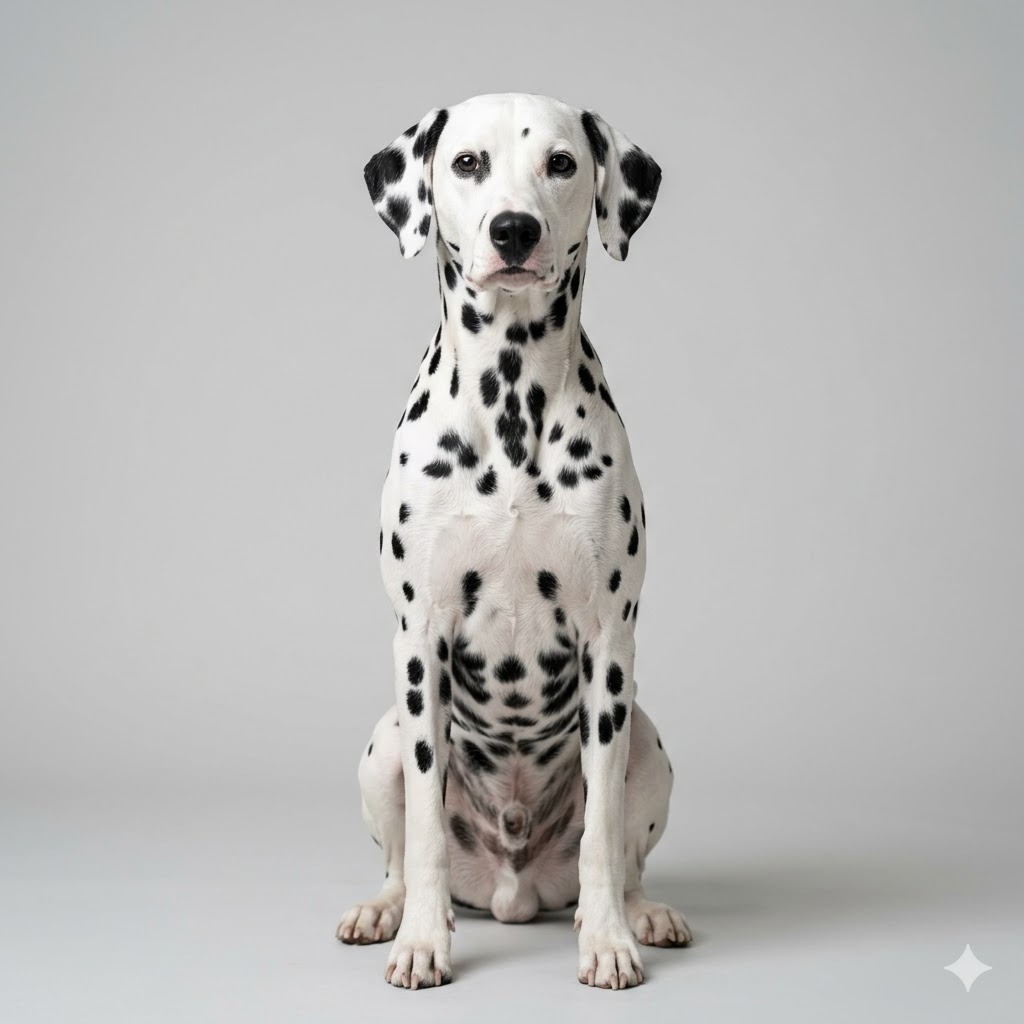
The Dalmatian is one of the most instantly recognisable dogs on earth - a lean, athletic, white dog covered in crisp black or liver spots, with a history as a carriage dog that ran for miles beside horse-drawn coaches.
🗓️ Last reviewed: June 2026
Overview
The Dalmatian is one of the most instantly recognisable dogs on earth - a lean, athletic, white dog covered in crisp black or liver spots, with a history as a carriage dog that ran for miles beside horse-drawn coaches. Behind the famous spotted coat is a high-energy, intelligent, and intensely people-focused breed that needs far more exercise and companionship than its film-star image suggests. Bred to trot tirelessly all day, the Dalmatian is built for stamina, thrives on having a job, and can become destructive and anxious when left under-exercised or alone. It is a dog that rewards committed, active owners and overwhelms casual ones.
History & Origins
The Dalmatian's exact origins are debated, but the breed is named after Dalmatia, a coastal region of modern Croatia, where spotted dogs were recorded for centuries. Similar dogs appear in art and writing across Europe, Asia, and Africa going back hundreds of years, suggesting an ancient and widely travelled type rather than a single point of origin.
The role that truly defined the breed was carriage or coach work. In Britain especially, Dalmatians ran alongside horse-drawn carriages, trotting for miles, clearing the way, guarding the coach at stops, and bonding closely with the horses. This is why the breed has such remarkable stamina, an affinity for horses, and the endurance to keep moving all day.
In the United States the breed became firmly associated with horse-drawn fire engines, riding with the firefighters and calming the horses - which is why the Dalmatian remains a mascot of fire stations to this day. The breed gained worldwide fame through the novel and films featuring 101 spotted dogs, a popularity spike that, unfortunately, led to widespread impulse buying and a great deal of irresponsible breeding. The American Kennel Club recognised the Dalmatian in 1888.
Appearance
A medium-sized, square-built, athletic dog with clean lines and obvious endurance. Adults stand 48-61 cm (19-24 in) and weigh roughly 16-32 kg (35-70 lb), with males larger. The whole dog is built for efficient, ground-covering movement.
Key features:
- Coat: short, dense, fine, and sleek, lying close to the body and shedding constantly.
- Spots: the defining feature - well-defined, round spots in either black or liver (brown) on a pure white ground. Puppies are born pure white and develop their spots over the following weeks.
- Head: clean and well-proportioned, with a fairly long muzzle and a keen, alert expression.
- Eyes: brown or amber (or blue, which is permitted but linked to a higher deafness risk).
- Ears: set high, carried close to the head, often spotted.
- Build: square outline, deep chest, lean and muscular, made for trotting long distances.
Temperament & Character
Dalmatians are energetic, playful, intelligent, and famously devoted to their people. They form intense bonds with their families and want to be involved in everything - they are not a breed that does well shut in a yard or left alone for long hours. Well-socialised Dalmatians are outgoing and friendly; under-socialised or poorly bred ones can be shy, nervy, or reactive.
This is a sensitive, sometimes wilful breed with a long memory. They respond beautifully to fair, consistent, reward-based handling and poorly to harshness, which makes them suspicious and stubborn. Many have a mischievous, clownish streak and a strong independent mind.
Above all, prospective owners must understand the energy. Bred to run beside carriages all day, the Dalmatian has enormous stamina and a deep need to move. Without sufficient exercise and mental work, that energy turns inward and outward as destructiveness, barking, digging, and anxiety. A tired, included Dalmatian is a delightful companion; a bored, isolated one is a handful.
Care
Coat & Grooming
Grooming the coat is easy; coping with the shedding is not. The short, fine coat needs only a quick brush a couple of times a week with a rubber curry or short-bristle brush - but Dalmatians shed heavily and constantly, all year round, and the stiff white (and dark) hairs weave into fabric and are notoriously hard to remove. Frequent brushing reduces but never stops it.
Bathe only occasionally, as needed, since the coat stays fairly clean and the dog is low-odour. Check and clean the ears regularly, trim nails roughly monthly, and brush the teeth several times a week.
Exercise & Activity Needs
This is one of the most demanding breeds for exercise. An adult Dalmatian needs a minimum of two hours of vigorous daily activity - ideally running, not just walking. They make superb jogging, cycling, and hiking companions and excel at canine sports such as agility, flyball, and canicross. They were quite literally bred to run all day beside a coach.
Mental stimulation is equally important. A clever, under-occupied Dalmatian invents its own entertainment, usually destructive. Training games, scent work, puzzle feeders, and a structured routine all help. Crucially, exercise must be managed carefully during the first year, while growth plates are still developing - high-impact running and jumping should wait until the skeleton has matured.
Health & Lifespan
Average lifespan is 11-13 years. Two health issues are especially important in this breed:
- Deafness - Dalmatians have an unusually high rate of congenital deafness linked to their spotting genetics. A significant proportion are deaf in one or both ears. Responsible breeders carry out BAER hearing tests on puppies, and you should insist on the result.
- Urinary stones (urate) - Dalmatians have a unique uric-acid metabolism that predisposes them to urate bladder stones, which can cause painful, dangerous blockages, especially in males. Constant access to fresh water, a suitable diet, and prompt veterinary attention to any straining are essential.
Other concerns include hip dysplasia, certain allergies and skin conditions, and the eye and temperament problems that follow careless breeding.
Feeding & Nutrition
An active adult Dalmatian typically eats around 1½-2½ cups of quality dry food per day, split into two meals and adjusted to its considerable activity level - working or sporting dogs need more. Because of the breed's tendency toward urate stones, diet matters more here than in most breeds: avoid foods extremely high in purines (such as organ meats and certain fish), keep the dog well hydrated, and follow veterinary guidance, sometimes including a specifically formulated lower-purine diet for affected dogs.
Always provide constant fresh water - hydration is a genuine health priority for this breed - and feed two meals rather than one to support digestion. Keep the dog lean and athletic; excess weight undermines the breed's natural endurance and stresses the joints.
Pros & Cons
Pros
- Striking, unmistakable appearance.
- Athletic, energetic, and a superb companion for runners and cyclists.
- Intelligent, trainable, and eager to be involved.
- Affectionate and intensely bonded to family.
- Excels at canine sports.
Cons
- Very high exercise needs - unsuitable for sedentary homes.
- Sheds heavily and continuously year-round.
- Elevated risk of congenital deafness.
- Prone to urate urinary stones, requiring dietary care.
- Prone to boredom-driven destructiveness and separation anxiety if neglected.
Best Suited For
- Active owners who run, cycle, or hike daily.
- Families and individuals home for much of the day.
- People committed to early training and socialisation.
- Canine-sport enthusiasts (agility, flyball, canicross).
- Owners prepared to manage deafness and a stone-prone diet.
Not suited for sedentary households, owners away long hours, anyone unable to tolerate constant shedding, or first-time owners wanting a low-maintenance, low-energy pet.
Dalmatian (Canis lupus familiaris) puppy growth chart
A typical growth curve for a large breed like the Dalmatian (Canis lupus familiaris), estimated from its adult weight of 16-32 kg. Puppies vary with sex, genetics and diet, so treat this as a guide - for your own puppy, use the puppy weight predictor.
| Age | Typical weight | % of adult |
|---|---|---|
| 2 mo | 3.5-7 kg | 22% |
| 3 mo | 5.3-10.6 kg | 33% |
| 4 mo | 6.9-13.8 kg | 43% |
| 6 mo | 9.6-19.2 kg | 60% |
| 9 mo | 12.8-25.6 kg | 80% |
| 12 mo | 14.7-29.4 kg | 92% |
| Adult | 16-32 kg | 100% |
Dalmatian (Canis lupus familiaris) - frequently asked questions
Are Dalmatians good with children?
They can be excellent with respectful, older children, but their exuberance and strength can overwhelm toddlers. Early socialisation and supervision are essential, and a bored, under-exercised Dalmatian is more likely to be nippy.
Why are some Dalmatians deaf?
The gene responsible for the breed's spotting is linked to congenital deafness. A notable proportion of Dalmatians are deaf in one or both ears. Reputable breeders BAER-test puppies, so always ask for the hearing results.
Do Dalmatians shed a lot?
Yes - heavily and year-round. The short, stiff hairs are difficult to remove from fabric. Regular brushing reduces but never eliminates the problem.
How much exercise does a Dalmatian really need?
A great deal - at least two hours of vigorous daily activity, ideally including running. This breed was developed to trot beside carriages all day and genuinely needs to move.
What are urate stones and why do Dalmatians get them?
Dalmatians have a unique uric-acid metabolism that makes them prone to urate bladder stones. These can cause painful, dangerous blockages, especially in males. Good hydration, an appropriate diet, and prompt attention to any straining are vital.
🧠 Test yourself: guess the dog
Three clues from our quiz bank, each about another of our dogs. Can you name them?
Clue 1.This low-slung scent hound has extraordinarily long, droopy ears that sweep the ground to stir up scent, second only to the bloodhound in tracking ability.
It's the Basset Hound - read the full profile →
Clue 2.This medium sled dog was developed by the Chukchi people and famously helped relay diphtheria medicine to Nome, Alaska, in 1925.
It's the Siberian Husky - read the full profile →
Clue 3.Named for a German town, this stocky working dog later became a popular police and protection breed.
It's the Rottweiler - read the full profile →
💛 Adoptable Dalmatian (Canis lupus familiaris)s near you
Real dogs of this breed (and close mixes) waiting in shelters and rescues right now, live from Petfinder. We have no affiliation and earn nothing - if someone catches your eye, the link goes straight to their shelter. New to adopting? Start with our adoption guide.
Widget not loading (some ad-blockers hide it)? Search directly on petfinder.com.