Finnish Spitz
The Finnish Spitz is a lively, fox-red hunting dog and the national dog of Finland - a striking, foxy-faced spitz bred to hunt game birds by scent, sight, and, above all, sound.
🗓️ Last reviewed: July 2026
Overview
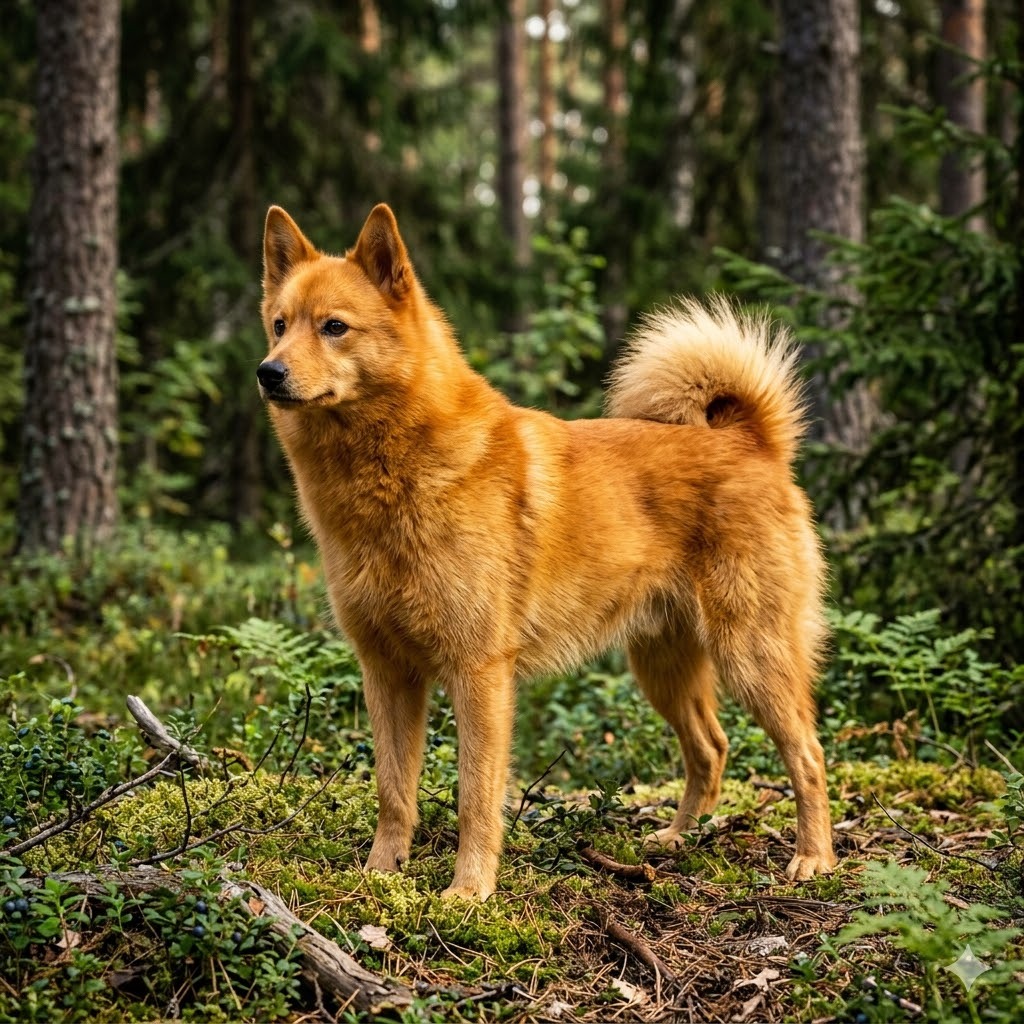
The Finnish Spitz is a lively, fox-red hunting dog and the national dog of Finland - a striking, foxy-faced spitz bred to hunt game birds by scent, sight, and, above all, sound. Known as the "barking bird dog," the breed locates birds in trees and holds them there with a rhythmic, near-continuous bark that guides the hunter in. That voice is the breed's calling card and, for pet owners, its biggest honest challenge. Weighing roughly 7-13 kg (15-29 lb), the Finnish Spitz is small-to-medium, elegant, and intelligent, with an independent, bright, and affectionate character.
History & Origins
The Finnish Spitz descends from spitz-type dogs brought into Finland by settlers thousands of years ago. Isolated in the northern forests, these dogs developed into a distinct hunting breed prized for finding game birds - especially capercaillie and grouse - in the dense boreal woodland.
By the late 1800s, cross-breeding with other dogs had nearly diluted the pure Finnish hunting spitz out of existence. A Finnish sportsman, Hugo Roos, is credited with rescuing the breed: he sought out the remaining pure dogs in remote villages and began a careful breeding programme in the 1890s to restore the original type. The breed standard was established in Finland in 1892.
The Finnish Spitz was recognised as the national dog of Finland, and it features in Finnish folklore and even poetry. Competitive "barking" trials, where dogs are judged partly on their bark rate while treeing birds, remain popular in Finland and Scandinavia. The AKC recognised the breed in 1987. Outside its homeland it remains uncommon, kept mostly by enthusiasts.
Appearance
Small-to-medium, square, and fox-like. Males stand 44-50 cm (17-20 in) and weigh 12-13 kg (26-29 lb); females are smaller at roughly 39-45 cm (15-18 in) and 7-10 kg (15-22 lb). The overall look is bright, alert, and vividly foxy.
Key features:
- Coat: double coat - a short, soft undercoat beneath a longer, harsher, straight outer coat; a distinct ruff, especially in males.
- Colour: glowing golden-red to reddish-brown; puppies are born darker and lighten with age. White markings on chest and feet are permitted but small.
- Head: foxy, with a clean muzzle and a fox-like expression.
- Eyes: medium, almond-shaped, dark, lively.
- Ears: erect, small, sharply pointed, highly mobile.
- Tail: plumed, curled over and along the thigh - a classic spitz tail.
Temperament & Character
Lively, intelligent, and independent. The Finnish Spitz is an active, alert, and playful dog with a strong sense of its own mind - a natural hunter that made decisions alone in the forest. It is affectionate and devoted with family, often bonding closely with one person, but reserved and cautious with strangers.
The breed's defining trait is its voice. Finnish Spitz dogs are famously, genuinely vocal. They were bred to bark - fast and often - and they will bark at movement, sounds, visitors, and excitement. This can be trained and managed, but it cannot be eliminated. Any honest description of this breed must put barking front and centre: it is not the dog for noise-sensitive homes or close-neighbour apartments.
With children the breed is playful and good-natured. With other dogs it is generally sociable. It has a moderate prey drive toward small animals and birds. It is an excellent, alert watchdog - which is, of course, related to all that barking.
Care
Coat & Grooming
The double coat is surprisingly easy to maintain and stays remarkably clean - the breed is often described as almost cat-like in its self-cleaning tidiness. Weekly brushing keeps it in good order most of the year, with more frequent brushing during the twice-yearly seasonal shed when the undercoat blows out.
Baths are rarely needed; the coat sheds dirt naturally and has little odour. Never shave the double coat. Clean ears weekly, trim nails every 3-4 weeks, and brush teeth several times a week.
Exercise & Activity Needs
Moderate to high. The Finnish Spitz is an active hunting breed that needs 45-60 minutes or more of daily exercise - brisk walks, hikes, play, and off-lead running where safe. It has good stamina and enjoys the outdoors, especially in cool weather.
The breed excels at scent work, agility, and, naturally, "barking" trials in its homeland. Mental stimulation is essential; a bright, under-occupied Finnish Spitz will bark more, dig, and find its own entertainment. Because of prey drive and independence, off-lead freedom requires reliable recall and a secure environment.
Health & Lifespan
Average lifespan is 12-15 years - long-lived and generally robust.
Common concerns:
- Patellar luxation - slipping kneecaps.
- Hip dysplasia - relatively uncommon but present.
- Epilepsy - seen occasionally in the breed.
- Progressive retinal atrophy and other eye conditions.
- Elbow issues and diabetes in some lines.
The Finnish Spitz is one of the healthier, hardier small breeds, with few widespread genetic problems thanks to a limited, carefully managed gene pool.
Feeding & Nutrition
Adults typically eat 1-1½ cups of quality food per day in two meals, adjusted for size and activity. The breed is naturally lean and athletic and generally does not overeat, but treats used in training should be accounted for to prevent creeping weight gain.
Measured meals twice a day suit the breed. Active or working dogs, and dogs in cold climates, need more. Fresh water should always be available, particularly given how much the breed vocalises.
Pros & Cons
Pros
- Beautiful, distinctive fox-red appearance.
- Intelligent, lively, and affectionate.
- Clean, low-odour coat that is easy to maintain.
- Healthy, hardy, and long-lived.
- Excellent alert watchdog.
Cons
- Extremely vocal - barking is the breed's defining challenge.
- Independent and stubborn; not for those wanting instant obedience.
- Seasonal heavy shedding twice a year.
- Prey drive and wanderlust; needs secure spaces.
- Reserved with strangers; needs thorough socialisation.
Best Suited For
- Owners who genuinely accept a vocal dog.
- Active homes with time for daily exercise and enrichment.
- Rural or detached houses without close neighbours.
- Owners who enjoy an intelligent, independent-minded companion.
Not suited for noise-sensitive households, close-quarters apartments, owners wanting a silent or wholly obedient dog, or those unwilling to socialise thoroughly.
Finnish Spitz puppy growth chart
A typical growth curve for a medium breed like the Finnish Spitz, estimated from its adult weight of 7-13 kg. Puppies vary with sex, genetics and diet, so treat this as a guide - for your own puppy, use the puppy weight predictor.
| Age | Typical weight | % of adult |
|---|---|---|
| 2 mo | 1.9-3.5 kg | 27% |
| 3 mo | 2.8-5.2 kg | 40% |
| 4 mo | 3.5-6.5 kg | 50% |
| 6 mo | 4.8-8.8 kg | 68% |
| 9 mo | 6-11 kg | 85% |
| 12 mo | 6.8-12.6 kg | 97% |
| Adult | 7-13 kg | 100% |
Finnish Spitz - frequently asked questions
Do Finnish Spitz dogs really bark that much?
Yes. Barking is central to the breed - they were bred to bark rapidly while treeing birds, and it is one of the most vocal breeds in the world. Training and exercise reduce nuisance barking, but a quiet Finnish Spitz is not a realistic expectation.
Are they good family dogs?
Yes, for the right family. They are affectionate, playful, and good with children, and make excellent watchdogs. They suit active homes that can tolerate their voice and independence.
Are Finnish Spitz easy to train?
They are intelligent but independent and easily bored. Training works well with short, fun, reward-based sessions, but they will not respond to harsh or repetitive methods.
Do they shed a lot?
The coat is clean and easy day to day, but it sheds heavily twice a year when the undercoat blows out. Regular brushing during those periods is important.
Are they hypoallergenic?
No. They shed seasonally and produce dander.
🧠 Test yourself: guess the dog
Three clues from our quiz bank, each about another of our dogs. Can you name them?
Clue 1.A massive yet agile estate-guarding breed, it combines mastiff bulk with bulldog tenacity in a roughly 60/40 ancestral mix.
It's the Bullmastiff - read the full profile →
Clue 2.With a curly, cotton-ball coat that sheds very little, this little dog was historically a popular circus and street-performer dog because it loves tricks and attention.
It's the Bichon Frise - read the full profile →
Clue 3.Made famous by a fictional farm dog who always found her way home, this long-nosed Scottish herder comes in rough and smooth coats.
It's the Collie (Rough) - read the full profile →
💛 Adoptable Finnish Spitzs near you
Real dogs of this breed (and close mixes) waiting in shelters and rescues right now, live from Petfinder. We have no affiliation and earn nothing - if someone catches your eye, the link goes straight to their shelter. New to adopting? Start with our adoption guide.
Widget not loading (some ad-blockers hide it)? Search directly on petfinder.com.