Giant Schnauzer (Canis lupus familiaris)
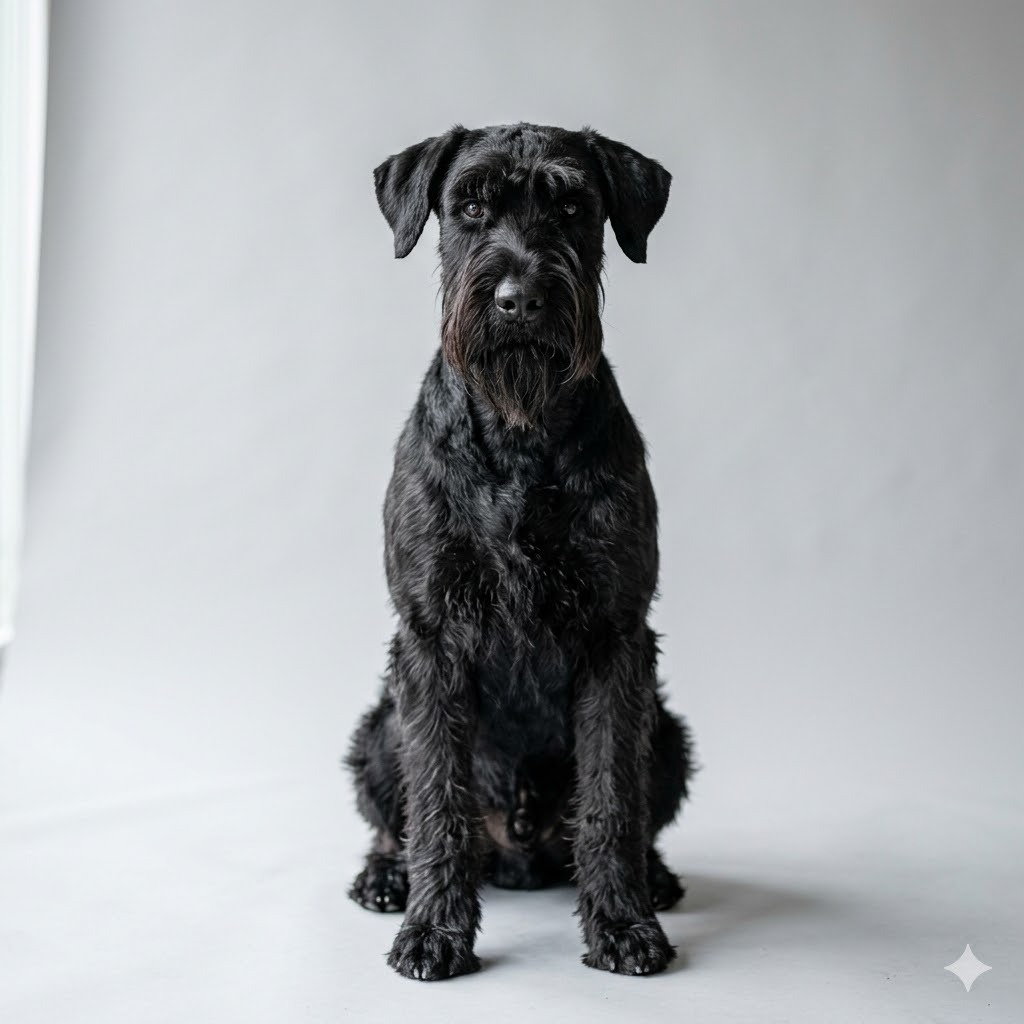
The Giant Schnauzer is the largest of the three schnauzer breeds - a powerful, intelligent, intensely driven working dog wearing the same harsh wiry coat, bushy eyebrows, and characteristic beard as its smaller cousins, scaled up into a bold and imposing guardian.
🗓️ Last reviewed: June 2026
Overview
The Giant Schnauzer is the largest of the three schnauzer breeds - a powerful, intelligent, intensely driven working dog wearing the same harsh wiry coat, bushy eyebrows, and characteristic beard as its smaller cousins, scaled up into a bold and imposing guardian. Bred in the mountains of southern Germany to drive cattle and later refined into a police and military dog, the Giant Schnauzer is courageous, deeply loyal, and almost limitless in energy and work ethic. It is not a casual pet. This is a high-drive protection breed that needs a confident owner, a serious daily job, and committed training to become the magnificent companion it can be - and that turns difficult and even dangerous in the wrong, under-occupied home.
History & Origins
The Giant Schnauzer was developed in the Bavarian Alps and the surrounding regions of southern Germany, in and around Munich and Wurttemberg, where it was originally known as the Munchener or Russian Bear Schnauzer. Its primary job was driving cattle to market, a task demanding stamina, intelligence, and a weatherproof coat. The breed is generally thought to have been created by enlarging the Standard Schnauzer, with input from larger working and herding dogs such as the rough-coated drovers' dogs of the region, and possibly black Great Danes and Bouvier-type dogs.
As railways replaced cattle droving in the late nineteenth century, the breed found new work. Its size, intelligence, and natural protectiveness made it a superb guard dog for breweries, butchers, and stockyards. During the early twentieth century the Giant Schnauzer was recognised for police and military work in Germany and trained alongside breeds such as the German Shepherd.
The breed was first shown in Germany in the early 1900s and gradually spread internationally. The American Kennel Club recognised the Giant Schnauzer in 1930. Although it has never become a mass-popularity breed, it remains highly valued as a working protection dog and as a companion for experienced, active owners.
Appearance
A large, strong, square-built dog combining substance with agility and an alert, almost regal bearing. Adults stand 60-70 cm (23.5-27.5 in) and weigh roughly 25-48 kg (55-105 lb), with males notably larger. The overall impression is of a robust, compact, and powerful working dog.
Key features:
- Coat: a dense, harsh, wiry double coat with a soft undercoat - weather-resistant and built for outdoor work.
- Colour: solid black, or "pepper and salt" (a banded grey produced by individual hairs banded in light and dark).
- Furnishings: the signature harsh eyebrows, beard, and leg furnishings that give the schnauzer its unmistakable face.
- Head: strong and rectangular with a powerful muzzle, dark oval eyes, and a keen, intelligent expression.
- Ears: set high; naturally folded (button) ears, sometimes cropped in countries where the practice is still permitted, though cropping is banned in many places.
- Build: square outline, muscular, with a deep chest and a high-set tail.
Temperament & Character
The Giant Schnauzer is bold, confident, intensely loyal, and highly intelligent. It bonds very closely with its family and is affectionate, even playful, with the people it loves, while being naturally reserved, watchful, and protective toward strangers. This combination makes it an outstanding guardian - alert, territorial, and ready to defend - but also a serious responsibility that demands an owner in clear control.
This is a working breed with a powerful drive and a strong need to think and do. A Giant Schnauzer is not content to lie around; it wants a job, mental challenge, and close partnership with its handler. Under-stimulated or left alone too long, it becomes bored, frustrated, destructive, vocal, and potentially difficult to manage. Many are also dominant and strong-willed, testing boundaries and requiring consistent, confident leadership from puppyhood.
Properly raised, trained, and exercised, the Giant Schnauzer is a devoted, dependable, and impressive companion. Poorly handled, its size, drive, and protectiveness can make it genuinely problematic, which is why the breed is firmly recommended only for experienced, committed owners.
Care
Coat & Grooming
The harsh wiry coat is relatively low-shedding but high in upkeep. For the correct harsh texture, show dogs are hand-stripped (the dead coat plucked out by hand) several times a year; most pet owners instead clip the coat every six to eight weeks, which softens the texture but is far more practical. Either way, the coat needs brushing or combing several times a week to prevent matting, especially in the dense furnishings on the legs, the beard, and the eyebrows.
The beard traps food and water and needs regular cleaning. Clean the ears regularly, trim nails roughly monthly, and brush the teeth several times a week. Plan for professional grooming costs throughout the dog's life if you choose to clip rather than learn to strip the coat yourself.
Exercise & Activity Needs
This is one of the most demanding breeds for exercise and mental work. An adult Giant Schnauzer needs a substantial amount of vigorous daily activity - well over an hour, and ideally considerably more - combining physical exertion with genuine mental challenge. Long walks alone are not enough; the breed thrives on structured work such as obedience, tracking, protection sport (IGP/Schutzhund), agility, and rally.
Mental stimulation is not optional with this breed. A clever, high-drive working dog that is bored will create its own outlet, almost always a destructive or problematic one. A Giant Schnauzer with a real job, daily training, and a close working relationship with its owner is a calm, satisfied dog; one without those things is a difficult one.
Health & Lifespan
Average lifespan is 10-12 years. The breed is generally robust but has several recognised concerns:
- Hip and elbow dysplasia - insist on parental joint scores.
- Gastric dilatation-volvulus (bloat) - the deep chest puts this breed at risk; learn the warning signs.
- Eye conditions, including progressive retinal atrophy and cataracts.
- Hypothyroidism.
- Autoimmune conditions and certain cancers reported in the breed, including toe (digital) cancers and others.
- Osteochondritis dissecans (OCD) and other developmental joint issues if a large puppy is grown or exercised too hard.
Choose a breeder who health-tests for hip, elbow, and eye problems and is open about conditions in their line.
Feeding & Nutrition
An adult Giant Schnauzer typically eats around 3-4.5 cups of quality dry food per day, divided into two meals and adjusted to its considerable size and activity level - hard-working dogs need more. Use a quality large-breed formula, and a large-breed puppy formula during growth, so that a big puppy grows steadily rather than too fast, which helps protect developing joints.
Because of the deep chest and bloat risk, feed at least two meals a day rather than one large one, avoid vigorous exercise immediately before or after eating, and consider a slow-feeder bowl for dogs that gulp. Keep the dog lean and muscular; excess weight burdens the joints and reduces working ability. Provide constant access to fresh water.
Pros & Cons
Pros
- Highly intelligent, trainable, and versatile in working roles.
- Devoted, loyal, and protective of family.
- An imposing and effective guardian.
- Relatively low-shedding coat.
- Athletic, robust, and a superb partner for active, experienced owners.
Cons
- Very high exercise and mental-stimulation needs.
- Strong-willed, dominant, and not for inexperienced owners.
- Powerful protective drive requiring careful management and socialisation.
- High-maintenance coat (regular stripping or clipping).
- Prone to boredom-driven destructiveness if under-occupied.
Best Suited For
- Experienced, confident owners who understand working and protection breeds.
- Very active homes able to provide hours of daily exercise and training.
- Owners wanting a working partner for sport, protection, or service roles.
- People committed to lifelong training and consistent leadership.
- Households wanting a devoted family guardian and able to manage one responsibly.
Not suited for first-time dog owners, sedentary households, people away long hours, anyone wanting a low-maintenance or easy-going pet, or owners unprepared to commit serious time to training and exercise.
Giant Schnauzer (Canis lupus familiaris) puppy growth chart
A typical growth curve for a large breed like the Giant Schnauzer (Canis lupus familiaris), estimated from its adult weight of 25-48 kg. Puppies vary with sex, genetics and diet, so treat this as a guide - for your own puppy, use the puppy weight predictor.
| Age | Typical weight | % of adult |
|---|---|---|
| 2 mo | 5.5-10.6 kg | 22% |
| 3 mo | 8.3-15.8 kg | 33% |
| 4 mo | 10.8-20.6 kg | 43% |
| 6 mo | 15-28.8 kg | 60% |
| 9 mo | 20-38.4 kg | 80% |
| 12 mo | 23-44.2 kg | 92% |
| Adult | 25-48 kg | 100% |
Giant Schnauzer (Canis lupus familiaris) - frequently asked questions
Are Giant Schnauzers good family dogs?
They can be devoted, affectionate family dogs when raised, trained, and exercised properly by experienced owners. However, their size, drive, and protectiveness mean they require careful socialisation and supervision around young children and are not a casual family choice.
What is the difference between the three schnauzer sizes?
They are three separate breeds sharing a similar look. The Miniature is a small companion and ratter, the Standard a medium all-purpose farm dog, and the Giant the largest, originally a cattle drover and now a working protection breed. The Giant is by far the most demanding in size, drive, and exercise needs.
How much exercise does a Giant Schnauzer need?
A great deal - well over an hour of vigorous daily activity, ideally more, combined with genuine mental work such as training or dog sport. This breed is not satisfied by walks alone.
Do Giant Schnauzers shed much?
Comparatively little. The harsh wiry coat is low-shedding, but it requires regular brushing plus hand-stripping or clipping every several weeks to stay in good condition.
Are Giant Schnauzers aggressive?
They are not indiscriminately aggressive, but they are naturally protective, territorial, and strong-willed. Without proper socialisation, training, and an experienced owner in clear control, that protective drive can become a serious problem. Well-raised dogs are confident and controlled rather than aggressive.
🧠 Test yourself: guess the dog
Three clues from our quiz bank, each about another of our dogs. Can you name them?
Clue 1.This small wrinkly-faced dog with a tightly curled tail and big round eyes was bred as a companion for Chinese emperors.
It's the Pug - read the full profile →
Clue 2.A high-drive, short-haired working dog often mistaken for a German shepherd, it needs a serious job and tons of exercise to stay balanced.
It's the Belgian Malinois - read the full profile →
Clue 3.This non-shedding curly dog's elaborate continental trim left fur over the joints and chest to protect them in cold water.
It's the Poodle (Standard, Miniature, Toy) - read the full profile →
💛 Adoptable Giant Schnauzer (Canis lupus familiaris)s near you
Real dogs of this breed (and close mixes) waiting in shelters and rescues right now, live from Petfinder. We have no affiliation and earn nothing - if someone catches your eye, the link goes straight to their shelter. New to adopting? Start with our adoption guide.
Widget not loading (some ad-blockers hide it)? Search directly on petfinder.com.