Gordon Setter
The Gordon Setter is the largest, heaviest, and most substantial of the setter breeds - a strong, dignified black-and-tan gundog developed in the Scottish Highlands.
🗓️ Last reviewed: July 2026
Overview
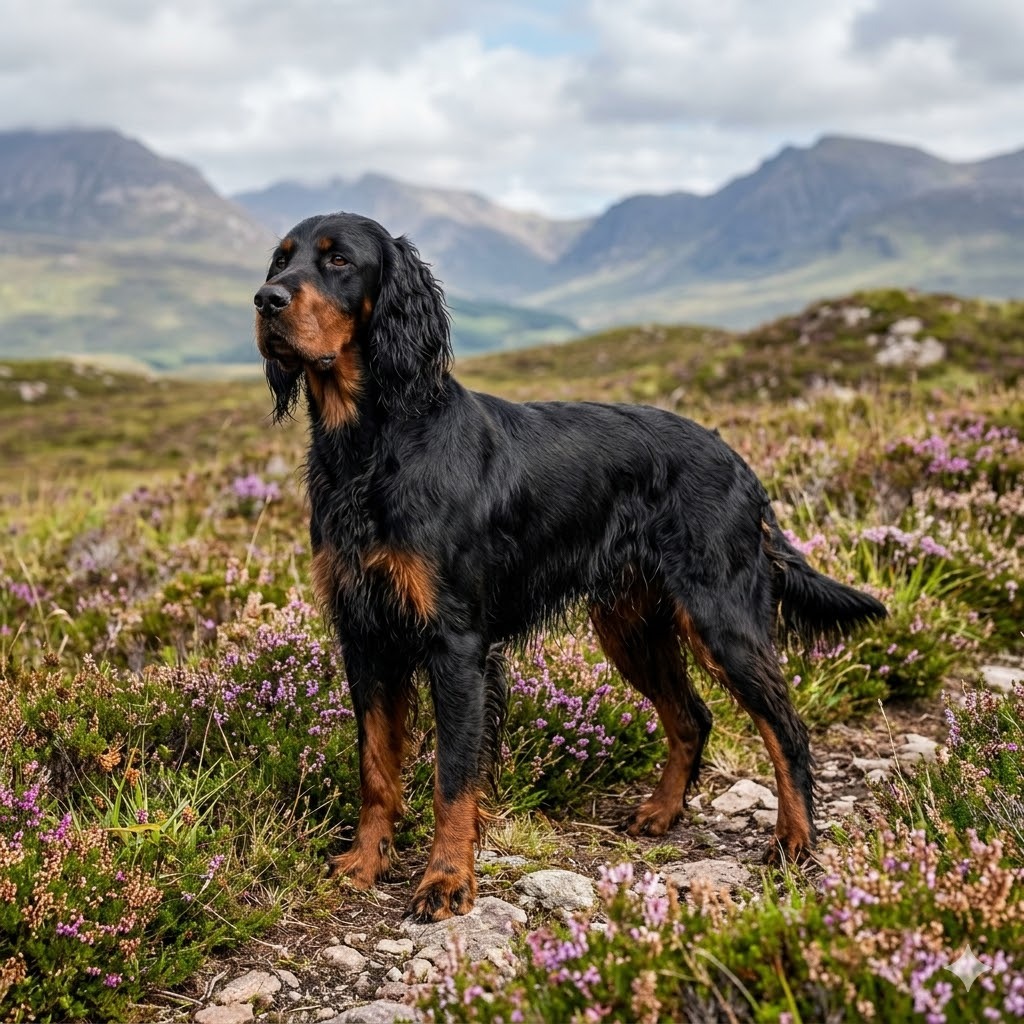
The Gordon Setter is the largest, heaviest, and most substantial of the setter breeds - a strong, dignified black-and-tan gundog developed in the Scottish Highlands. Bold, loyal, and deeply devoted to its family, the Gordon is a serious bird dog with real stamina and a determined, methodical hunting style. Unlike the more effusively friendly English and Irish setters, the Gordon tends to bond intensely with one household and can be reserved with strangers, giving it a more protective, one-family character. Handsome, capable, and steadfast, it suits active owners who want an athletic companion with a strong working heritage and a loyal heart.
History & Origins
The Gordon Setter takes its name from the Dukes of Gordon, whose kennels at Gordon Castle in northeast Scotland were central to the breed's development in the late 18th and early 19th centuries. Black-and-tan setters existed in Scotland before then, but the Duke's kennels popularised and refined the type, producing a heavier, more powerful bird dog suited to the demanding Highland terrain and long days in the field.
The Gordon was bred for endurance and thoroughness rather than raw speed. It works closer to the gun than some setters, ranging methodically and using an excellent nose to locate game birds such as grouse and pheasant. This deliberate, reliable style made it a favourite of Scottish and later worldwide sportsmen who valued a dependable working partner over a flashy wide-ranging one.
The breed was recognised by kennel clubs in the late 19th century and has been kept both as a working gundog and as a companion ever since. It remains less common than the other setters but retains a devoted following among hunters and enthusiasts who prize its loyalty and capability.
Appearance
The Gordon Setter is a large, powerful, and substantial dog - clearly the sturdiest of the setters. Males stand around 61-69 cm (24-27 in) at the shoulder and typically weigh 25-36 kg (55-80 lb); females are somewhat smaller and lighter, often 20-32 kg. The build is muscular and robust while still athletic, conveying both strength and stamina.
Key features:
- Coat: moderately long, soft, and shining, either straight or slightly wavy, with feathering on the ears, chest, legs, underside, and tail.
- Colour: the signature deep, shining coal black with rich chestnut or mahogany tan markings over the eyes, on the muzzle, chest, legs, and under the tail.
- Head: deep and fairly broad, with a heavier, more substantial look than other setters and a wise, dignified expression.
- Eyes: dark brown, intelligent and soulful.
- Ears: long, set low, hanging close to the head.
- Tail: carried level or slightly downward, tapering and well feathered.
Temperament & Character
The Gordon Setter is bold, confident, and intensely loyal, often forming a particularly strong bond with one person or one family. It is affectionate and devoted at home but tends to be more reserved and watchful with strangers than the other setters, which gives it a natural protectiveness and makes it a capable watchdog.
This is an intelligent, sensitive breed with a strong streak of independence rooted in its working heritage. It can be a little stubborn and slow to mature, and it does best with owners who provide clear, consistent leadership delivered with kindness. Gordons are generally good with children in their own family and can live well with other dogs when socialised, though their bird-dog focus and possessive loyalty mean early socialisation is important.
The breed thrives on inclusion and company; it does not do well ignored or left alone for long periods, and can become anxious or destructive without enough companionship, exercise, and mental work. Given a job and a close relationship with its people, the Gordon is a steadfast, dependable, and deeply rewarding companion.
Care
Coat & Grooming
The soft, feathered black-and-tan coat needs regular grooming to stay clean and mat-free. Brush two to three times a week, concentrating on the feathering on the ears, chest, legs, and tail, where tangles gather. Occasional trimming around the feet, ears, and neck keeps the dog neat, and some owners use professional grooming to maintain the coat.
The long, low-hanging ears trap moisture and debris and need weekly checking and cleaning to prevent infection. Gordons shed moderately, with heavier seasonal periods. Bathe as needed, trim nails regularly, and brush teeth several times a week to support overall health.
Exercise & Activity Needs
The Gordon Setter is a working gundog with substantial exercise needs - at least 60-90 minutes of vigorous daily activity, and often more for a young or field-bred dog. Long walks, running, hiking, swimming, and field work all suit the breed's stamina and drive. A brief stroll will not satisfy it.
Gordons excel at hunting, tracking, field trials, obedience, and agility, and they benefit greatly from having a real job that engages their nose and mind. Mental stimulation is as important as physical exercise; a bored, under-worked Gordon becomes restless and destructive. A securely fenced area for free running is a real asset, given the breed's size and drive.
Health & Lifespan
Average lifespan is 10-12 years. The Gordon is generally sturdy, but a few hereditary conditions occur and screening matters.
Common concerns:
- Hip and elbow dysplasia.
- Bloat (GDV) - a serious risk in this large, deep-chested breed.
- Progressive retinal atrophy and other eye conditions.
- Hypothyroidism.
- Cerebellar ataxia - a hereditary neurological disorder for which DNA testing exists.
- Ear infections - due to the long, hanging ears.
Choosing a breeder who screens hips, elbows, eyes, and hereditary conditions greatly reduces risk. Bloat prevention and weight management are especially important for this substantial breed.
Feeding & Nutrition
An adult Gordon Setter typically eats around 2.5-3.5 cups of quality food per day, divided into two meals; active and working dogs need more. A balanced diet appropriate to the breed's size, age, and activity level keeps it in strong, athletic condition without excess weight.
Because of the serious bloat risk in this deep-chested breed, feed two or more smaller meals rather than one large one, and avoid vigorous exercise for about an hour before and after eating. Slow-feeder bowls help fast eaters. Keep the dog lean and muscular to protect its joints and stamina. Feathering around the mouth can pick up food and may need an occasional wipe.
Pros & Cons
Pros
- Loyal, devoted, and strongly bonded to family.
- Handsome, substantial, and dignified.
- Capable, hard-working gundog with great stamina.
- More protective and watchful than other setters.
- Intelligent and trainable with patient handling.
Cons
- High exercise and mental-stimulation needs.
- Independent and slow to mature; not the easiest first dog.
- Can be reserved or wary with strangers.
- Feathered coat requires regular grooming.
- Prone to bloat; needs careful feeding management.
Best Suited For
- Active, experienced owners who enjoy training and the outdoors.
- Homes wanting a loyal, protective, one-family companion.
- Hunters and dog-sport enthusiasts.
- Owners with time for exercise, grooming, and close company.
Not suited for sedentary households, owners wanting an instantly outgoing dog, homes where the dog is left alone for long hours, or first-time owners who underestimate its drive and independence.
Gordon Setter puppy growth chart
A typical growth curve for a large breed like the Gordon Setter, estimated from its adult weight of 25-36 kg. Puppies vary with sex, genetics and diet, so treat this as a guide - for your own puppy, use the puppy weight predictor.
| Age | Typical weight | % of adult |
|---|---|---|
| 2 mo | 5.5-7.9 kg | 22% |
| 3 mo | 8.3-11.9 kg | 33% |
| 4 mo | 10.8-15.5 kg | 43% |
| 6 mo | 15-21.6 kg | 60% |
| 9 mo | 20-28.8 kg | 80% |
| 12 mo | 23-33.1 kg | 92% |
| Adult | 25-36 kg | 100% |
Gordon Setter - frequently asked questions
How is the Gordon Setter different from other setters?
It is the largest, heaviest, and most substantial of the setters, always black-and-tan in colour, and tends to be more loyal to one family and more reserved with strangers, giving it a more protective character.
Are Gordon Setters good family dogs?
Yes, for active families. They are devoted and affectionate with their own people and generally good with children they are raised with, though their loyalty and reserve mean early socialisation is important.
Do Gordon Setters make good guard dogs?
They make good watchdogs. They are more watchful and reserved with strangers than other setters and will alert to visitors, though they are companions and hunters rather than dedicated guard dogs.
Do Gordon Setters need a lot of exercise?
Yes. As working gundogs they need at least 60-90 minutes of vigorous daily activity plus mental stimulation. Without enough exercise they become restless and destructive.
Are Gordon Setters easy to train?
They are intelligent but independent, sensitive, and slow to mature, so they need patient, consistent, reward-based training. With kind, firm handling they become loyal and cooperative partners.
🧠 Test yourself: guess the dog
Three clues from our quiz bank, each about another of our dogs. Can you name them?
Clue 1.Bred to dig into setts and burrows after badgers, this dog's name literally means 'badger dog' in German.
It's the Dachshund - read the full profile →
Clue 2.This small, affectionate lapdog was recreated in the 1920s to look like the longer-nosed dogs in old royal portraits.
It's the Cavalier King Charles Spaniel - read the full profile →
Clue 3.Bred to herd, guard, and hunt vermin on Irish farms, this breed greets people with an enthusiastic jump nicknamed its trademark 'leap'.
It's the Soft Coated Wheaten Terrier - read the full profile →
💛 Adoptable Gordon Setters near you
Real dogs of this breed (and close mixes) waiting in shelters and rescues right now, live from Petfinder. We have no affiliation and earn nothing - if someone catches your eye, the link goes straight to their shelter. New to adopting? Start with our adoption guide.
Widget not loading (some ad-blockers hide it)? Search directly on petfinder.com.