Greater Swiss Mountain Dog
The Greater Swiss Mountain Dog - affectionately known as the "Swissy" - is a large, powerful tricolour draft and farm breed from the Swiss Alps, built to pull carts, drive cattle, and guard the homestead.
🗓️ Last reviewed: July 2026
Overview
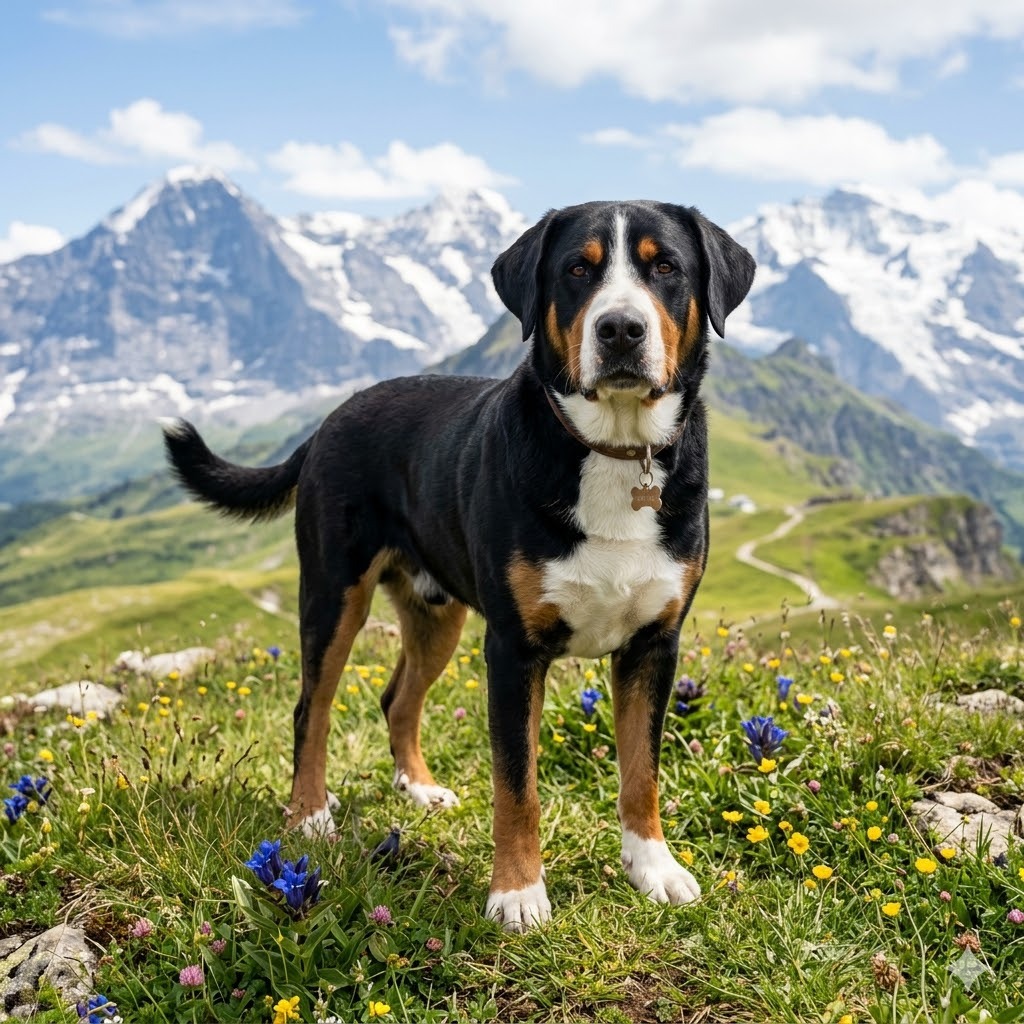
The Greater Swiss Mountain Dog - affectionately known as the "Swissy" - is a large, powerful tricolour draft and farm breed from the Swiss Alps, built to pull carts, drive cattle, and guard the homestead. It is the largest and oldest of the four Swiss Sennenhund breeds, sharing the striking black, rust, and white markings of its better-known relative the Bernese Mountain Dog, but with a shorter, easier-care coat. Males typically weigh 45-70 kg (100-155 lb). Steady, friendly, and devoted, the Swissy is a big-hearted family dog that matures slowly and combines gentle affection with real working strength.
History & Origins
The Greater Swiss Mountain Dog is an ancient working breed native to the Swiss Alps, thought to descend from large molosser-type dogs brought to the region in antiquity, crossed with native farm dogs. For centuries these dogs were the all-purpose helpers of Swiss farmers, herdsmen, and merchants, pulling loaded carts, driving and guarding cattle, and protecting property in the mountain valleys.
As farm mechanisation and the arrival of other breeds spread, the Swissy declined and was very nearly lost. By the early 20th century it was thought to have disappeared as a distinct type. In 1908 the Swiss cynologist Albert Heim identified a short-haired Sennenhund as a remnant of the old draft breed, and dedicated efforts began to preserve and rebuild it.
Numbers grew slowly through the 20th century, and the breed was exported to North America from the late 1960s. The AKC granted full recognition in 1995. The Swissy remains an uncommon breed, valued as a working farm dog, draft competitor, and steady family companion.
Appearance
Large, sturdy, and muscular, built for strength and endurance rather than speed. Males stand 65-72 cm (25.5-28.5 in) and weigh 45-70 kg (100-155 lb); females are smaller. The frame is powerful and well-boned, giving an impression of solid, confident strength.
Key features:
- Coat: short, dense double coat - shorter and easier to maintain than the Bernese's long coat.
- Colour: striking tricolour - a black base with symmetrical rich rust and clean white markings on the face, chest, feet, and tail tip.
- Head: broad, strong, and flat on top, with a gentle expression.
- Eyes: almond-shaped, brown, with a kind, alert look.
- Ears: medium, triangular, drop, set high.
- Tail: thick, carried low at rest.
Temperament & Character
Steady, friendly, and devoted. The Greater Swiss Mountain Dog is known for its calm confidence and even temperament, combining the affectionate loyalty of a family dog with the watchful awareness of a farm guardian. Swissys bond closely with their people and thrive on being part of everything the family does.
The breed is alert and territorial enough to make a good watchdog, sounding a deep bark at strangers, but it is not aggressive; a well-socialised Swissy is confident and friendly once it understands there is no threat. Because they mature slowly - often not fully grown up in mind until three years or more - they can be goofy, boisterous, and puppy-like for a long time.
Swissys are typically excellent with children, gentle and tolerant, though their size and exuberance mean supervision is wise around toddlers. They generally get along with other dogs and pets when socialised. As highly social dogs, they do not do well left alone for long periods.
Care
Coat & Grooming
The short double coat is refreshingly low-maintenance compared with longer-coated mountain breeds: a weekly brush keeps it healthy, with more frequent brushing during the twice-yearly heavy sheds when the undercoat blows. Despite the short length, Swissys shed a fair amount year-round.
Bathe only occasionally, keep the coat clean and dry, and check for debris after outdoor work. Clean the ears weekly, trim nails regularly, and brush the teeth often. The dense coat suits cold weather well, but the breed can overheat in hot conditions and needs shade and water.
Exercise & Activity Needs
Moderate. A Swissy needs around 45-60 minutes of daily activity - brisk walks, hikes, play, and, ideally, some form of work such as carting or weight-pulling, which the breed genuinely enjoys and excels at. They are strong and enjoy a job, but they are not tireless endurance athletes and are content to relax at home once exercised.
As a large, slow-maturing breed, growth must be protected: puppies need controlled, low-impact exercise, with no forced running or repetitive jumping until the joints have matured. Draft and pulling work should wait until the dog is physically mature. Exercise in the cool of the day in warm weather.
Health & Lifespan
Average lifespan is 8-11 years - typical for a large breed.
Common concerns:
- Hip and elbow dysplasia - screen breeding stock.
- Bloat (GDV) and gastric issues - a serious risk in this deep-chested breed.
- Splenic torsion - twisting of the spleen, seen in the breed.
- Osteochondrosis (OCD) - a developmental joint condition in growing dogs.
- Epilepsy.
- Urinary incontinence - relatively common, especially in females.
- Eyelid abnormalities such as entropion and distichiasis.
Buy from breeders who test hips, elbows, and eyes and who know the breed's health lines.
Feeding & Nutrition
A large-breed adult typically eats 3-5 cups of quality food daily, split across two meals to reduce bloat risk. Growing puppies must be fed a large-breed puppy formula that controls calcium and calorie intake, since too-fast growth in a slow-maturing giant strains developing joints.
Keep the dog lean to protect its joints and heart, avoid vigorous activity for an hour before and after meals, and consider a slow feeder given the bloat risk. Provide constant access to fresh water.
Pros & Cons
Pros
- Steady, friendly, devoted family temperament.
- Great with children and other pets.
- Short coat is easier to groom than long-coated relatives.
- Strong, capable working and draft dog.
- Confident watchdog without aggression.
Cons
- Large, strong, and slow to mature - long "puppy" phase.
- Sheds noticeably despite the short coat.
- Serious bloat and joint health risks.
- Cannot be left alone for long.
- Can overheat in hot climates.
Best Suited For
- Active families with space and time for a large dog.
- Owners who enjoy hiking, carting, or farm work.
- People wanting a Bernese-like dog with an easier coat.
- Cool or temperate climates.
Not suited for apartment dwellers without room, full-time-office homes that leave the dog alone, hot climates, or owners unprepared for a big, boisterous, slow-maturing dog.
Greater Swiss Mountain Dog puppy growth chart
A typical growth curve for a giant breed like the Greater Swiss Mountain Dog, estimated from its adult weight of 45-70 kg. Puppies vary with sex, genetics and diet, so treat this as a guide - for your own puppy, use the puppy weight predictor.
| Age | Typical weight | % of adult |
|---|---|---|
| 2 mo | 8.1-12.6 kg | 18% |
| 3 mo | 12.6-19.6 kg | 28% |
| 4 mo | 16.7-25.9 kg | 37% |
| 6 mo | 23.4-36.4 kg | 52% |
| 9 mo | 31.5-49 kg | 70% |
| 12 mo | 37.4-58.1 kg | 83% |
| Adult | 45-70 kg | 100% |
Greater Swiss Mountain Dog - frequently asked questions
What is a "Swissy"?
"Swissy" is the common nickname for the Greater Swiss Mountain Dog, the largest and oldest of the four Swiss Sennenhund (mountain dog) breeds.
How is a Swissy different from a Bernese Mountain Dog?
Both share the black, rust, and white tricolour and Swiss farm heritage, but the Greater Swiss has a short, easier-care coat, is generally larger and more robust, and tends to live somewhat longer than the long-coated Bernese.
Are Greater Swiss Mountain Dogs good family dogs?
Yes - they are steady, affectionate, and typically excellent with children, though their size and long-lasting puppy exuberance mean supervision and training are important.
Do Swissys shed a lot?
More than people expect for a short-coated breed. They shed year-round and blow their undercoat heavily twice a year, so regular brushing helps manage it.
How long do Swissys take to mature?
Slowly - many are not fully mature in body and mind until around three years of age, so owners should expect an extended, goofy adolescent phase.
🧠 Test yourself: guess the dog
Three clues from our quiz bank, each about another of our dogs. Can you name them?
Clue 1.Named for the way it paws and spars with its front legs, this square-jawed German working dog has an undershot bite.
It's the Boxer - read the full profile →
Clue 2.Bred down from a larger farm ratter, this wiry-coated companion has a stocky body and bold personality.
It's the Miniature Schnauzer - read the full profile →
Clue 3.Bred in Wales to drive cattle, this short-legged dog has large erect ears and a fox-like face.
It's the Pembroke Welsh Corgi - read the full profile →
💛 Adoptable Greater Swiss Mountain Dogs near you
Real dogs of this breed (and close mixes) waiting in shelters and rescues right now, live from Petfinder. We have no affiliation and earn nothing - if someone catches your eye, the link goes straight to their shelter. New to adopting? Start with our adoption guide.
Widget not loading (some ad-blockers hide it)? Search directly on petfinder.com.