Irish Terrier
The Irish Terrier is a bold, fiery, red-coated all-round terrier from Ireland - nicknamed the "Daredevil" for its reckless courage.
🗓️ Last reviewed: July 2026
Overview
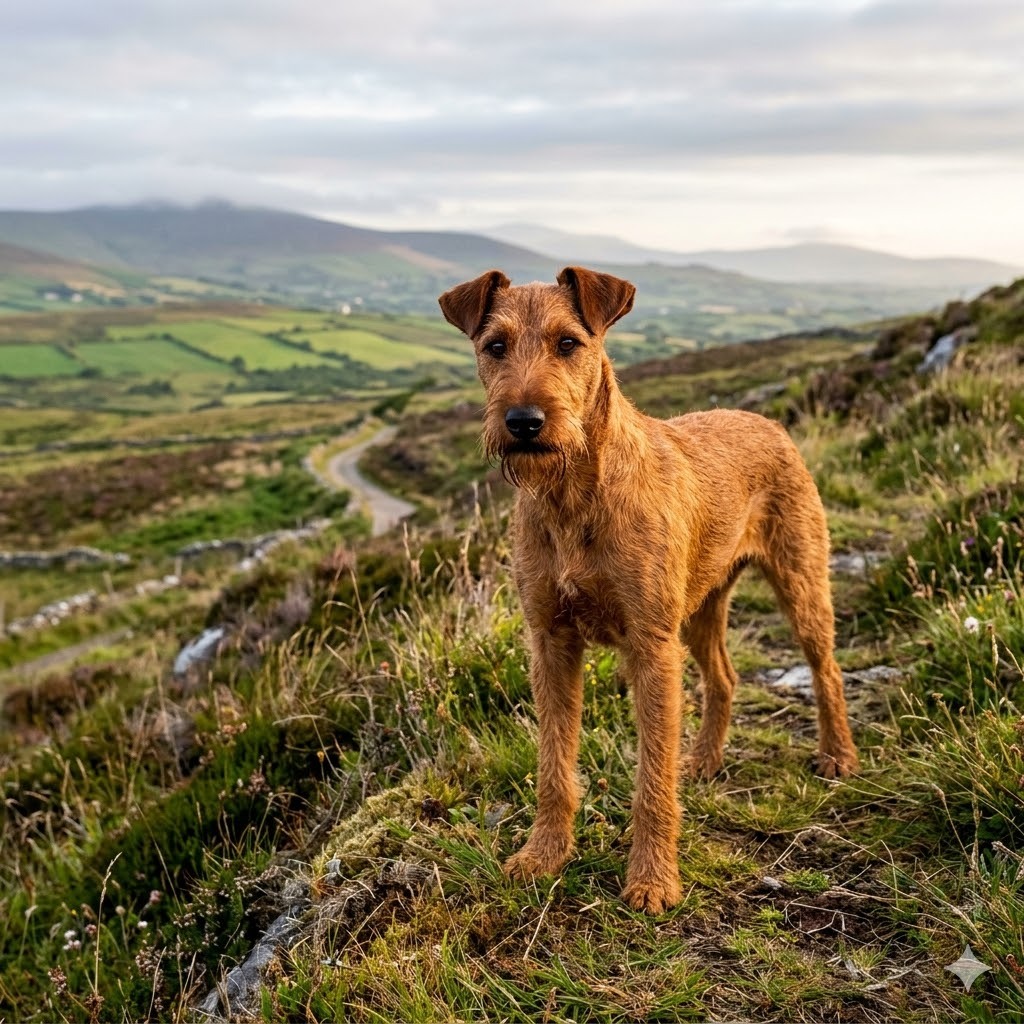
The Irish Terrier is a bold, fiery, red-coated all-round terrier from Ireland - nicknamed the "Daredevil" for its reckless courage. Lean, racy, and built like a small red hound-terrier hybrid, it is one of the oldest terrier breeds and the only solid-red one. Deeply loyal and affectionate with its own family, the Irish Terrier is also famously scrappy with other dogs and driven to chase. It is a spirited, spring-loaded companion that rewards a confident owner and punishes a passive one. Males typically weigh 11-12 kg (25-27 lb), females slightly less.
History & Origins
The Irish Terrier is among the oldest terrier breeds, with roots stretching back centuries in the Irish countryside. Farmers and cottagers valued it as a versatile working dog - ratter, vermin-killer, guard, hunting companion, and family protector all in one. The breed was standardised in the late 1800s, with a breed club forming in Dublin in 1879, making it one of the first terriers to gain formal recognition.
Early Irish Terriers came in various colours, but breeders soon fixed the solid red coat that defines the breed today. During the First World War, Irish Terriers served with distinction as messenger and sentry dogs in the trenches, earning a reputation for fearlessness under fire. This wartime service cemented the "Daredevil" nickname and boosted the breed's popularity.
The Kennel Club and the AKC both recognised the breed early. Though never a top-registration breed, the Irish Terrier has retained a devoted following prizing its old-fashioned working character over fashion.
Appearance
Medium-sized, lean, and racy - noticeably longer in leg and body than most terriers, giving an athletic, greyhound-touched outline. Males stand around 46-48 cm (18-19 in) and weigh 11-12 kg (25-27 lb); females are a touch smaller.
Key features:
- Coat: dense, wiry, and broken, lying close to the body with a softer undercoat. Hard and weatherproof to the touch.
- Colour: solid red - bright red, golden red, or red wheaten. A small white patch on the chest is tolerated but not desired. The only whole-coloured red terrier.
- Head: long, flat, and lean with a strong muzzle and a characteristic beard and eyebrows.
- Eyes: small, dark, and full of fire.
- Ears: small, V-shaped, folding forward.
- Tail: traditionally docked; carried gaily. Natural tails common where docking is banned.
Temperament & Character
Bold, spirited, and utterly fearless - the Irish Terrier does nothing by halves. With its own people it is deeply devoted, affectionate, and endlessly loyal, forming a strong bond and thriving on being part of family life. It is playful, comical, and intensely engaged with its household.
That devotion comes packaged with a hot temper toward other dogs. The Irish Terrier has a well-earned reputation for dog-aggression and will rarely back down from a challenge, especially with dogs of the same sex. Its prey drive is strong; cats, small pets, and wildlife are all fair game unless the dog is raised carefully alongside them.
The breed is alert, watchful, and makes an excellent watchdog, quick to sound the alarm and brave enough to back it up. It is good with children in its own family when raised together, though its boisterous energy suits older kids better than toddlers. This is a dog with strong opinions and a stubborn streak - never dull, never easy, always a character.
Care
Coat & Grooming
The wiry, broken coat is weatherproof and low-shedding when maintained correctly. For proper coat texture and colour, the Irish Terrier should be hand-stripped - the dead hairs plucked out by hand - two to three times a year. Clipping softens the coat, dulls the red, and is discouraged for a working-textured dog.
Between strippings, brush weekly to remove loose hair and keep the beard and legs tidy. The beard traps food and water and needs regular cleaning. Bathe only when necessary, as over-bathing softens the coat. Clean ears weekly, trim nails every few weeks, and brush teeth several times a week.
Exercise & Activity Needs
High. The Irish Terrier is an athletic, energetic dog that needs a good hour or more of vigorous daily exercise - brisk walks, off-lead running in secure areas, and active play. A bored or under-exercised Irish Terrier becomes destructive, noisy, and difficult.
The breed excels at earthdog trials, agility, and terrier racing, and enjoys hiking and games of fetch. Because of its prey drive and dog-reactivity, off-lead work is best in enclosed, dog-free spaces. Mental stimulation through training, scent games, and problem-solving toys is as important as physical exercise for this sharp, busy mind.
Health & Lifespan
Average lifespan is 13-15 years. The Irish Terrier is one of the hardier, longer-lived terrier breeds with relatively few inherited problems.
Common concerns:
- Hyperkeratosis (corny feet) - a hereditary thickening of the footpads seen in some lines.
- Urinary stones (cystinuria) - a genetic tendency in some dogs.
- Hypothyroidism.
- Cataracts and other eye conditions.
- Muscular cramping (canine familial spinocerebellar issues in rare lines).
Overall a robust, healthy breed when sourced from health-tested parents.
Feeding & Nutrition
Adults typically eat around 1-1.5 cups of quality dry food per day, split into two meals, adjusted for size and activity. The Irish Terrier is an active dog with a healthy appetite but is prone to putting on weight if underexercised, so portions should be watched.
A balanced diet with good-quality protein supports the working build and coat. Because some lines carry cystinuria, dogs prone to urinary stones may need a specific diet - discuss with a vet if there is any history. Keep treats modest and fresh water always available.
Pros & Cons
Pros
- Bold, loyal, and deeply devoted to family.
- Hardy, healthy, and long-lived.
- Low-shedding wiry coat when maintained.
- Excellent watchdog and versatile working terrier.
- Comical, spirited, full of character.
Cons
- Strong dog-aggression, especially same-sex.
- High prey drive - risky with cats and small pets.
- Stubborn and independent - not an easy first dog.
- Needs regular hand-stripping.
- High energy and destructive if under-stimulated.
Best Suited For
- Confident, experienced owners who enjoy an assertive terrier.
- Active households that can meet daily exercise needs.
- Homes without other dogs, or with careful management.
- Owners who want a bold watchdog and loyal companion.
- Families with older children rather than toddlers.
Not suited for first-time dog owners, homes with cats or small pets, multi-dog households seeking harmony, or anyone wanting a placid, easy-going pet.
Irish Terrier puppy growth chart
A typical growth curve for a medium breed like the Irish Terrier, estimated from its adult weight of 11-12 kg. Puppies vary with sex, genetics and diet, so treat this as a guide - for your own puppy, use the puppy weight predictor.
| Age | Typical weight | % of adult |
|---|---|---|
| 2 mo | 3-3.2 kg | 27% |
| 3 mo | 4.4-4.8 kg | 40% |
| 4 mo | 5.5-6 kg | 50% |
| 6 mo | 7.5-8.2 kg | 68% |
| 9 mo | 9.4-10.2 kg | 85% |
| 12 mo | 10.7-11.6 kg | 97% |
| Adult | 11-12 kg | 100% |
Irish Terrier - frequently asked questions
Are Irish Terriers good with other dogs?
Often not. The breed has a genuine reputation for dog-aggression, particularly toward dogs of the same sex. Early socialisation helps but rarely eliminates it. Many Irish Terriers are best as the only dog.
Do Irish Terriers shed a lot?
No - the wiry coat sheds very little when properly hand-stripped and maintained. It is not hypoallergenic, but shedding is minimal compared to most breeds.
Why are they called "Daredevils"?
For their reckless courage. The breed will take on anything without hesitation, a trait that earned fame during the First World War when Irish Terriers served fearlessly as messenger dogs under fire.
Are Irish Terriers good family dogs?
Yes, with their own family they are affectionate, loyal, and playful, and good with older children raised alongside them. Their boldness and prey drive mean they suit active, confident families rather than quiet homes.
Do Irish Terriers need a lot of grooming?
Regular grooming, yes. Weekly brushing plus hand-stripping two to three times a year keeps the coat correct. They are not high-maintenance in shedding, but the coat needs the right care to stay weatherproof and red.
🧠 Test yourself: guess the dog
Three clues from our quiz bank, each about another of our dogs. Can you name them?
Clue 1.Famously energetic, this compact hunting terrier of TV fame can leap five times its own height.
It's the Jack Russell Terrier - read the full profile →
Clue 2.Famous as a droopy-faced advertising mascot, this stubby-legged hound has a deep bark and a famously stubborn streak.
It's the Basset Hound - read the full profile →
Clue 3.A high-drive, short-haired working dog often mistaken for a German shepherd, it needs a serious job and tons of exercise to stay balanced.
It's the Belgian Malinois - read the full profile →
💛 Adoptable Irish Terriers near you
Real dogs of this breed (and close mixes) waiting in shelters and rescues right now, live from Petfinder. We have no affiliation and earn nothing - if someone catches your eye, the link goes straight to their shelter. New to adopting? Start with our adoption guide.
Widget not loading (some ad-blockers hide it)? Search directly on petfinder.com.