Keeshond
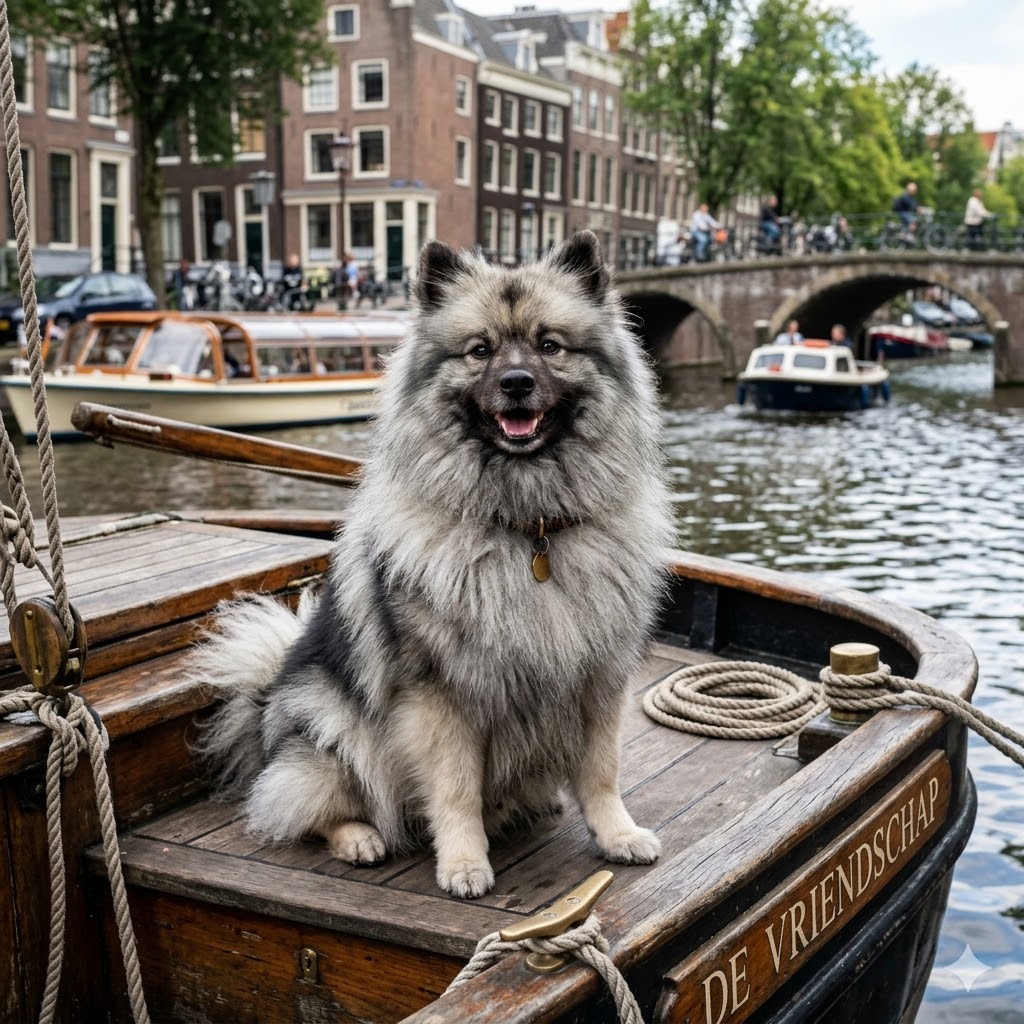
The Keeshond is a fluffy, medium-sized spitz breed from the Netherlands, famous as the "Dutch barge dog" that once rode the canal boats and river barges of Holland as a watchdog and companion.
🗓️ Last reviewed: July 2026
Overview
The Keeshond is a fluffy, medium-sized spitz breed from the Netherlands, famous as the "Dutch barge dog" that once rode the canal boats and river barges of Holland as a watchdog and companion. Cloaked in a plush silver-grey and black coat and wearing the trademark "spectacles" of shading around the eyes, the Keeshond has an endearing, seemingly smiling face and a temperament to match: friendly, people-loving, and cheerful. Unlike many spitz and working breeds, it needs no serious job - it simply wants to be part of the family. That easy sociability, moderate exercise needs, and a heavy shedding coat define this affectionate companion. Adults typically weigh 16-20 kg (35-45 lb).
History & Origins
The Keeshond descends from the same family of European spitz dogs that gave rise to breeds such as the German Spitz and Pomeranian. In the Netherlands it became established as an all-purpose companion and watchdog on the barges, farms, and riverboats of the 18th and 19th centuries, valued for its alertness, manageable size, and friendly nature rather than for herding or guarding livestock.
The breed became a political symbol in the late 1700s. During a period of Dutch unrest, the dog was adopted as the mascot of the Patriot faction, whose leader Cornelis (Kees) de Gijselaar was said to own such a dog - and the breed is traditionally said to take its name, "Kees's dog," from this association. When the rival faction prevailed, the breed's popularity dipped, but it survived on the barges and farms of ordinary people.
In the 1920s a British breeder, Baroness van Hardenbroek, championed the breed and helped establish it internationally. The American Kennel Club recognised the Keeshond in 1930. Today it is kept almost entirely as a companion and family dog, prized for its temperament and looks.
Appearance
A medium-sized, squarely built spitz with a foxy face and a luxuriant coat. Adults stand about 43-46 cm (17-18 in) and weigh 16-20 kg (35-45 lb), with males slightly larger than females. The overall impression is of a compact, balanced, richly coated dog.
Key features:
- Coat: thick, plush double coat with a long, harsh outer coat standing off from the body and a soft, dense undercoat; a pronounced mane around the neck, especially in males, and well-feathered "trousers" on the hindquarters.
- Colour: a mixture of grey, black, and cream giving the characteristic silver-grey appearance, with black-tipped guard hairs shading the coat.
- Head: foxy and wedge-shaped, with distinctive "spectacles" - markings and shading of the coat and skin around the eyes.
- Eyes: dark, medium-sized, almond-shaped, with an alert, friendly expression.
- Ears: small, triangular, erect, set high.
- Tail: moderately long, set high and carried curled tightly over the back, with a cream and black plume.
Temperament & Character
Friendly, outgoing, and devoted to people. The Keeshond is one of the most companionable of the spitz breeds - it thrives on human company, follows its family from room to room, and generally greets everyone, strangers included, as a potential friend. It earned the nickname "the smiling Dutchman" for its cheerful, expressive face.
Bright and sensitive, the Keeshond is quick to pick up on the household's mood and often serves as a natural comforter. It is alert and makes a good watchdog in the sense of announcing visitors, but it is far too sociable to be a guard dog. It can be vocal, and left alone too long it may bark or become anxious, as the breed strongly dislikes isolation.
With children the Keeshond is typically gentle, patient, and playful, making it an excellent family dog. It is usually good with other dogs and pets when socialised, reflecting its easygoing, non-aggressive nature.
Care
Coat & Grooming
The Keeshond's thick double coat is its most demanding feature. Brush it thoroughly at least twice a week, working right down to the skin, to prevent tangles and keep the undercoat healthy; more frequent brushing is needed during the twice-yearly heavy sheds, when the undercoat blows out in large quantities. This is a serious shedder, and loose hair will find its way onto floors, furniture, and clothing.
The coat should be brushed, not clipped - shaving a Keeshond can damage the coat's texture and its ability to insulate. A light misting of water while brushing helps protect the coat. Baths every couple of months keep it fresh. Clean ears weekly, trim nails every 3 weeks, and brush teeth several times weekly.
Exercise & Activity Needs
Moderate. The Keeshond needs around 45-60 minutes of daily exercise - walks, play sessions, and games - to stay fit and content. It is adaptable and does not have the relentless drive of a herding or gundog breed, which makes it well suited to a wide range of homes, including flats, provided its needs are met.
The breed enjoys and does well at agility, obedience, rally, and trick training, and it loves interactive games with its people. Mental stimulation matters as much as physical exercise; the Keeshond is intelligent and enjoys learning. Because it thrives on togetherness rather than tasks, it needs no serious working job to be happy - just involvement and companionship.
Health & Lifespan
Average lifespan is 12-15 years.
Common concerns:
- Hip dysplasia - screen breeding stock.
- Patellar luxation - slipping kneecaps.
- Primary hyperparathyroidism - a hereditary condition for which a genetic test exists.
- Hypothyroidism.
- Epilepsy.
- Skin and coat issues if the coat is neglected or shaved.
The Keeshond is generally a hardy, long-lived breed. Buying from a breeder who health-tests helps avoid the known hereditary issues.
Feeding & Nutrition
An adult Keeshond typically eats around 1.5-2 cups of quality food per day divided into two meals, adjusted for age, size, and activity. The breed can be prone to weight gain, and its thick coat easily hides a thickening waistline, so portions should be measured and treats accounted for.
Assess condition by feel rather than by eye, keep the dog trim to protect its joints, and provide fresh water at all times. Slow-feeder bowls help enthusiastic eaters, and avoiding excess table scraps keeps the breed in good shape.
Pros & Cons
Pros
- Friendly, affectionate, people-loving companion.
- Excellent with children and other pets.
- Manageable, adaptable size - suits flats and houses.
- Intelligent and easy to train.
- Long-lived and generally hardy.
Cons
- Heavy, twice-yearly seasonal shedding and constant hair.
- Thick coat needs regular thorough brushing.
- Dislikes being left alone; prone to barking.
- Can be vocal without training.
- Prone to weight gain if overfed.
Best Suited For
- Families and individuals wanting an affectionate companion.
- Homes where someone is around much of the day.
- First-time owners (with a willingness to groom and vacuum).
- Flat or house dwellers who can meet moderate exercise needs.
- Owners who want a friendly, sociable, non-guarding dog.
Not suited for people wanting a low-shedding dog, households where the dog would be alone for long hours, or anyone seeking a serious guard or working dog.
Keeshond puppy growth chart
A typical growth curve for a medium breed like the Keeshond, estimated from its adult weight of 16-20 kg. Puppies vary with sex, genetics and diet, so treat this as a guide - for your own puppy, use the puppy weight predictor.
| Age | Typical weight | % of adult |
|---|---|---|
| 2 mo | 4.3-5.4 kg | 27% |
| 3 mo | 6.4-8 kg | 40% |
| 4 mo | 8-10 kg | 50% |
| 6 mo | 10.9-13.6 kg | 68% |
| 9 mo | 13.6-17 kg | 85% |
| 12 mo | 15.5-19.4 kg | 97% |
| Adult | 16-20 kg | 100% |
Keeshond - frequently asked questions
Are Keeshonden good family dogs?
Yes, excellent ones. They are friendly, gentle, and playful with children, sociable with other pets, and devoted to their people, making them one of the best family companions among the spitz breeds.
Do Keeshonden shed a lot?
Yes. They are heavy shedders, especially during the twice-yearly seasonal blow-out of the undercoat, and they shed steadily year-round. Regular brushing and a vacuum are part of Keeshond ownership.
Can I shave my Keeshond in summer?
No. The double coat should be brushed, not shaved. It insulates against both heat and cold, and shaving can permanently damage its texture and regrowth. Regular brushing, shade, and water keep the dog comfortable in warm weather.
Do Keeshonden bark a lot?
They can be vocal - it comes from their watchdog barge-dog heritage. With early training of a "quiet" cue and enough company and stimulation, barking is very manageable.
Does a Keeshond need a job like a herding dog?
No. Unlike many working and herding breeds, the Keeshond is a companion at heart. It needs moderate exercise, mental engagement, and, above all, to be included in family life - not a serious working task.
🧠 Test yourself: guess the dog
Three clues from our quiz bank, each about another of our dogs. Can you name them?
Clue 1.This sleek, energetic pointer wears a solid liver head over a speckled body and excels at dog sports.
It's the German Shorthaired Pointer - read the full profile →
Clue 2.This tiny toy terrier with a long, silky blue-and-tan coat was originally bred to catch rats in English textile mills.
It's the Yorkshire Terrier - read the full profile →
Clue 3.This gentle giant is sweet and patient with families despite its enormous frame, but sadly has a short lifespan.
It's the Great Dane - read the full profile →
💛 Adoptable Keeshonds near you
Real dogs of this breed (and close mixes) waiting in shelters and rescues right now, live from Petfinder. We have no affiliation and earn nothing - if someone catches your eye, the link goes straight to their shelter. New to adopting? Start with our adoption guide.
Widget not loading (some ad-blockers hide it)? Search directly on petfinder.com.