Kerry Blue Terrier
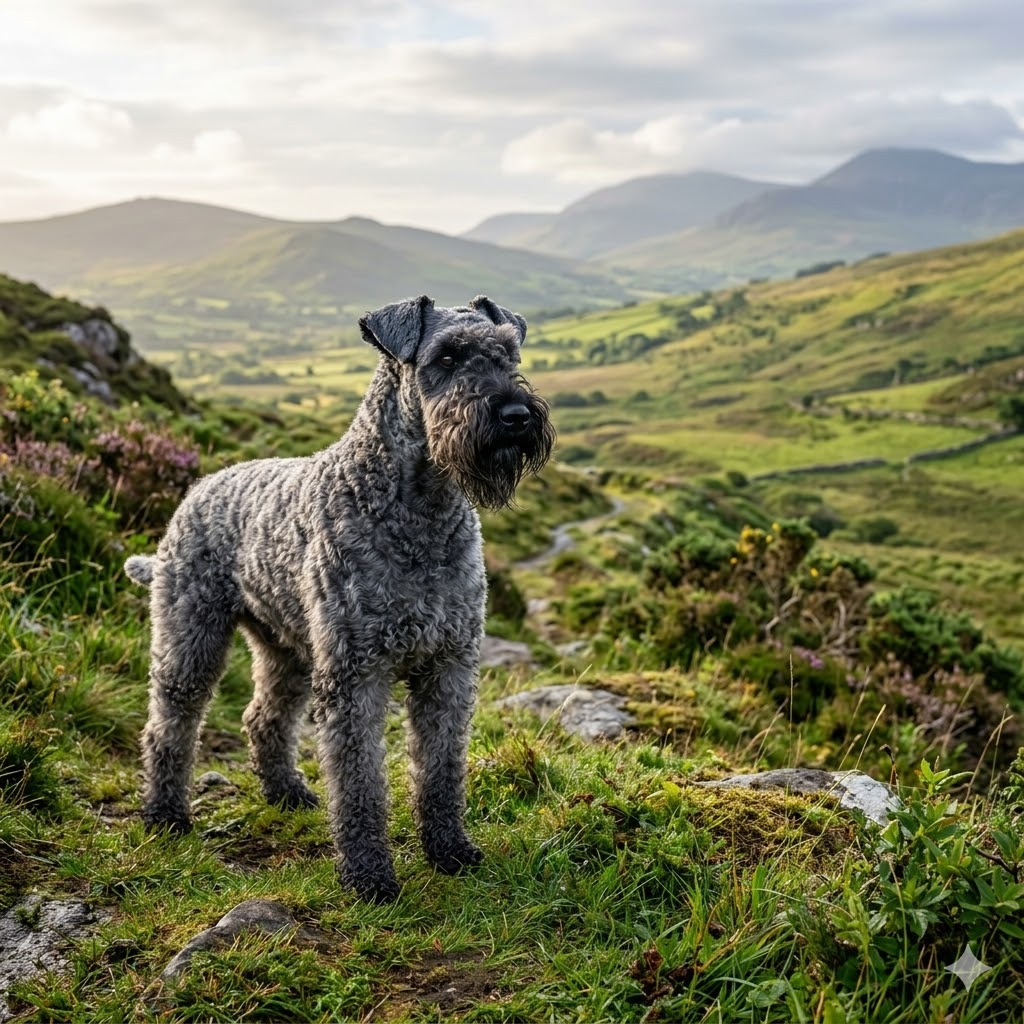
The Kerry Blue Terrier is a spirited, versatile Irish working terrier famous for its remarkable coat that transforms from black at birth to a distinctive blue-grey by adulthood.
🗓️ Last reviewed: July 2026
Overview
The Kerry Blue Terrier is a spirited, versatile Irish working terrier famous for its remarkable coat that transforms from black at birth to a distinctive blue-grey by adulthood. Soft, dense, and non-shedding, that curly coat needs regular clipping rather than the stripping most terriers require. Behind the striking looks sits a bold, feisty, intelligent dog - a farm all-rounder that could herd, hunt, guard, and ratt with equal enthusiasm. Loyal and playful with family but often reactive toward other dogs, the Kerry is a confident, high-spirited companion for an experienced owner. Males typically weigh 15-18 kg (33-40 lb), females slightly less.
History & Origins
The Kerry Blue Terrier originated in the mountainous County Kerry region of south-west Ireland, where it developed over the past few centuries as an all-purpose farm and working dog. Irish smallholders needed a single versatile dog that could herd cattle and sheep, hunt vermin and small game, guard the home, and even retrieve from water - and the Kerry did all of it. Legend ties the breed to a blue dog that swam ashore from a shipwreck, though its true origins lie in the native terriers of the region.
The breed became a symbol of Irish national identity. It was championed by Irish patriots, and Michael Collins famously owned a Kerry Blue named Convict 224. Efforts were made to have it recognised as the national dog of Ireland. The first breed club formed in Dublin in the early 20th century, and the Kerry was among the dogs at the first Irish Kennel Club shows.
The Kennel Club and AKC recognised the breed in the early 1920s. Though never a mainstream popular breed, the Kerry Blue has kept a loyal following worldwide who value its versatility, character, and unmistakable coat.
Appearance
Medium-sized, compact, and muscular with an upstanding, well-balanced outline. Males stand around 46-48 cm (18-19 in) and weigh 15-18 kg (33-40 lb); females are slightly smaller and lighter.
Key features:
- Coat: soft, dense, and wavy to curly - a single coat that does not shed. Fine and abundant.
- Colour: any shade of blue-grey, from deep slate to light blue-grey. Puppies are born black and clear to their adult blue colour gradually over the first 18 months to two years.
- Head: long, lean, and well-balanced with a strong muzzle and a full beard.
- Eyes: small, dark, and keen.
- Ears: small, V-shaped, folding forward toward the front.
- Tail: traditionally docked and carried erect; natural tails common where docking is banned.
Temperament & Character
Bold, spirited, and full of terrier fire, the Kerry Blue is an intelligent, high-energy dog with a strong personality. With its family it is affectionate, playful, and deeply loyal, thriving on involvement in daily life and forming close bonds. It is alert and territorial, making an excellent watchdog that takes its guarding duties seriously.
The breed's versatility shows in its keen, adaptable mind - Kerries are quick learners who enjoy having a job. That intelligence comes with independence and a stubborn streak; a Kerry will test boundaries and needs an owner who leads with consistency.
Like many Irish terriers, the Kerry Blue tends to be dog-reactive and can be scrappy, particularly with unfamiliar dogs and same-sex dogs. Its prey drive toward cats and small animals is strong. With children in its own family it is generally good when raised together, though its energy and boldness suit older kids better than toddlers. This is a lively, opinionated dog that never fades into the background.
Care
Coat & Grooming
The Kerry's soft, curly, non-shedding coat is one of its defining features but demands consistent care. Unlike wiry terriers that are hand-stripped, the Kerry is clipped and scissored regularly - typically every four to six weeks - to keep the coat tidy and prevent matting. Many owners use a professional groomer for the traditional Kerry trim.
Between grooms, the coat needs brushing and combing several times a week, or daily around the beard and legs, to prevent tangles and mats forming close to the skin. The beard collects food and water and needs regular cleaning. Clean ears weekly and pluck hair from the ear canal if needed, trim nails every few weeks, and brush teeth several times a week.
Exercise & Activity Needs
High. The Kerry Blue is an athletic, energetic working breed that needs at least an hour of vigorous daily exercise - brisk walks, running, and active play. Without enough outlet the breed becomes bored, restless, and prone to destructive or noisy behaviour.
Kerries excel at agility, obedience, earthdog trials, and tracking, and enjoy hiking and interactive games. Given their dog-reactivity and prey drive, off-lead exercise is safest in secure, dog-free areas. Mental stimulation matters as much as physical - this clever breed needs training, puzzles, and varied activity to stay balanced and content.
Health & Lifespan
Average lifespan is 12-15 years. The Kerry Blue is generally a hardy breed with a moderate number of inherited concerns.
Common concerns:
- Progressive neuronal abiotrophy (PNA) - a rare hereditary neurological condition specific to the breed.
- Hip dysplasia.
- Eye conditions including cataracts, entropion, and keratoconjunctivitis sicca (dry eye).
- Hypothyroidism.
- Skin cysts and spiculosis - the coat's dense curls make the breed prone to certain skin growths.
- Factor XI deficiency - a bleeding disorder in some lines.
Sourcing from health-tested parents reduces the risk of the main hereditary problems.
Feeding & Nutrition
Adults typically eat around 1.5-2 cups of quality dry food per day, split into two meals, adjusted for size and activity level. The Kerry is an energetic dog with a healthy appetite and does well on a balanced, good-quality diet with adequate protein to support its muscular, active build.
Watch portions, as an under-exercised Kerry can gain weight. Keep treats modest, especially during training, and ensure constant access to fresh water. There are no breed-wide dietary restrictions, but any dog with a known health issue should be fed according to veterinary advice.
Pros & Cons
Pros
- Non-shedding coat suited to allergy-conscious homes.
- Intelligent, versatile, and highly trainable.
- Bold, loyal, and playful with family.
- Excellent, watchful guard dog.
- Hardy and reasonably long-lived.
Cons
- Dog-reactivity and scrappiness, especially same-sex.
- Strong prey drive - risky with cats and small pets.
- Coat needs frequent clipping and brushing.
- Stubborn and independent - not for beginners.
- High energy and needs plenty of stimulation.
Best Suited For
- Experienced, confident owners who enjoy a spirited terrier.
- Active households able to meet daily exercise needs.
- Allergy-conscious homes wanting a non-shedding dog.
- Homes without other dogs, or with careful management.
- Families with older children rather than toddlers.
Not suited for first-time owners, homes with cats or small pets, multi-dog households seeking easy harmony, or owners unwilling to commit to regular professional grooming.
Kerry Blue Terrier puppy growth chart
A typical growth curve for a medium breed like the Kerry Blue Terrier, estimated from its adult weight of 15-18 kg. Puppies vary with sex, genetics and diet, so treat this as a guide - for your own puppy, use the puppy weight predictor.
| Age | Typical weight | % of adult |
|---|---|---|
| 2 mo | 4.1-4.9 kg | 27% |
| 3 mo | 6-7.2 kg | 40% |
| 4 mo | 7.5-9 kg | 50% |
| 6 mo | 10.2-12.2 kg | 68% |
| 9 mo | 12.8-15.3 kg | 85% |
| 12 mo | 14.6-17.5 kg | 97% |
| Adult | 15-18 kg | 100% |
Kerry Blue Terrier - frequently asked questions
Why are Kerry Blue puppies born black?
The characteristic blue-grey colour develops gradually. Puppies are born black or very dark and clear to their adult blue shade over the first year to two years, sometimes passing through brownish or greyish transitional stages along the way.
Do Kerry Blue Terriers shed?
No - the Kerry has a single, non-shedding coat. This makes it appealing to allergy-conscious owners, though no dog is fully hypoallergenic. The trade-off is frequent clipping and brushing to prevent matting.
Are Kerry Blues good with other dogs?
Often not. The breed tends to be dog-reactive and can be scrappy, especially with unfamiliar and same-sex dogs. Early socialisation helps but many Kerries are best as the only dog in the home.
How much grooming does a Kerry Blue need?
A lot. The soft curly coat needs brushing several times a week and clipping or scissoring every four to six weeks, usually by a groomer, to keep the traditional trim and prevent mats.
Are Kerry Blue Terriers good family dogs?
Yes, with their own family they are loyal, affectionate, and playful, and good with older children raised alongside them. Their energy, boldness, and dog-reactivity mean they suit active, experienced households best.
🧠 Test yourself: guess the dog
Three clues from our quiz bank, each about another of our dogs. Can you name them?
Clue 1.Some individuals of this graceful droving breed carry a gene making them dangerously sensitive to certain common medications.
It's the Collie (Rough) - read the full profile →
Clue 2.This small German terrier-type dog sports a bushy beard and arched eyebrows on a squared-off muzzle.
It's the Miniature Schnauzer - read the full profile →
Clue 3.This wrinkled, sour-mugged breed is the national symbol of England and a common university mascot.
It's the Bulldog (English Bulldog) - read the full profile →
💛 Adoptable Kerry Blue Terriers near you
Real dogs of this breed (and close mixes) waiting in shelters and rescues right now, live from Petfinder. We have no affiliation and earn nothing - if someone catches your eye, the link goes straight to their shelter. New to adopting? Start with our adoption guide.
Widget not loading (some ad-blockers hide it)? Search directly on petfinder.com.