Welsh Terrier
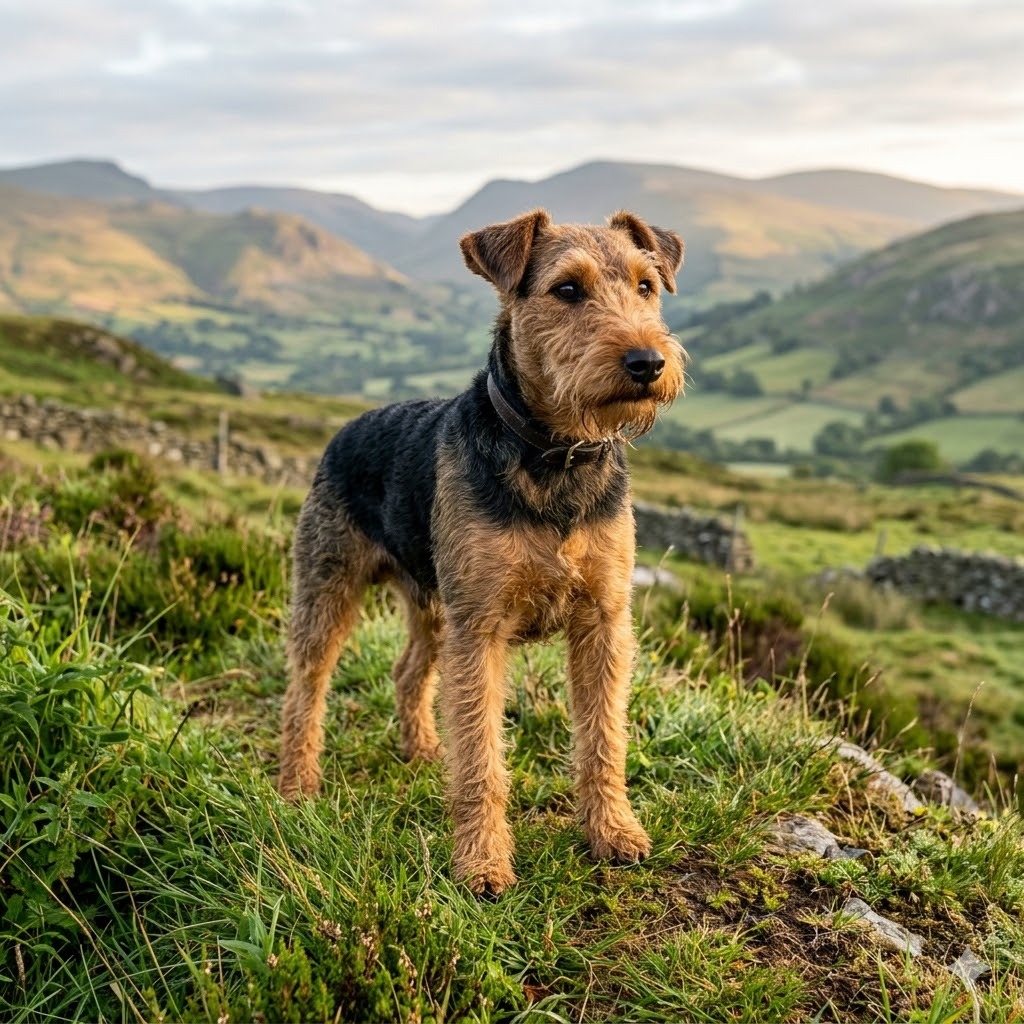
The Welsh Terrier is a compact, black-and-tan working terrier that looks like a scaled-down Airedale - the same sculpted, wiry-coated, square outline in a handier size.
🗓️ Last reviewed: July 2026
Overview
The Welsh Terrier is a compact, black-and-tan working terrier that looks like a scaled-down Airedale - the same sculpted, wiry-coated, square outline in a handier size. Happy, confident, and endlessly game, it is a true all-rounder: spirited enough to have hunted fox, otter, and badger in the Welsh hills, yet biddable and steady enough to make a delightful family dog. Adults stand up to about 39 cm at the shoulder and weigh roughly 9-10 kg. Cheerful, alert, and full of terrier fire without the sharp edges, the Welsh is often praised as one of the most even-tempered members of the group.
History & Origins
The Welsh Terrier is one of the oldest terrier breeds native to Wales, developed to hunt fox, otter, and badger in the rugged Welsh countryside. It descends from the old rough-coated black-and-tan terrier of Britain, a foundational working type that also stands behind several other terrier breeds. For generations these hardy dogs worked the hills, going to ground after quarry and holding their own against tough opponents.
In the 19th century the breed was standardised and shown, and it appeared under several names before "Welsh Terrier" was settled. The Kennel Club recognised it in the late 1800s, and the American Kennel Club registered the breed in 1888. Its close resemblance to the Airedale and Lakeland Terriers reflects shared black-and-tan working ancestry. Although never the most numerous breed, the Welsh Terrier has enjoyed steady popularity as a smart, sound companion, and it has appeared in the show ring at the highest level, including top wins at major dog shows.
Appearance
A compact, square, well-balanced terrier that closely resembles a small Airedale. Adults stand up to about 39 cm (15 in) at the shoulder and weigh roughly 9-10 kg (20-22 lb). The outline is neat and workmanlike, with good bone, a level topline, and an alert, confident carriage.
Key features:
- Coat: hard, wiry, and dense double coat that is abundant and weather-resistant, lying close over a softer undercoat.
- Colour: the classic black-and-tan (or grizzle-and-tan) pattern, with a black or grizzle "jacket" over the back and rich tan on the head, legs, and underside.
- Head: rectangular and Airedale-like, with a strong muzzle, neat folded ears, and a longer beard and eyebrows framing a keen expression.
- Eyes: small, dark, almond-shaped, alert and intelligent.
- Ears: small, V-shaped, folded forward.
- Tail: set high and carried upright, traditionally docked where permitted, otherwise natural.
The overall impression is of a tidy, sturdy, black-and-tan terrier built for real work.
Temperament & Character
The Welsh Terrier is happy, confident, and even-tempered - generally regarded as one of the steadier, more biddable terriers. It is spirited and full of energy, always ready for a game or an adventure, yet less scrappy and excitable than some of its cousins. This balance of terrier fire and good sense is a large part of the breed's appeal.
Affectionate and people-loving, the Welsh bonds closely with its family and enjoys being involved in everything. It is playful and robust, usually excellent with children who treat it well, and it makes a cheerful, alert companion. As a watchdog it is quick to notice and announce visitors, though it is friendly rather than aggressive toward people.
True to its heritage, the Welsh Terrier has a strong prey drive and a taste for digging and chasing. It can be independent and self-assured, with a stubborn streak, but it is more responsive to training than many terriers. Early socialisation helps it live comfortably with other dogs, while small pets may still trigger the hunting instinct.
Care
Coat & Grooming
The hard, wiry double coat sheds very little and is often described as low-shedding, but it needs regular maintenance. Brush a couple of times a week to keep it clean and free of tangles, giving extra attention to the beard, eyebrows, and leg furnishings. To keep the coat harsh and correctly coloured, it should be hand-stripped several times a year rather than clipped, since clipping softens the texture and mutes the black-and-tan.
Bathe only when necessary, as the coat repels dirt. Clean the ears regularly, trim the nails every few weeks, and brush the teeth several times a week to protect dental health.
Exercise & Activity Needs
Fairly high for its size. A Welsh Terrier needs around 60 minutes of activity daily - brisk walks, energetic play, and a chance to explore. They are athletic and enjoy fetch, agility, terrier sports such as earthdog and barn hunt, and secure off-lead runs.
Because of the prey drive, they should be kept on lead near roads and wildlife, and gardens must be securely fenced against determined digging and climbing. Mental stimulation is as important as physical exercise; training games, puzzle feeders, and scent work keep this bright, busy dog happy and help prevent boredom-related digging or barking.
Health & Lifespan
Average lifespan is 12-15 years - a robust and generally healthy breed.
Common concerns:
- Patellar luxation - slipping kneecaps.
- Hip dysplasia.
- Glaucoma, lens luxation, and other eye conditions.
- Hypothyroidism.
- Allergies and skin conditions.
- Epilepsy in some lines.
Responsible breeders screen breeding stock for eye and joint issues. Keeping the dog lean, well exercised, and dentally healthy supports a long, active life.
Feeding & Nutrition
Adults typically eat about 1-1½ cups of quality food per day, split into two meals, adjusted to size and activity level. The Welsh Terrier is active and holds condition well, but like most terriers it can gain weight if overfed, so portions should be measured and treats limited.
A complete diet suited to the breed's size and life stage works well. Fresh water should always be available, and treats are best kept for training rather than free feeding. Monitoring body condition and adjusting food to exercise keeps the dog trim and protects its joints.
Pros & Cons
Pros
- Happy, confident, and even-tempered for a terrier.
- Smart and more biddable than many terriers.
- Wiry coat sheds very little.
- Sturdy and playful; good with respectful children.
- Athletic all-rounder, long-lived and healthy.
Cons
- Strong prey drive and love of digging.
- Coat needs regular grooming and periodic hand-stripping.
- Energetic; needs a good hour of activity daily.
- Independent streak can show as stubbornness.
- Not reliably safe off-lead near wildlife.
Best Suited For
- Active individuals, couples, and families with children.
- Owners wanting a smart, sound, spirited terrier.
- Homes with a securely fenced garden.
- People happy to provide daily exercise, training, and grooming.
Not suited for sedentary owners, homes with free-roaming small pets, gardeners protective of their beds, or anyone unwilling to keep up with an energetic, occasionally stubborn terrier.
Welsh Terrier puppy growth chart
A typical growth curve for a medium breed like the Welsh Terrier, estimated from its adult weight of 9-10 kg. Puppies vary with sex, genetics and diet, so treat this as a guide - for your own puppy, use the puppy weight predictor.
| Age | Typical weight | % of adult |
|---|---|---|
| 2 mo | 2.4-2.7 kg | 27% |
| 3 mo | 3.6-4 kg | 40% |
| 4 mo | 4.5-5 kg | 50% |
| 6 mo | 6.1-6.8 kg | 68% |
| 9 mo | 7.7-8.5 kg | 85% |
| 12 mo | 8.7-9.7 kg | 97% |
| Adult | 9-10 kg | 100% |
Welsh Terrier - frequently asked questions
Is a Welsh Terrier just a small Airedale?
They look very similar and share black-and-tan working ancestry, but they are distinct breeds. The Welsh Terrier is smaller and was developed separately in Wales, though the family resemblance is unmistakable.
Are Welsh Terriers good family dogs?
Yes. They are among the more even-tempered and biddable terriers, playful and sturdy with respectful children, and they bond closely with their families, making them a popular all-round companion.
Do Welsh Terriers shed much?
Very little. The hard, wiry coat is low-shedding, but it needs regular brushing and hand-stripping several times a year to keep its correct texture and colour.
Do Welsh Terriers bark a lot?
They are alert and will bark to announce visitors and unusual events, but they are not typically excessive barkers. Adequate exercise and mental stimulation keeps noise in check.
Are Welsh Terriers easy to train?
Compared with many terriers, yes. They are intelligent and fairly biddable, responding well to positive, consistent, reward-based training, though their independent streak still calls for patience.
🧠 Test yourself: guess the dog
Three clues from our quiz bank, each about another of our dogs. Can you name them?
Clue 1.A robust water dog from a seafaring nation, this breed was nearly extinct before a 20th-century revival saved it.
It's the Portuguese Water Dog - read the full profile →
Clue 2.Once called the 'poor man's racehorse,' this slender sighthound was raced and used for hunting rabbits in English mining towns.
It's the Whippet - read the full profile →
Clue 3.This low-slung herding dog with a famously docked or naturally short tail was the beloved breed of Queen Elizabeth II.
It's the Pembroke Welsh Corgi - read the full profile →
💛 Adoptable Welsh Terriers near you
Real dogs of this breed (and close mixes) waiting in shelters and rescues right now, live from Petfinder. We have no affiliation and earn nothing - if someone catches your eye, the link goes straight to their shelter. New to adopting? Start with our adoption guide.
Widget not loading (some ad-blockers hide it)? Search directly on petfinder.com.