Lakeland Terrier
The Lakeland Terrier is a small, sturdy, hardy working terrier from the fell country of England's Lake District, bred to go to ground after foxes in rough, mountainous terrain.
🗓️ Last reviewed: July 2026
Overview
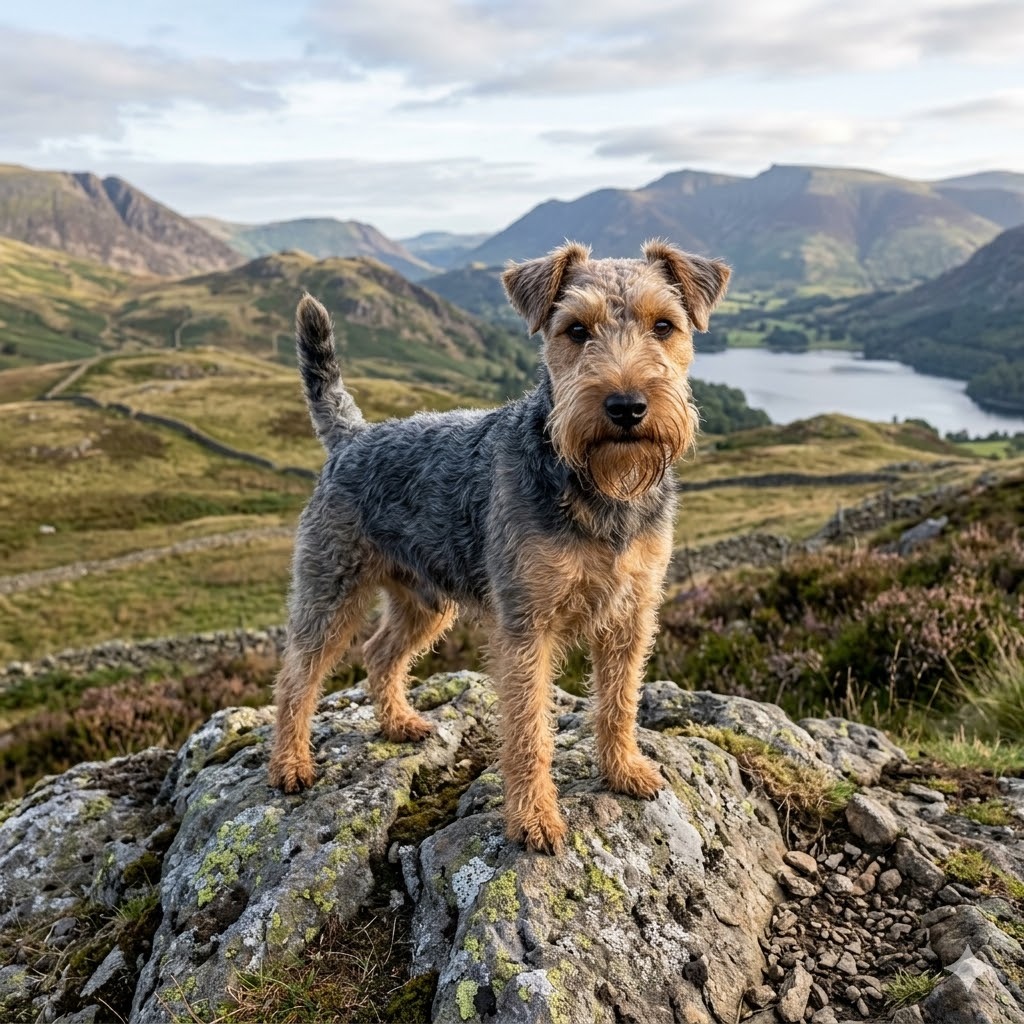
The Lakeland Terrier is a small, sturdy, hardy working terrier from the fell country of England's Lake District, bred to go to ground after foxes in rough, mountainous terrain. Confident, cocky, and tireless, it packs enormous determination into a compact frame - a bold little digger and hunter with boundless energy. Its wiry, weatherproof coat is traditionally hand-stripped, and its spirited, self-assured character makes it a lively, entertaining companion for owners who can match its drive. Feisty and often reactive with other dogs, the Lakeland is all terrier in a tidy package. Adults typically weigh 7-8 kg (15-17 lb).
History & Origins
The Lakeland Terrier is one of the oldest working terrier breeds in England, developed in the fell country of the Lake District in the north-west. Hill farmers needed a small, game terrier that could follow foxes into rocky dens and dispatch them, protecting lambs from predation. The dog had to be small enough to squeeze into tight underground earths yet tough and tireless enough to work all day over harsh mountain ground.
The breed worked alongside foxhound packs in the fells, running with the hounds and then going to ground when the fox took cover. This demanding role shaped a compact, athletic, fearless terrier with a weatherproof coat and inexhaustible stamina. Various local strains contributed to the breed, which shares ancestry with the Border Terrier and other northern working terriers.
The Lakeland Terrier Association formed in the early 20th century, and the breed gained Kennel Club recognition in the 1920s, with the AKC following in 1934. Though it became a successful show terrier - even winning Best in Show at major events - the Lakeland has kept its working spirit and gameness intact.
Appearance
Small, square, and sturdy with a smart, upstanding, workmanlike outline. Adults stand around 33-37 cm (13-15 in) at the shoulder and weigh about 7-8 kg (15-17 lb), with a build that is compact but athletic and free-moving.
Key features:
- Coat: dense, wiry, and weatherproof with a hard outer coat and a softer undercoat.
- Colour: several accepted colours including blue, black, liver, red, wheaten, and grizzle, sometimes with a saddle marking.
- Head: rectangular and well-balanced with a strong muzzle and a characteristic beard and eyebrows.
- Eyes: small, dark, and full of keen expression.
- Ears: small, V-shaped, folding forward.
- Tail: traditionally docked and carried gaily; natural tails common where docking is banned.
Temperament & Character
Confident, cocky, and self-assured, the Lakeland Terrier carries itself with a jaunty, bold air that reflects its game working heart. It is intelligent, alert, and endlessly curious, with a bold streak that makes it fearless well beyond its size. With family it is affectionate, playful, and lively, thriving on activity and involvement.
The breed is a tireless digger and hunter, driven by strong instincts to chase, dig, and pursue anything that moves. Prey drive is high; small pets and wildlife trigger the hunting response, and a Lakeland will happily excavate a garden in pursuit of scent. It is alert and vocal, making a keen watchdog quick to announce visitors.
Like most terriers, the Lakeland can be feisty and reactive with other dogs and may not back down from a challenge. It is generally good with children in its own family when raised together, though its bounce and energy suit older kids. Independent and strong-minded, the Lakeland is a busy, spirited, entertaining dog that never runs out of enthusiasm.
Care
Coat & Grooming
The Lakeland's dense, wiry coat is weatherproof and low-shedding when maintained properly. For correct texture and colour it should be hand-stripped - the dead hairs plucked out - two to three times a year. Clipping softens the coat and dulls the colour, so it is discouraged for a dog kept in working trim, though some pet owners choose it for convenience.
Between strippings, brush weekly to remove loose hair and keep the beard, legs, and eyebrows tidy. The beard collects food and moisture and needs regular cleaning. Bathe only when necessary to preserve coat texture. Clean ears weekly, trim nails every few weeks, and brush teeth several times a week.
Exercise & Activity Needs
High for such a small dog. The Lakeland is a tireless working terrier that needs a good hour or more of vigorous daily exercise - brisk walks, running, and active play - plus mental stimulation to satisfy its busy mind. An under-exercised Lakeland becomes bored, noisy, and destructive, and its love of digging can wreck a garden.
The breed excels at earthdog trials, agility, and terrier racing, and enjoys hiking and games of fetch. Given its high prey drive and dog-reactivity, off-lead exercise is safest in secure, enclosed areas. A securely fenced garden is important, as Lakelands will dig under or scramble over inadequate boundaries in pursuit of scent.
Health & Lifespan
Average lifespan is 12-15 years. The Lakeland Terrier is a robust, hardy breed with relatively few inherited health problems.
Common concerns:
- Lens luxation - a hereditary eye condition seen in some terrier lines.
- Cataracts and other eye conditions.
- Legg-Calve-Perthes disease - a hip joint condition affecting small breeds.
- Von Willebrand disease - a bleeding disorder in some lines.
- Distichiasis - abnormal eyelash growth causing eye irritation.
Overall one of the healthier, hardier terrier breeds when sourced from health-tested parents.
Feeding & Nutrition
Adults typically eat around half to one cup of quality dry food per day, split into two meals, adjusted for size and activity. Despite its small size the Lakeland is highly active and burns energy readily, but it can gain weight if overfed and under-exercised, so portions should be measured.
A balanced, good-quality diet with adequate protein supports the breed's muscular, athletic build and weatherproof coat. Keep treats modest, particularly during training, and ensure fresh water is always available. There are no breed-wide dietary restrictions.
Pros & Cons
Pros
- Compact, sturdy, and hardy with a long lifespan.
- Bold, confident, and full of character.
- Low-shedding wiry coat when maintained.
- Athletic and versatile working terrier.
- Affectionate and playful with family.
Cons
- High prey drive - risky with cats and small pets.
- Feisty and reactive with other dogs.
- Tireless digger - can wreck a garden.
- Stubborn and independent - not the easiest to train.
- Needs regular hand-stripping and plenty of exercise.
Best Suited For
- Active owners who enjoy a bold, busy small terrier.
- Households able to meet high exercise and stimulation needs.
- Homes with a securely fenced, terrier-proof garden.
- Owners wanting a plucky watchdog and lively companion.
- Families with older children rather than toddlers.
Not suited for homes with cats or small pets, owners wanting a calm lap dog, those unwilling to manage digging and dog-reactivity, or people expecting an easy, biddable beginner's breed.
Lakeland Terrier puppy growth chart
A typical growth curve for a toy breed like the Lakeland Terrier, estimated from its adult weight of 7-8 kg. Puppies vary with sex, genetics and diet, so treat this as a guide - for your own puppy, use the puppy weight predictor.
| Age | Typical weight | % of adult |
|---|---|---|
| 2 mo | 2.3-2.6 kg | 33% |
| 3 mo | 3.2-3.6 kg | 45% |
| 4 mo | 3.9-4.4 kg | 55% |
| 6 mo | 5.3-6 kg | 75% |
| 9 mo | 6.7-7.6 kg | 95% |
| 12 mo | 7-8 kg | 100% |
| Adult | 7-8 kg | 100% |
Lakeland Terrier - frequently asked questions
Are Lakeland Terriers good with other dogs?
They can be feisty and reactive, like most terriers, and may not back down from a challenge. Early socialisation helps, but owners should manage introductions carefully and not assume the breed will happily share space with strange dogs.
Do Lakeland Terriers dig a lot?
Yes. Bred to go to ground after foxes, the Lakeland is a natural, enthusiastic digger. A secure, terrier-proof garden and constructive outlets like earthdog work help redirect the instinct away from the flower beds.
Do Lakeland Terriers shed much?
No - the wiry coat sheds very little when properly hand-stripped and maintained. It is not fully hypoallergenic, but shedding is minimal compared with most breeds.
Are Lakeland Terriers good family pets?
Yes, with their own family they are affectionate, playful, and lively, and good with older children raised alongside them. Their energy, boldness, and prey drive suit active households rather than quiet homes.
How much exercise does a Lakeland Terrier need?
A good hour or more of vigorous daily exercise plus mental stimulation. Despite its small size the Lakeland is a tireless working terrier, and without enough activity it becomes bored, noisy, and destructive.
🧠 Test yourself: guess the dog
Three clues from our quiz bank, each about another of our dogs. Can you name them?
Clue 1.This enormous, droopy-jowled mastiff is famed for a calm, affectionate temperament despite its intimidating bulk.
It's the English Mastiff - read the full profile →
Clue 2.Originally a German water retriever, this curly-coated dog comes in standard, miniature, and toy sizes and rarely sheds.
It's the Poodle (Standard, Miniature, Toy) - read the full profile →
Clue 3.This brachycephalic, fawn-or-brindle breed often shows a comically wrinkled forehead and a long, energetic puppyhood.
It's the Boxer - read the full profile →
💛 Adoptable Lakeland Terriers near you
Real dogs of this breed (and close mixes) waiting in shelters and rescues right now, live from Petfinder. We have no affiliation and earn nothing - if someone catches your eye, the link goes straight to their shelter. New to adopting? Start with our adoption guide.
Widget not loading (some ad-blockers hide it)? Search directly on petfinder.com.