Chinese Shar-Pei (Canis lupus familiaris)
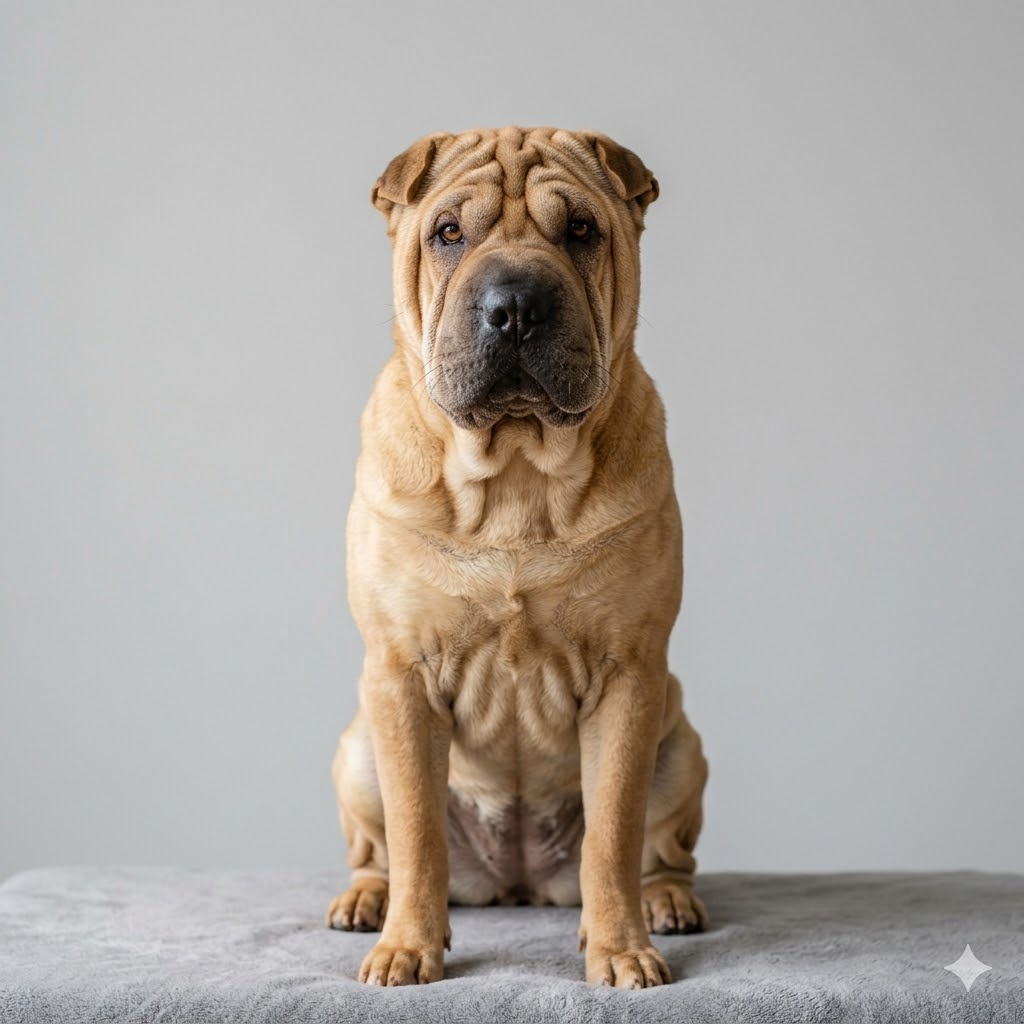
The Chinese Shar-Pei is an ancient Chinese breed famous for its deeply wrinkled skin, hippopotamus-like muzzle, small sunken eyes, and a uniquely harsh, sandpapery coat.
🗓️ Last reviewed: June 2026
Overview
The Chinese Shar-Pei is an ancient Chinese breed famous for its deeply wrinkled skin, hippopotamus-like muzzle, small sunken eyes, and a uniquely harsh, sandpapery coat. Calm, dignified, fiercely loyal, and notably independent, the Shar-Pei is a devoted guardian that bonds closely with its family while remaining aloof and watchful toward outsiders. Once listed as one of the rarest dog breeds in the world, it was saved from near-extinction in the twentieth century. Behind the charming wrinkles lies a serious, strong-willed dog with significant breed-specific health needs - a companion best suited to experienced, committed owners who understand both its character and its care requirements.
History & Origins
The Shar-Pei is an old Chinese breed, with evidence suggesting dogs of similar type existed in southern China for many centuries, possibly traced back to statues and references from the Han dynasty period. The name translates roughly as "sand skin," describing the breed's distinctive rough, prickly coat. Traditionally it was an all-purpose rural dog of the Chinese peasantry - used for guarding, hunting, herding, and, regrettably, fighting, with the loose skin thought to help it twist free in a struggle.
The breed's modern story is one of dramatic rescue. Political and economic upheaval in twentieth-century China devastated the dog population, and by the 1970s the Shar-Pei was on the brink of extinction. A Hong Kong breeder made a public appeal to dog lovers in the West to save the breed, and a small number of dogs were exported, principally to the United States. This tiny founding population, bred up rapidly to meet sudden popularity, is part of why the breed carries a relatively narrow genetic base and several inherited health concerns.
The American Kennel Club recognised the Chinese Shar-Pei in 1992. Today's Shar-Pei differs somewhat from the original Chinese type, with Western breeding tending to exaggerate the wrinkling and the padded muzzle - traits that contribute to some of the breed's health challenges.
Appearance
A medium-sized, compact, square, and sturdy dog with a distinctive profile unlike any other breed. Adults stand roughly 46-51 cm (18-20 in) and weigh about 18-29 kg (40-65 lb). The overall impression is of a solid, dignified, frowning dog.
Key features:
- Skin and wrinkles: loose, wrinkled skin, especially pronounced on the face and over the body in puppies; in many adults the wrinkling reduces to the head, neck, and shoulders, though heavily wrinkled lines remain very wrinkled.
- Coat: the hallmark harsh, straight, prickly coat that gives the breed its name; it comes in short "horse coat" and slightly longer "brush coat" lengths, both rough to the touch.
- Muzzle: the broad, padded "hippopotamus" muzzle, often with a slightly swollen appearance.
- Tongue: a blue-black tongue and dark mouth, a feature shared with the Chow Chow.
- Eyes: small, sunken, almond-shaped, giving a scowling expression (and sometimes partly obscured by surrounding skin).
- Ears: very small, triangular, set high and lying flat against the head.
- Tail: thick at the base, tapering, set very high and curled over the back.
Temperament & Character
The Shar-Pei is calm, confident, and dignified, with a strong sense of independence. It is devoted and affectionate with its own family - often forming a particularly close bond with one person - while remaining reserved, aloof, or suspicious toward strangers. This combination of loyalty and wariness makes it a naturally alert and effective guardian.
The breed is intelligent but strong-willed and not especially eager to please, which can read as stubbornness. Shar-Pei are typically quiet, clean, and dignified in the home, not given to needless fuss or excessive barking. They are also territorial and can be assertive with unfamiliar dogs, so calm, confident handling and thorough socialisation are essential.
Two points define daily life with the breed. First, its guarding instinct and reserve toward strangers mean early, consistent socialisation is non-negotiable to keep protectiveness measured rather than reactive. Second, the breed's stoic, independent nature means a Shar-Pei may not obviously show pain or illness, which - combined with its many health predispositions - makes attentive, proactive owners essential.
Care
Coat & Grooming
The coat itself is low-maintenance - a weekly brush with a rubber curry or short bristle brush removes loose hair, and the Shar-Pei sheds moderately, more heavily during seasonal changes. The harsh coat keeps fairly clean, so frequent bathing is unnecessary and can irritate the skin.
The wrinkles, however, demand real attention. The deep skin folds - especially on the face and around the muzzle and neck - trap moisture, food, and debris, creating a breeding ground for yeast and bacteria. Wrinkles must be wiped clean and, crucially, dried thoroughly on a regular basis to prevent skin-fold dermatitis and infection. After baths, the folds must be dried completely. Clean the small, tight ears carefully and regularly (the narrow ear canals predispose to infection), trim nails, and brush the teeth several times a week.
Exercise & Activity Needs
The Shar-Pei has moderate exercise needs - a couple of daily walks plus some play and mental stimulation usually satisfy an adult. It is not a high-octane breed; it tends toward a calm, measured temperament and is content with a reasonable, consistent routine rather than intense activity.
Heat tolerance is a genuine concern. The padded muzzle, small nostrils, and dense skin can make breathing and cooling less efficient, so exercise should be limited in hot, humid conditions and timed for cooler parts of the day, with shade and water always available. Regular moderate activity also helps keep the breed at a healthy weight, which is important for its joints and overall health.
Health & Lifespan
Average lifespan is 8-12 years. The Shar-Pei has more breed-specific health concerns than many breeds, largely owing to its conformation and narrow founding gene pool:
- Familial Shar-Pei Fever (FSF) - a breed-specific inflammatory condition causing recurrent fevers and swollen, painful hocks, which can lead to a serious complication called amyloidosis (organ damage from protein deposits). This is one of the most important conditions to discuss with any breeder.
- Skin-fold dermatitis and skin infections - the wrinkles trap moisture and are highly prone to yeast and bacterial infection.
- Entropion - the eyelids roll inward, scraping the eye; very common in this breed and often requiring surgical correction, sometimes in young puppies.
- Ear infections - the very narrow ear canals are prone to trouble.
- Hip and elbow dysplasia and patellar luxation.
- Allergies and atopy - common and often lifelong.
- Hypothyroidism and certain other conditions.
Feeding & Nutrition
An adult Shar-Pei typically eats around 1½-2½ cups of quality dry food per day, divided into two meals and adjusted to size, age, and activity. Because the breed is prone to skin problems and food-related allergies, diet quality matters: many Shar-Pei do best on a limited-ingredient or carefully chosen formula, and a vet may recommend specific protein sources or skin-supportive diets for individual dogs.
Feed two measured meals rather than free-feeding, keep treats modest, and maintain a lean body condition, since excess weight worsens joint problems and heat intolerance. Provide constant fresh water - important for a breed that cools itself less efficiently - and introduce any dietary changes gradually, watching for signs of food sensitivity such as itching, ear inflammation, or digestive upset.
Pros & Cons
Pros
- Distinctive, unmistakable appearance.
- Calm, dignified, and quiet in the home.
- Devoted and loyal to its family.
- A naturally alert, effective guardian.
- Low-maintenance coat (brushing only).
Cons
- Numerous serious breed-specific health problems.
- Wrinkles require constant cleaning and drying to prevent infection.
- Aloof, strong-willed, and not eager to please - harder to train.
- Can be territorial and assertive with other dogs.
- Heat-sensitive and best suited to experienced owners.
Best Suited For
- Experienced, committed owners who understand the breed's health needs.
- Calm households able to provide consistent routine and leadership.
- Owners wanting a dignified, loyal companion and capable watchdog.
- People willing to budget for, and stay vigilant about, significant veterinary care.
- Cooler climates, or homes that can reliably keep the dog cool.
Not suited for first-time owners, anyone unable to commit to daily wrinkle and skin care, households with a tight veterinary budget, hot climates without air conditioning, or owners wanting an outgoing, biddable, sociable-with-all dog.
Chinese Shar-Pei (Canis lupus familiaris) puppy growth chart
A typical growth curve for a large breed like the Chinese Shar-Pei (Canis lupus familiaris), estimated from its adult weight of 18-29 kg. Puppies vary with sex, genetics and diet, so treat this as a guide - for your own puppy, use the puppy weight predictor.
| Age | Typical weight | % of adult |
|---|---|---|
| 2 mo | 4-6.4 kg | 22% |
| 3 mo | 5.9-9.6 kg | 33% |
| 4 mo | 7.7-12.5 kg | 43% |
| 6 mo | 10.8-17.4 kg | 60% |
| 9 mo | 14.4-23.2 kg | 80% |
| 12 mo | 16.6-26.7 kg | 92% |
| Adult | 18-29 kg | 100% |
Chinese Shar-Pei (Canis lupus familiaris) - frequently asked questions
Are Chinese Shar-Pei good with children?
They can be loyal and gentle with children in their own family when well-socialised, but their reserved, dignified nature means they tolerate rough handling poorly. They are generally better suited to homes with respectful older children, with supervision always advised.
Do the wrinkles need special care?
Yes - this is essential. The skin folds trap moisture, food, and debris and are highly prone to yeast and bacterial infection. Wrinkles must be wiped clean and dried thoroughly on a regular basis, and dried completely after every bath.
What is Shar-Pei Fever?
Familial Shar-Pei Fever is a breed-specific inflammatory condition causing recurrent fevers and swollen, painful hock joints. It can lead to amyloidosis, a serious build-up of protein that damages organs. It is one of the most important health issues to discuss with a breeder and monitor with a vet.
Are Shar-Pei aggressive?
They are not inherently aggressive but are naturally reserved, territorial, and protective, and can be assertive with unfamiliar dogs. Early socialisation and calm, confident handling are essential to keep these instincts balanced.
Why does the Shar-Pei have a blue tongue?
The blue-black tongue and dark mouth tissue are a natural feature of the breed, shared with the Chow Chow. It is normal and present from a young age.
🧠 Test yourself: guess the dog
Three clues from our quiz bank, each about another of our dogs. Can you name them?
Clue 1.Developed in southern Africa from native dogs and European breeds, this muscular hunter is nicknamed the lion dog.
It's the Rhodesian Ridgeback - read the full profile →
Clue 2.Named for a German town, this stocky working dog later became a popular police and protection breed.
It's the Rottweiler - read the full profile →
Clue 3.A diminutive companion from northern England whose floor-length coat is often tied up in a bow on top of the head.
It's the Yorkshire Terrier - read the full profile →
💛 Adoptable Chinese Shar-Pei (Canis lupus familiaris)s near you
Real dogs of this breed (and close mixes) waiting in shelters and rescues right now, live from Petfinder. We have no affiliation and earn nothing - if someone catches your eye, the link goes straight to their shelter. New to adopting? Start with our adoption guide.
Widget not loading (some ad-blockers hide it)? Search directly on petfinder.com.