Apistogramma
Apistogramma is a large genus of South American dwarf cichlids, with over 90 described species and many undescribed forms still finding their way into the hobby.
🗓️ Last reviewed: July 2026
Overview
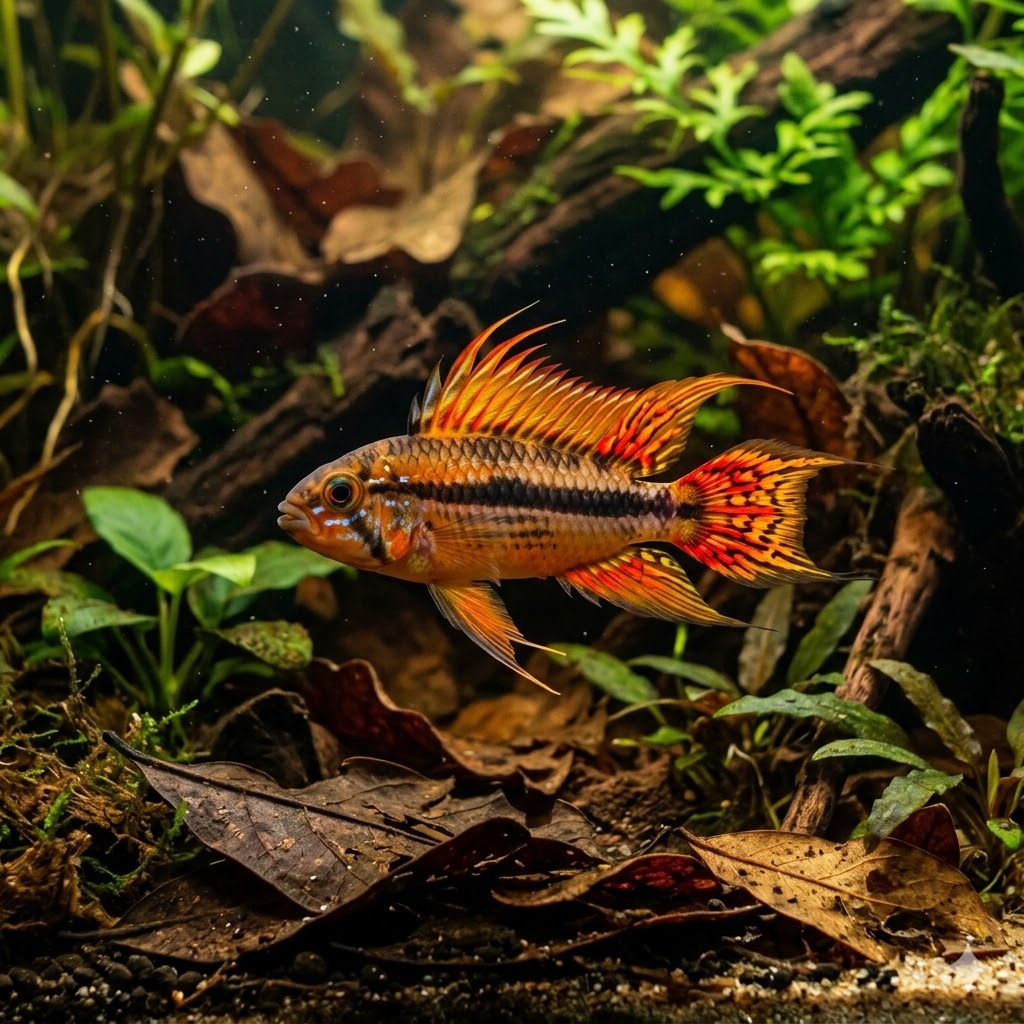
Apistogramma is a large genus of South American dwarf cichlids, with over 90 described species and many undescribed forms still finding their way into the hobby. Popular for their intense colour and complex, almost mammal-like behaviour, these fish stay small - most adults reach only 5-8 cm - which makes them one of the very few cichlids genuinely suited to a peaceful planted community. Males are the showpieces, flashing yellows, blues, reds and bold fin extensions during courtship and territorial display, while females run the nursery. Watching a pair set up home, spawn and shepherd a cloud of fry around the tank is one of the great small-scale spectacles in freshwater fishkeeping. They reward patience and good water more than money spent on equipment.
Natural History
Apistogramma species come from the soft, acidic, tannin-stained waters of the Amazon basin and surrounding river systems across Peru, Brazil, Colombia, Bolivia and beyond. They live among leaf litter, submerged roots and dense marginal vegetation in shallow, warm, dimly lit water, where they feed on tiny invertebrates picked and sifted from the substrate. In the wild they are cave spawners, using hollows under wood, rock and fallen leaves to hide their eggs from predators, and they show a strong division of labour - the female tends the eggs and fry closely while the male patrols and defends the wider territory. Many species are harem breeders, with one male holding a stretch of stream containing several females and their separate broods. Popular aquarium types include Apistogramma cacatuoides (the cockatoo cichlid), Apistogramma agassizii, Apistogramma borellii and Apistogramma trifasciata, of which the cacatuoides is generally the hardiest and best suited to beginners because it has been captive-bred for many generations.
Appearance
Small, laterally compressed cichlids with pointed heads and remarkably expressive fins. Males are larger and far more colourful, often carrying elongated dorsal spikes, trailing extended tail lobes and vivid patterning in yellow, orange, red and iridescent blue, with the exact pattern varying enormously from species to species. Females are smaller, rounder and mostly buttery yellow, but transform into intense gold with bold black markings when guarding eggs or fry - a warning signal to anything that comes near. Body language is a big part of their charm: they signal with flared fins, colour changes and little dashing movements. Adult size is typically 5-8 cm, with males at the larger end.
Tank Size & Setup
- Single pair: minimum tank size around 60 litres.
- Larger community or multiple pairs: 100 litres or more.
Provide plenty of cover - driftwood, leaf litter, tangled roots and dense planting all help these naturally shy fish settle and show colour. Offer several potential spawning caves, such as small clay pots laid on their side or half coconut shells, so a pair can choose and claim a territory of their own. A soft sandy substrate suits their natural sifting behaviour and lets them forage as they would in the wild. Gentle filtration is important, because Apistogramma dislike strong current, and subdued lighting broken up by floating plants helps them feel secure. Because a spawning pair will claim a corner of the tank, giving them enough footprint and enough visual barriers keeps the peace with tank-mates and lets shyer females hold their own.
Water Parameters
- Temperature: 25-29°C.
- pH: 5.5-7.0 - soft, slightly acidic water is strongly preferred.
- Ammonia 0, nitrite 0, nitrate low.
Many wild-type Apistogramma need genuinely soft, acidic water to thrive and, especially, to breed successfully, since hard alkaline water can prevent eggs from developing. Tank-raised strains such as cacatuoides tolerate a wider range and are the sensible choice for anyone with hard tap water. Botanicals, alder cones and almond leaves that release tannins mimic their natural blackwater habitat, gently lower pH and help suppress bacteria. Whatever the exact numbers, stability and cleanliness matter enormously to this genus.
Diet
Micro-predator. Apistogramma relish small live and frozen foods - baby brine shrimp, daphnia, cyclops, microworms and finely chopped bloodworm all trigger natural foraging and hunting behaviour. High-quality micro-pellets and crushed flake can form the everyday staple, but the more live and frozen food they receive, the better their colour, condition and breeding readiness. Frequent small feedings suit their picking, sifting feeding style far better than one large meal. Conditioning a pair for spawning is largely a matter of clean water and generous portions of protein-rich live food over a week or two.
Health & Lifespan
Average lifespan is 3-5 years.
Common concerns:
- Sensitivity to poor water quality - they dislike high nitrate, dissolved waste and unstable parameters more than most community fish.
- Bacterial infections and fin issues in dirty or overcrowded tanks.
- Internal parasites, especially in wild-caught specimens, which may need careful quarantine and treatment.
- Stress from aggressive tank-mates or too much bright open space, which can cause them to hide, fade and stop eating.
Pros & Cons
Pros: small size, stunning male colour, fascinating breeding behaviour, suited to peaceful planted tanks. Cons: need soft acidic water for best results, shy and easily bullied, sensitive to water quality, breeding pairs defend a small territory.
Apistogramma - frequently asked questions
How big do Apistogramma get?
Most species reach 5-8 cm, with males larger than females.
Are they aggressive?
Generally peaceful, but a spawning pair will defend a small area around their cave.
Do they need soft water?
Wild-type species do best in soft, acidic water. Tank-raised strains like cacatuoides are more forgiving.
Can they live in a community tank?
Yes, with small peaceful tank-mates such as tetras and small catfish. Avoid boisterous or fin-nipping species.
Are they good for beginners?
Cockatoo cichlids (cacatuoides) are a good first dwarf cichlid, being hardy and forgiving; wild-type species with strict water demands suit more experienced keepers.
How do I tell males from females?
Males are larger, more colourful and carry extended, pointed fins, while females are smaller, rounder and turn bright golden-yellow with dark markings when in breeding condition.
🧠 Test yourself: guess the fish
Three clues from our quiz bank, each about another of our fish. Can you name them?
Clue 1.Contrary to popular myth, this hardy pet has a memory spanning months and should never be kept in a tiny bowl.
It's the Goldfish - read the full profile →
Clue 2.This category of hardy tropical fish includes the swordtail and platy and breeds readily in home tanks.
It's the Molly / Platy / Swordtail (Livebearers) - read the full profile →
Clue 3.Originally from South America, this little livebearer was spread worldwide to eat mosquito larvae.
It's the Guppy - read the full profile →