Goldfish
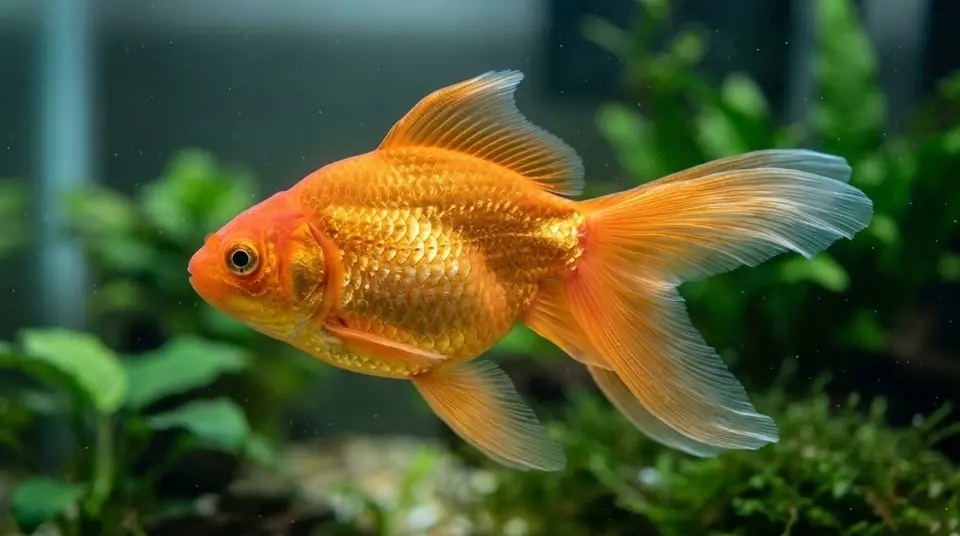
The goldfish (Carassius auratus) is one of the oldest domesticated fish in the world - selectively bred in China for over 1,000 years from the wild Prussian carp.
Updated: October 2026
Overview
The goldfish (Carassius auratus) is one of the oldest domesticated fish in the world - selectively bred in China for over 1,000 years from the wild Prussian carp. Despite the pet-shop image of goldfish in bowls, the species grows to 15-35 cm depending on type and lives 10-20+ years when properly kept.
Natural History
Wild Prussian carp native to East Asia. Domestic goldfish exist in two broad categories:
- Common/Comet/Shubunkin goldfish - slim-bodied, pond-suitable, grow 25-35 cm.
- Fancy goldfish (fantail, ryukin, oranda, telescope, ranchu, etc.): round-bodied, slower, prone to swim bladder issues.
Appearance
Common: orange, white, yellow, black, calico. Slim body 25-35 cm. Fancy: rounded body, often double tails, "wen" growths (hood), telescoping eyes. Up to 20 cm.
Tank Size & Setup
- Single common goldfish: minimum 75-110 L (20-30 gallon) tank. Pond preferred long-term.
- Single fancy goldfish: minimum 75 L; 110 L+ for two.
Strong filtration - goldfish produce enormous waste.
The "goldfish in a bowl" image is the cause of countless premature deaths. Bowls are inhumane housing.
Water Parameters
- Temperature: 10-21°C, by the RSPCA, so a heater is not normally needed.
- pH: 7.0-8.4.
- Ammonia 0, nitrite 0, nitrate <40 ppm.
Diet
Omnivore. Quality goldfish pellets, sinking gel food, blanched vegetables (peas help with swim bladder issues), occasional bloodworms.
Health & Lifespan
10-20+ years (some over 40).
Common concerns:
- Swim bladder disorder - especially in fancy varieties.
- Ammonia/nitrite poisoning from uncycled or overstocked tanks.
- Ich (white spot).
- Fin rot.
- Dropsy.
Pros & Cons
Pros: long-lived, hardy, colourful, peaceful. Cons: very high waste production; large adult size; bowls and small tanks are inadequate.
Everyday gear for aquariums
Links go to Amazon or a partner brand's own store and may earn us a commission at no extra cost to you. As an Amazon Associate we earn from qualifying purchases. An Amazon link leads to a type of gear and you choose the exact product; a card that names a store leads to that partner's own shop.
Goldfish - frequently asked questions
How do I care for a goldfish?
The RSPCA's basics: at least 60 litres of water per goldfish, in a filtered tank (mechanical and biological filtration) away from sunlight and radiators; tap water treated with a dechlorinator or left standing for 24 hours, and new water brought to the tank's temperature; 10-21°C, so a heater is not normally needed; and a light cycle of 8-10 hours (RSPCA). Feed two or three times a day; goldfish also like chopped vegetables such as peas and spinach. They do not need other fish for company and can live up to 25 years.
Can goldfish live in bowls?
No. They require filtered tanks. Bowls cause early death.
How big do they get?
Common: 25-35 cm. Fancy: 15-20 cm. Both larger than pet shops suggest.
How long do they live?
10-20+ years properly kept; documented over 40.
Pond or tank?
Common varieties thrive in outdoor ponds. Fancy varieties usually need indoor tanks.
Cold water or tropical?
Coldwater: the RSPCA gives 10-21°C, so a heater is not normally needed; if you worry about temperature swings, set one at the lower limit of that range.
Sources
Sources this profile draws on, as linked in the text:
- RSPCA(rspca.org.uk)
Test yourself: guess the fish
Three clues from our quiz bank, each about another of our fish. Can you name them?
Clue 1.Originally from South America, this little livebearer was spread worldwide to eat mosquito larvae.
It's the Guppy - read the full profile →
Clue 2.A peaceful nano-fish best kept in large shoals, it glows electric blue and crimson under subdued aquarium lighting.
It's the Cardinal Tetra - read the full profile →
Clue 3.Prized for flowing, jewel-toned fins, the male of this species builds a floating nest of bubbles to cradle its eggs.
It's the Betta (Siamese Fighting Fish) - read the full profile →