Electric Blue Acara
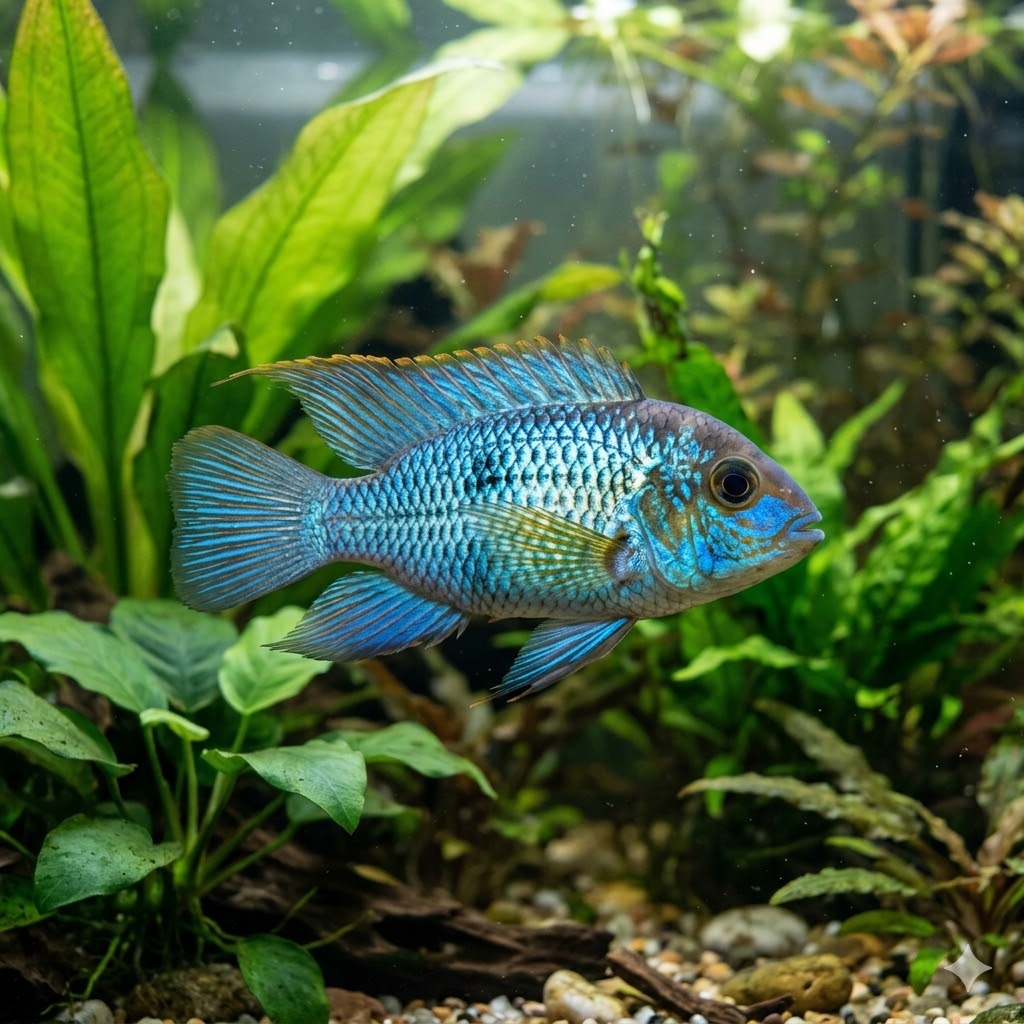
The electric blue acara is a stunning man-made colour form of the blue acara (Andinoacara pulcher), selectively bred to shimmer an intense metallic blue from nose to tail.
🗓️ Last reviewed: July 2026
Overview
The electric blue acara is a stunning man-made colour form of the blue acara (Andinoacara pulcher), selectively bred to shimmer an intense metallic blue from nose to tail. Combining eye-catching colour with a relatively calm temperament and genuinely easy care, it has become one of the most popular "beginner cichlids" for keepers who want a centrepiece fish with real presence but without the aggression or bulk of many larger species. Adults reach around 15-20 cm and make an ideal introduction to keeping New World cichlids. Because it takes the placid, hardy nature of the wild blue acara and dresses it in electric colour, it manages to be both a showstopper and a low-drama fish, which is a rare and welcome combination in the cichlid world.
Natural History
The parent species, the blue acara, is native to the slow rivers, streams and still waters of northern South America, including Venezuela, Colombia, Panama and Trinidad. There it lives among roots and rockwork in warm, often turbid water, sifting the substrate for small invertebrates and spawning on cleaned flat surfaces as a devoted, protective parent. Both parents share guarding duties, defending eggs and fry from anything that comes near. The electric blue variant does not occur in the wild - it was developed and fixed in the aquarium trade over successive generations - but it retains the hardiness, adaptability and gentle disposition that made the wild form so well liked in the first place. That combination of good looks and easy temperament is exactly why the electric blue form spread so quickly through the hobby.
Appearance
A robust, oval-bodied cichlid glowing an even, vivid electric blue across the body and fins, frequently with lighter or pearly highlights around the face and gill covers. The intensity of colour is the whole appeal, catching the light with a metallic, almost neon sheen that no wild fish quite matches. Males tend to grow slightly larger and develop more pointed, sometimes trailing fin tips, while the sexes are otherwise fairly similar and can be tricky to tell apart until maturity. The colour deepens with good diet, clean water and confidence, so a settled, well-fed fish is far bluer than a stressed newcomer. Adult size is roughly 15-20 cm.
Tank Size & Setup
- Single fish or pair: minimum tank size around 150 litres.
- Community or larger display: 200 litres or more.
Provide a soft substrate for their natural sifting, along with driftwood, smooth rocks and caves for shelter and potential spawning sites. Robust or well-anchored plants work best, as acaras may dig gently around the base of decor, though they are far less destructive than many cichlids. Good filtration keeps their water clean, and a layout with open swimming space at the front and cover toward the back suits their calm, exploratory nature. A darker substrate and background help their blue colour stand out and make the fish feel secure enough to show it off.
Water Parameters
- Temperature: 24-28°C.
- pH: 6.5-7.5 - adaptable to a range of hardness.
- Ammonia 0, nitrite 0, nitrate low to moderate.
Electric blue acaras are tolerant of typical tap water conditions as long as it is clean and stable, which is a big part of why they suit newcomers to cichlids so well. They do not demand soft, acidic water or any special chemistry, and they respond to regular water changes and low nitrate with better colour and vigour.
Diet
Omnivore. Electric blue acaras accept quality cichlid pellets and flakes eagerly and thrive on a varied menu that includes frozen and live foods such as bloodworm, brine shrimp and earthworms, which they hunt enthusiastically along the bottom. A little vegetable matter helps round out the diet and aids digestion. Feeding varied, colour-enhancing foods keeps that trademark electric blue looking its best, while overfeeding should be avoided since these enthusiastic eaters will beg and gorge if allowed.
Health & Lifespan
Average lifespan is 8-10 years.
Common concerns:
- Sensitivity to poor water quality in overstocked or under-filtered tanks.
- Ich (white spot) in stressed or newly introduced fish.
- Bloat from overfeeding rich foods.
- Fin damage from boisterous or nippy tank-mates, which can spoil their flowing fins.
Pros & Cons
Pros: spectacular electric blue colour, relatively peaceful for a cichlid, hardy and adaptable, good beginner cichlid, rewarding parental behaviour. Cons: needs a fairly large tank, can be mildly territorial when breeding, may dig, and its bright colour comes from selective breeding rather than a wild form.
Electric Blue Acara - frequently asked questions
How big do electric blue acaras get?
Around 15-20 cm at maturity.
Are they aggressive?
They are among the more peaceful cichlids, though they can become territorial while breeding. They generally coexist well with suitable tank-mates.
Are they good for beginners?
Yes - hardy, adaptable and calm, they are one of the best cichlids for keepers new to larger New World species.
What tank-mates work?
Peaceful to semi-robust community fish of a similar size, such as larger tetras, rainbowfish and peaceful catfish. Avoid tiny fish that could be eaten and aggressive species.
Do they occur in the wild?
No - the electric blue form was developed in captivity from the wild blue acara and does not exist in nature. The wild blue acara is a more muted grey-blue fish.
How do I tell males from females?
It can be difficult until they mature. Males usually grow a little larger and develop more pointed, sometimes trailing dorsal and anal fins, while females tend to be slightly smaller and rounder, especially when carrying eggs.
🧠 Test yourself: guess the fish
Three clues from our quiz bank, each about another of our fish. Can you name them?
Clue 1.This tall, triangular freshwater fish from the Amazon basin swims with trailing fin filaments and is a graceful staple of community aquariums.
It's the Angelfish - read the full profile →
Clue 2.Popular with aquarists who ship dormant eggs by mail, the males of this fish are far flashier than females.
It's the Killifish - read the full profile →
Clue 3.This category of hardy tropical fish includes the swordtail and platy and breeds readily in home tanks.
It's the Molly / Platy / Swordtail (Livebearers) - read the full profile →