Why Dogs Get the Zoomies
Sudden bursts of tearing around the house or garden, often in the evening, after a bath or when you come home, are a normal way for many dogs to burn off energy. When they tend to happen, how to keep them safe, and the signs that are worth a call to your vet.
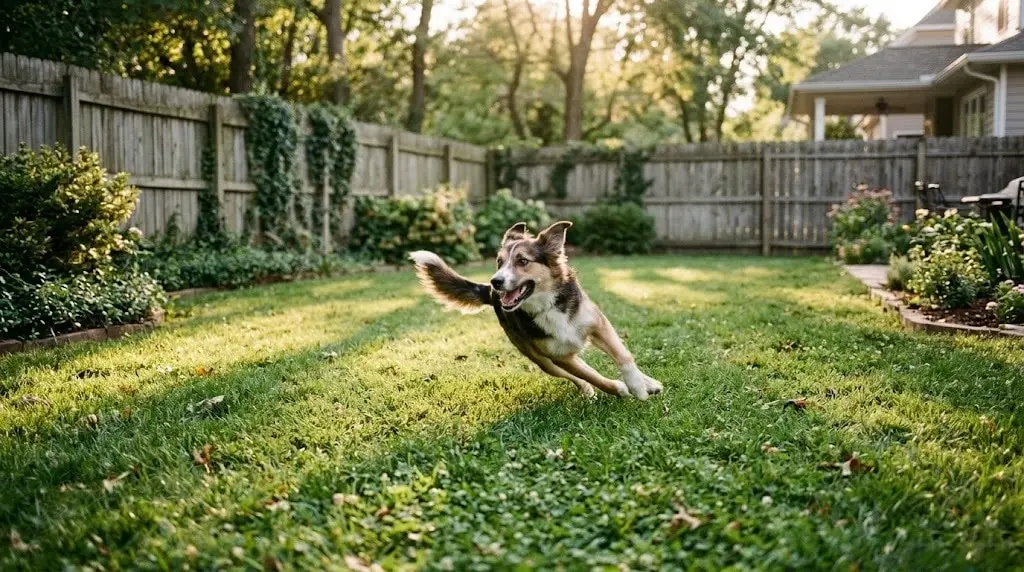 AI illustration
The zoomies are short, sudden bursts of wild running and spinning that many dogs have from time to time, and in a healthy dog they are normal. The scientific name is frenetic random activity periods, or FRAPs. Cornell’s Riney Canine Health Center says there is no known specific cause, but the bursts appear to be a way to release pent-up energy or perhaps to relieve stress. A happy zooming dog looks loose and even wiggly, and it may play bow when it slows down. Your job is mostly to keep the space safe and let it run its course.
What the zoomies look like
Each dog has its own version, but a typical burst includes:
- Fast laps around the room, the sofa or the garden, often in circles.
- Sharp turns, spins and sudden stops, sometimes with a play bow before taking off again.
- A tucked rear end. Cornell notes that many dogs tuck their rear end and tail as they run, more so when another dog is giving chase.
- A quick finish. A burst usually lasts from a few seconds to a few minutes, ends as suddenly as it began, and the dog often lies down or settles straight afterwards.
FRAPs are most common in puppies and young dogs, but many dogs keep getting the zoomies once in a while for their whole lives.
When they tend to happen
The zoomies often show up at predictable moments, which gives you clues about what sets them off for your own dog. Cornell and the Wikipedia summary of FRAPs list these:
- When you get home. A dog that has been alone all day with little to do may zoom around to burn off energy, and any very exciting moment, such as an owner returning, can set off a burst.
- Late in the evening, and at dawn or dusk.
- After a bath.
- After being let out of confinement, or in a wide-open space.
- During play, or during training when the dog gets overstimulated.
- After going to the toilet.
These are patterns people have noticed, not proven causes, and the reason for a single burst is usually impossible to pin down. Watching when your dog’s zoomies happen tells you more than any general explanation.
Keeping a zooming dog safe
Cornell’s advice is that the risk lies in the surroundings: a dog running at full speed without a plan can injure itself or break something.
- Watch the footing. Grass is the best surface for hard running, and carpet and packed dirt are also good. Hard floors, ice, gravel and sand raise the risk of slipping or falling.
- Clear the obstacles. Keep a zooming dog away from stairs, obstacles and anything breakable. Fill holes in the garden, or mark them with a post or cone so your dog can avoid them.
- Keep it away from the road. When your dog is off the lead, keep it in an enclosed space.
- Let it run its course. If the burst happens in a safe space, there is no need to stop it.
Can you reduce the zoomies?
You do not need to stop them. If they happen often or at awkward times, such as when you are asleep, Cornell suggests your dog may need more exercise and mental stimulation:
- Physical exercise such as a hike or a jog (depending on the dog’s age), play with a toy, or swimming.
- Mental work such as practising household manners, teaching new tricks, and scent games like finding a hidden treat.
- A walk somewhere new, with new things to see and sniff, combines both and can satisfy a dog more than a walk in a familiar spot.
For puppies, our puppy socialisation timeline covers how activity, rest and new experiences fit together in the first months.
When to check with your vet
We are not vets, and this is not a diagnosis. Cornell says that if a dog zooming around appears to be in pain, frightened or anxious, the owner should find out what caused the distress by seeking veterinary help. Its description of the difference:
- A happy zooming dog is loose and even wiggly, bounces around you when it slows down, may have its tongue flapping out and may play bow.
- A frightened dog is more tense, with wide eyes and a tail tightly tucked to the belly that stays tucked even when it stops. It may carry its head low with its ears folded back. Cornell notes that a scared dog needs to be calmed down, because this kind of frenzy is not a happy one.
If your older dog shows other changes, such as confusion or pacing at night, our guide to dog dementia covers what is worth raising with your vet. If your dog follows you closely around the house as well, our article on why dogs follow you everywhere looks at that side of dog behaviour.
Sources
- Cornell University College of Veterinary Medicine, Riney Canine Health Center, “What are zoomies?” (read 28 October 2026): vet.cornell.edu
- Wikipedia, “Frenetic random activity periods” (read 28 October 2026), for how long a burst lasts and the dawn, dusk, bath and confinement contexts: en.wikipedia.org
Recommended Gear on Amazon
- Non-slip rug pads and runners - browse current options and reviews on Amazon.
- Dog puzzle feeders - browse current options and reviews on Amazon.
- Snuffle mats - browse current options and reviews on Amazon.
As an Amazon Associate, we earn from qualifying purchases - at no extra cost to you. This helps us keep producing free, in-depth guides.