Amazon Milk Frog
The Amazon Milk Frog (Trachycephalus resinifictrix) is a large, hardy arboreal tree frog from the rainforest canopy of South America.
🗓️ Last reviewed: June 2026
Overview
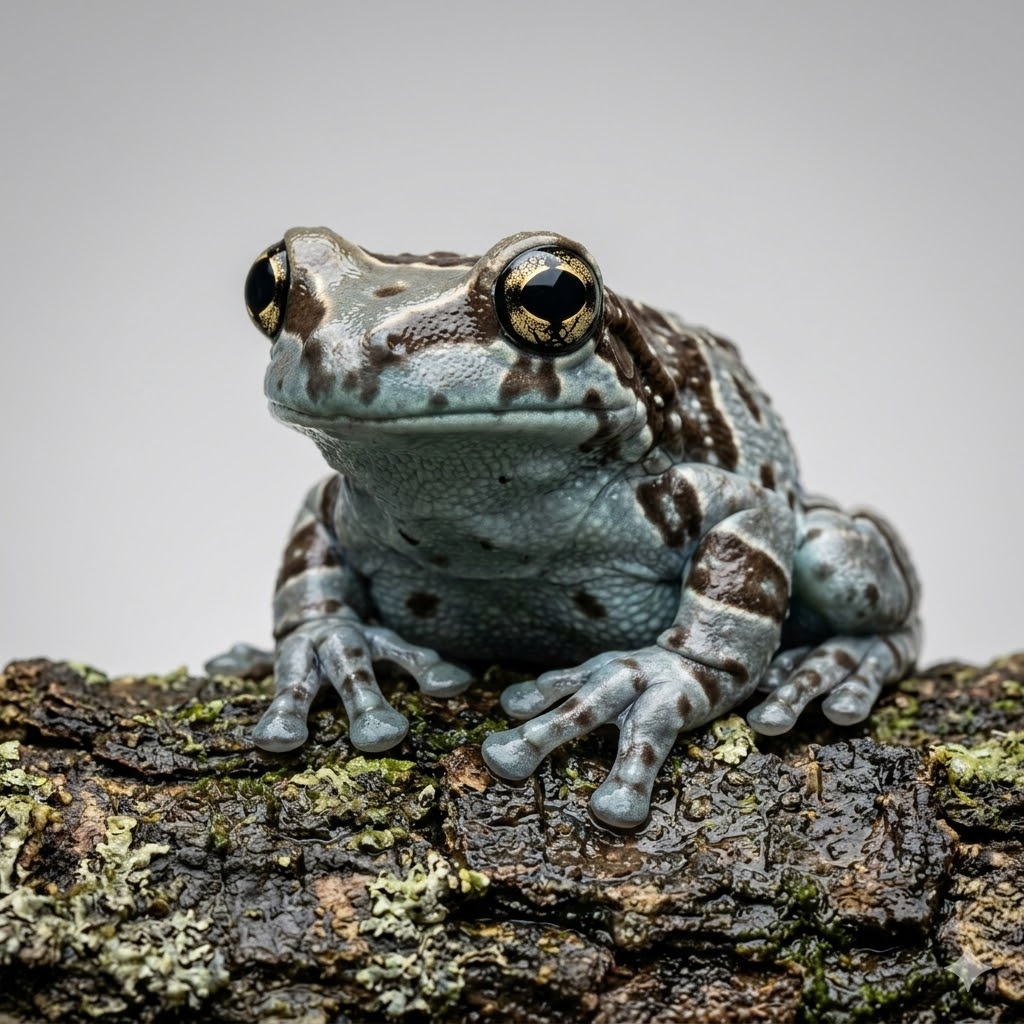
The Amazon Milk Frog (Trachycephalus resinifictrix) is a large, hardy arboreal tree frog from the rainforest canopy of South America. It is known for its handsome gray-blue and brown banded, marbled skin, big expressive eyes, and calm, sit-and-wait nature. With a tall planted humid terrarium, branches to climb, and a steady diet of gut-loaded insects, it is one of the more forgiving and beginner-friendly tree frogs, though it is best treated as a hands-off display animal.
Natural History
Native to the Amazon Basin of northern South America, where it lives high in the rainforest canopy and breeds in water-filled tree holes well above the forest floor. The common name comes from the milky, sticky secretion the frog releases when stressed, a defence against predators. As a canopy species it is built for climbing rather than ground living, and it spends most of its time perched among branches and broad leaves in warm, very humid air.
Appearance
Adults are large for a tree frog, with females reaching about 10 cm and males a little smaller. The skin is gray-blue to pale lavender with bold brown or black banding and a marbled pattern, which can lighten or darken with mood and time of day. The eyes are large with a cross-shaped or marbled pupil, and the toes end in big adhesive pads for climbing. Older frogs often develop a slightly bumpy, textured skin.
Temperament & Handling
Calm, slow-moving, hands-off display animal. Amazon milk frogs are sit-and-wait perchers that tolerate a well-planted enclosure well, but their permeable amphibian skin absorbs whatever it touches. The oils, soaps, and salts on human skin can harm them, so handle minimally and only with clean, wet, rinsed hands when truly necessary - for a health check or moving the animal - and wash thoroughly afterward. They are most rewarding watched rather than held.
Enclosure
Minimum: a tall 60-80 L (roughly 18x18x24 inch) vertical, planted terrarium for one adult; larger and taller for a pair or group.
Provide:
- A vertical, well-planted setup with sturdy branches, cork bark, and broad-leaved live or artificial plants for climbing and cover.
- A moisture-holding substrate such as coconut fibre or a bioactive mix, kept damp but not waterlogged.
- A shallow, large water dish big enough for the frog to soak in, with clean dechlorinated water changed often.
- A secure, ventilated lid - these frogs are strong climbers and will escape an open top.
Heating, Lighting, Humidity
- Temperature: warm tropical, ideally 24-29°C by day with a mild drop at night.
- Maintain humidity of 60-80%, rising higher after misting, using daily misting and a damp substrate while keeping airflow good to avoid stagnant, mouldy conditions.
- Lighting: a low-level UVB tube can be beneficial and a planted-tank or day light on a regular day/night cycle helps the plants and the frog's rhythm. No harsh basking lamp is needed; gentle ambient warmth is enough in most homes, with a thermostat-controlled heat source if your room runs cool.
Diet
Insectivore.
- Gut-loaded crickets as a staple.
- Dubia roaches, and similar appropriately sized feeders.
- The occasional larger item such as a hornworm or, rarely, a pinky for a fully grown adult.
Dust feeders with calcium and a multivitamin on a regular rotation. Feed growing frogs most days and adults every 2-3 days, offering prey no wider than the space between the frog's eyes, and remove any uneaten insects.
Avoid: oversized prey, and wild-caught insects that may carry pesticides or parasites.
Health & Lifespan
8-10 years, sometimes longer in excellent care.
Common concerns:
- Dehydration - keep humidity up and water clean.
- Obesity from overfeeding rich prey.
- Metabolic bone disease from poor calcium and vitamin supplementation.
- Bacterial and fungal skin infections from dirty water or poor hygiene.
- Chemical poisoning - very sensitive to chlorine and chloramine; always use dechlorinated water and clean, residue-free hands and decor. Consult an exotics or herp vet experienced with amphibians if anything seems wrong.
Pros & Cons
Pros:
- Large, striking, and characterful tree frog.
- Hardy and beginner-friendly for an arboreal species.
- Calm and easy to observe.
- Rewards a well-planted vertical vivarium.
Cons:
- Warm, humid conditions required year-round.
- Permeable skin; not for routine handling.
- Needs a tall enclosure and clean water.
- Capable climber and escape artist.
Best Suited For
- Keepers wanting a large, showy tree frog.
- First-time arboreal amphibian owners ready to maintain humidity.
- Older children and adults (for observation).
Not suited for anyone wanting a frog to handle, keepers unable to keep conditions warm and humid, or those without space for a tall planted terrarium.
Amazon Milk Frog - frequently asked questions
Why is it called a milk frog?
When stressed or threatened, the frog can release a milky, sticky secretion from its skin as a defence. This gives the species its common name and is one reason to handle it as little as possible.
Can I handle my Amazon milk frog?
Best to keep it to a minimum. Their skin absorbs oils, soaps, and salts from human hands, which can harm them, so only handle when necessary with clean, wet, rinsed hands and wash afterward. They are happiest as a display animal.
Do they need a tall tank?
Yes. As a canopy tree frog they climb rather than roam the floor, so a tall, vertical, planted terrarium with branches and broad leaves suits them far better than a wide, short one.
How long do they live?
Commonly 8-10 years, and longer with excellent care.
🧠 Test yourself: guess the amphibian
Three clues from our quiz bank, each about another of our amphibians. Can you name them?
Clue 1.A popular beginner amphibian, this little green-and-black hopper spends much of its time floating in shallow water.
It's the Fire-Bellied Toad - read the full profile →
Clue 2.Critically endangered in the wild, this Mexican amphibian is native to just a single lake system near a major capital city.
It's the Axolotl - read the full profile →
Clue 3.This stout amphibian of the genus Ceratophrys will try to swallow prey nearly its own size and may wait days for a meal.
It's the Pacman Frog (Horned Frog) - read the full profile →