Bourke's Parakeet
Bourke's parakeet is the gentle dusk-flyer of the parrot world - a small, soft-coloured Australian grass parrot famous for being one of the quietest, calmest parakeets you can keep.
🗓️ Last reviewed: July 2026
Overview
Bourke's parakeet is the gentle dusk-flyer of the parrot world - a small, soft-coloured Australian grass parrot famous for being one of the quietest, calmest parakeets you can keep. Most active at dawn and dusk, it coos and chirps softly rather than screeching, making it a wonderful choice for anyone wanting a peaceful, apartment-friendly hookbill.
Natural History & Origin
A small, gentle Australian grass parakeet (Neopsephotus bourkii); a calm, quiet aviary and cage bird popular for its soft nature.
Appearance
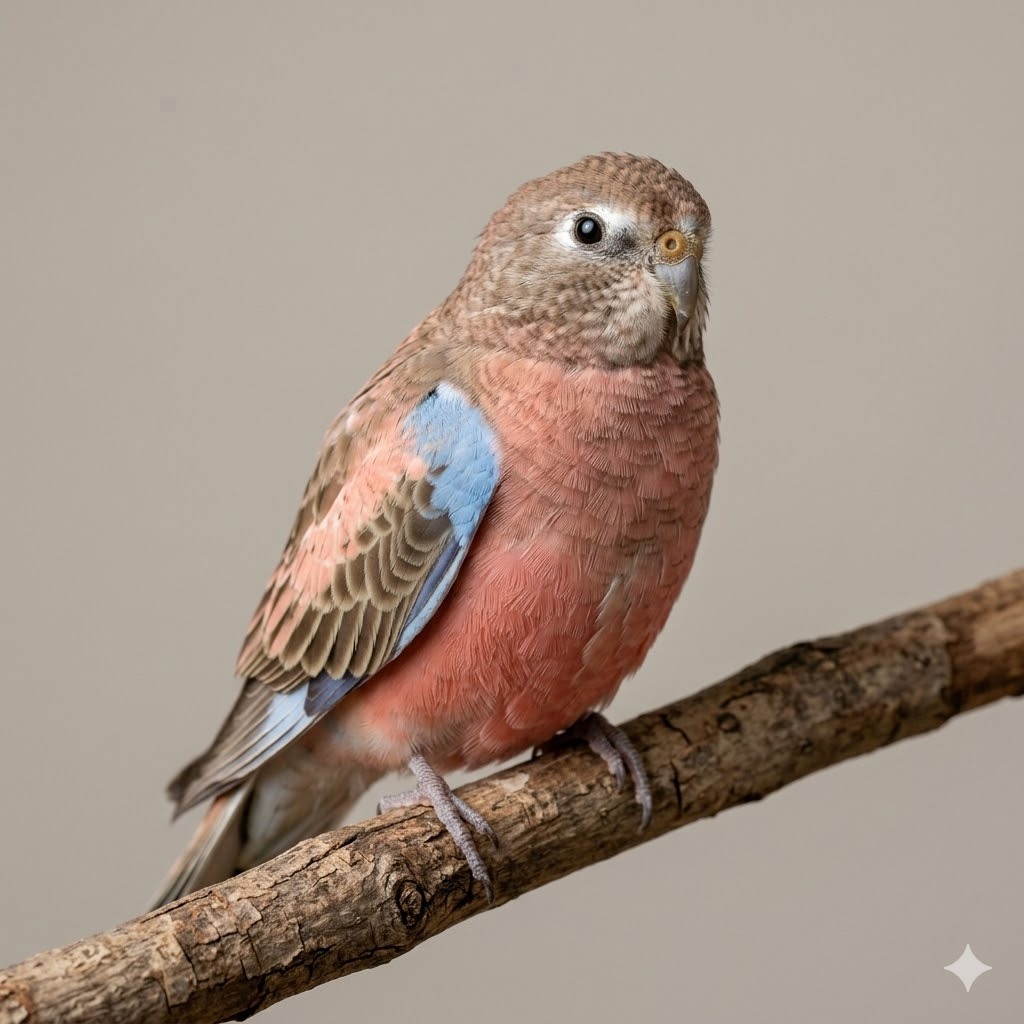
Small (about 45 g) in soft dusty pink, brown and blue; the popular 'rosy' mutation glows pink. Big dark eyes suit its crepuscular habits.
Temperament & Noise
Exceptionally gentle, calm and quiet - Bourke's rarely bite or scream and hand-tame into affectionate, mellow companions. Their soft twitter is among the quietest of parrots.
Housing & Flight
A roomy horizontal flight cage or aviary with room to fly (they whirr about at dawn and dusk); mix well with other peaceful grass parakeets and finches. Provide perches, foraging toys and a bath.
Diet
A small-parakeet/grass-parrot seed mix plus pellets, sprouted seed, greens and some seeding grasses; grit optional, calcium via cuttlebone. Fresh water and bathing.
Health & Lifespan
Average lifespan is 10-15 years. Hardy 10-15 year birds if kept dry and out of drafts; generally robust, with routine parrot care (nail/beak, parasite checks). Crepuscular activity is normal, not lethargy.
Training & Enrichment
Gentle and trainable to step-up and light handling, though they're calm rather than showy; some learn simple whistles. Enrichment is flight space, foraging and a companion.
Pros & Cons
Pros
- Among the quietest parrots - apartment-friendly
- Gentle, rarely bites
- Peaceful in mixed aviaries
- Long-lived and hardy
Cons
- Calm rather than playful/showy
- Most active at dawn/dusk
- Limited talking ability
- Prefers flight space to climbing
Best Suited For
- Apartment dwellers wanting a quiet parrot
- First-time hookbill keepers
- Mixed peaceful aviaries
- People wanting a gentle companion
Bourke's Parakeet - frequently asked questions
Are Bourke's parakeets really that quiet?
Yes - they're one of the quietest parrots in the hobby, chirping and twittering softly rather than screeching, which makes them ideal for apartments and calm homes.
Why is mine most active at dusk?
Bourke's are naturally crepuscular - liveliest at dawn and dusk - so evening whirring flights are normal and healthy, not a sign of distress.
Do they get along with other birds?
Very well - they're peaceful community birds that mix calmly with other grass parakeets, finches and doves in a roomy aviary.
🧠 Test yourself: guess the bird
Three clues from our quiz bank, each about another of our birds. Can you name them?
Clue 1.Famed for extreme intelligence, loud screams, and intense bonding, members of this group can outlive their owners and pluck feathers when bored.
It's the Cockatoo - read the full profile →
Clue 2.Capable of mimicking human speech, this nomadic seed-eater forms vast flocks in the arid outback and breeds after rain.
It's the Budgerigar (Budgie) - read the full profile →
Clue 3.Among the tiniest parrots kept as pets, this short-tailed bird is bold and feisty despite its affectionate name.
It's the Lovebird - read the full profile →
Social Needs
Peaceful and social - happy singly with attention, in a bonded pair, or in a mixed peaceful aviary. They don't squabble and make excellent community birds.