Cockatoo
Cockatoos are large, crested, predominantly white or black parrots native to Australasia.
🗓️ Last reviewed: June 2026
Overview
Cockatoos are large, crested, predominantly white or black parrots native to Australasia. They are among the most intelligent, most affectionate, and most demanding pet birds in existence - bonding intensely with humans and developing severe behavioural problems when ownership doesn't meet their extraordinary needs. The species name has become almost synonymous with rehoming, as countless cockatoos pass through multiple homes after owners underestimate the commitment.
Natural History & Origin
21 species across Australasia. Common pet species:
- Umbrella Cockatoo - large, pure white.
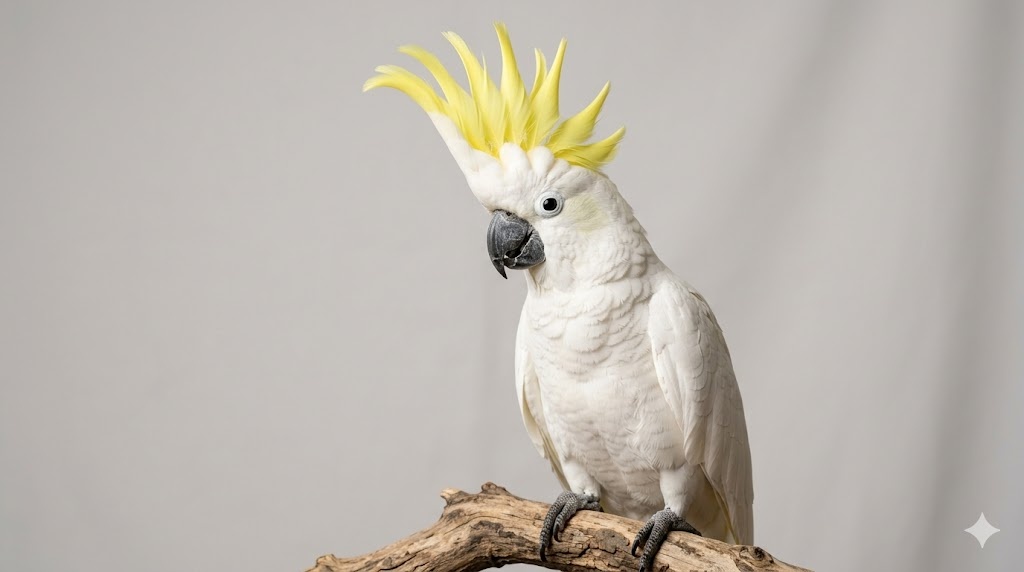
- Sulphur-crested Cockatoo - large, yellow crest.
- Moluccan (Salmon-crested) Cockatoo - largest, salmon-pink.
- Galah (Rose-breasted) Cockatoo - pink and grey.
- Goffin's Cockatoo - smaller, white.
- Major Mitchell's Cockatoo - pink with elaborate crest.
Wild cockatoos live in large flocks. Many species are threatened by habitat loss and the pet trade.
Appearance
Large parrots: 30-55 cm length, 300-1000+ g.
Predominantly white with yellow, orange, or pink crests in most species. Galah and Moluccan are pink-toned.
Temperament & Noise
Affectionate to the point of demanding. Cockatoos are "Velcro birds" - bonded individuals demand near-constant interaction and develop screaming, self-mutilation, and aggression when isolated.
Extremely loud. Cockatoo screams reach 130 dB - louder than a jet engine. Many cities consider cockatoos a noise nuisance unsuitable for apartments.
Bites are powerful - cockatoo beaks can crack walnuts and break human fingers.
Housing & Flight
Minimum cage: 1.2 × 1.2 × 1.8 m. Larger strongly preferred.
Provide:
- Many durable toys (cockatoos destroy soft toys quickly).
- Multiple perches.
- Daily out-of-cage time - minimum 4-6 hours.
- Foraging puzzles.
Cockatoos must have a job - without enrichment they self-mutilate.
Diet
- High-quality pellets (50-60%).
- Fresh vegetables abundantly.
- Sprouted seeds.
- Limited nuts.
Health & Lifespan
40-70 years (some species 80+).
Common concerns:
- PBFD.
- Polyomavirus.
- Feather plucking / self-mutilation - extremely common, often debilitating.
- Fatty liver disease.
- Lipomas in older birds.
- Behavioural issues - screaming, aggression, mate-bonding to humans.
Pros & Cons
Pros:
- Among the most affectionate of all parrots.
- Highly intelligent.
- 50+ year companions.
- Striking appearance.
Cons:
- Extreme noise.
- Powerful bite.
- Severe behavioural issues common (screaming, plucking).
- Demanding to the point of being unmanageable for most homes.
- Lifetime commitment of 50+ years.
- Frequently rehomed.
- Powder dust (allergy concern).
Best Suited For
- Experienced parrot owners with detached homes.
- Stay-at-home owners able to dedicate hours daily.
- Lifetime commitment with a successor plan.
Not suited for apartment dwellers, working households, first-time bird owners, families with young children, anyone underestimating the commitment.
Cockatoo - frequently asked questions
Why are cockatoos rehomed so often?
Most owners underestimate the noise, mess, demands, and 50+ year commitment. Rescue organisations are full of cockatoos surrendered after a few years.
How loud are they?
Up to 130 dB at the source - comparable to a jet engine. Apartment-living with a cockatoo is rarely workable.
Are they good with kids?
No - they bite powerfully and the long lifespan exceeds any childhood.
Can they be trained out of screaming?
Sometimes reduced significantly. Eliminated, almost never. Screaming is biological flock-contact behaviour.
How long do they live?
40-70 years for most species; some over 80. Major Mitchell's reportedly reach 100.
🧠 Test yourself: guess the bird
Three clues from our quiz bank, each about another of our birds. Can you name them?
Clue 1.This small Australian grass parakeet, wild-colored green and yellow with black scalloping, is the world's most popular pet bird.
It's the Budgerigar (Budgie) - read the full profile →
Clue 2.Among the tiniest parrots kept as pets, this short-tailed bird is bold and feisty despite its affectionate name.
It's the Lovebird - read the full profile →
Clue 3.Hardy enough to form feral city colonies in cold climates, this small talkative parrot constructs apartment-like twig nests.
It's the Quaker (Monk) Parakeet - read the full profile →
Social Needs
Intense. Single cockatoos need hours of daily interaction. Pairs work if both birds came hand-raised; otherwise they bond to each other and reject humans.