Conure
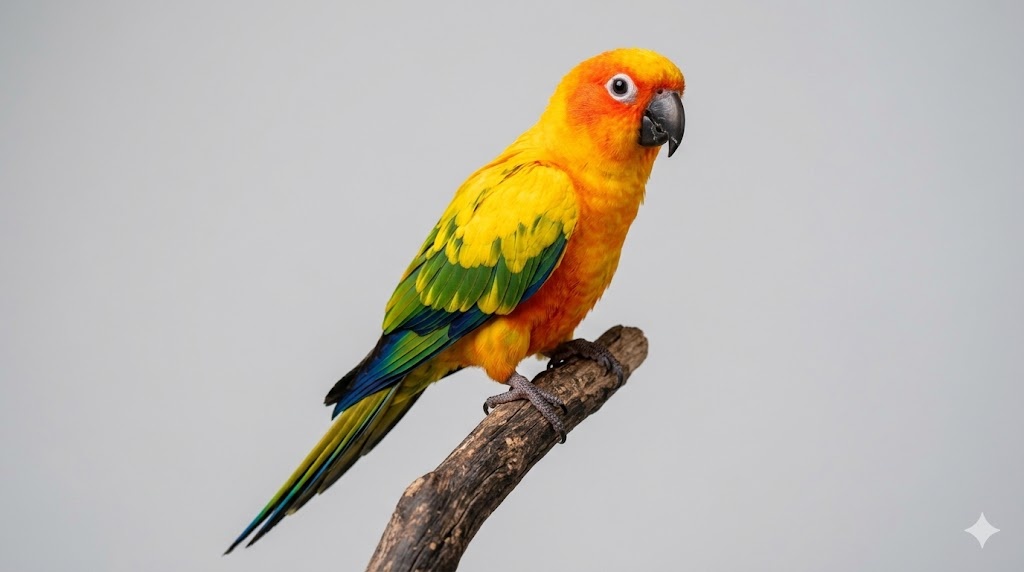
"Conure" is a broad category of small-to-medium South American parrots known for vibrant colours and outsized personalities.
🗓️ Last reviewed: June 2026
Overview
"Conure" is a broad category of small-to-medium South American parrots known for vibrant colours and outsized personalities. The Green-cheeked Conure is the most popular small species; the Sun Conure is the brilliantly coloured (but extremely loud) larger relative. Both share intelligence, sociability, and a love of mischief.
Natural History & Origin
Conures are native to the forests, savannas, and grasslands of South America. The umbrella term covers several genera (Pyrrhura, Aratinga, Eupsittula, others) - over 100 species total. Many are now endangered in the wild.
Common pet species:
- Green-cheeked Conure - small, quieter, popular.
- Sun Conure - brilliant orange/yellow, very loud.
- Jenday Conure.
- Nanday Conure.
- Blue-crowned Conure - Paulie the bird.
Appearance
Size varies by species: Green-cheek 60 g and 26 cm; Sun Conure 110 g and 30 cm.
Colours: green is common base, with face/head colour variations. Many mutations available.
Temperament & Noise
Affectionate, playful, intelligent, often nippy. Conures bond intensely with family and demand interaction.
Noise varies dramatically:
- Green-cheeked Conure: moderate, manageable for apartments.
- Sun Conure: extremely loud - often described as having the loudest scream of any common pet bird relative to size. Not for apartments.
Conures love to bathe - many enjoy shower time and play in water.
Housing & Flight
Minimum cage: 75 × 60 × 90 cm (larger species need more).
Provide:
- Many toys (heavy chewers).
- Multiple perches.
- Daily out-of-cage flight time.
- Foraging puzzles.
Diet
- Pellets as base (60%).
- Fresh vegetables daily.
- Sprouted seeds as enrichment.
- Limited fruit.
Health & Lifespan
15-25 years (Sun Conures up to 30).
Common concerns:
- Conure Bleeding Syndrome - vitamin K deficiency; treatable.
- Beak and feather disease.
- Aspergillosis.
- Self-mutilation from stress.
Pros & Cons
Pros:
- Brilliant colours.
- Strong bonded personality.
- Trainable, playful, "clown of the parrots."
- Manageable size for parrots.
Cons:
- Sun Conures extremely loud.
- Nippy.
- 20-30 year commitment.
- Demanding of attention.
Best Suited For
- Households accepting long parrot commitment.
- Active families wanting interactive parrot.
- Detached homes (especially for Sun Conures).
Not suited for apartment dwellers with shared walls (Sun Conures), working households without coverage.
Conure - frequently asked questions
Green-cheek vs Sun Conure - which is better for me?
Green-cheek: smaller, quieter, apartment-suitable. Sun: louder, more brilliantly coloured, requires detached home.
Are they good with kids?
Older children with supervision. Bites are notable.
How long do they live?
15-25 years; up to 30 for Sun Conures.
Are they noisy?
Varies dramatically by species. Sun and Nanday Conures are very loud; Green-cheek is moderate.
🧠 Test yourself: guess the bird
Three clues from our quiz bank, each about another of our birds. Can you name them?
Clue 1.Spanish monks once monopolized the trade in this melodious island finch by selling only males abroad.
It's the Canary - read the full profile →
Clue 2.Famed for extreme intelligence, loud screams, and intense bonding, members of this group can outlive their owners and pluck feathers when bored.
It's the Cockatoo - read the full profile →
Clue 3.Studies of how these birds' beaks varied across the Galapagos helped shape Darwin's ideas on evolution.
It's the Finch (Zebra & Society) - read the full profile →
Social Needs
Either pair or significant daily human interaction. Most conures do well as single birds with adequate attention.