Sun Conure
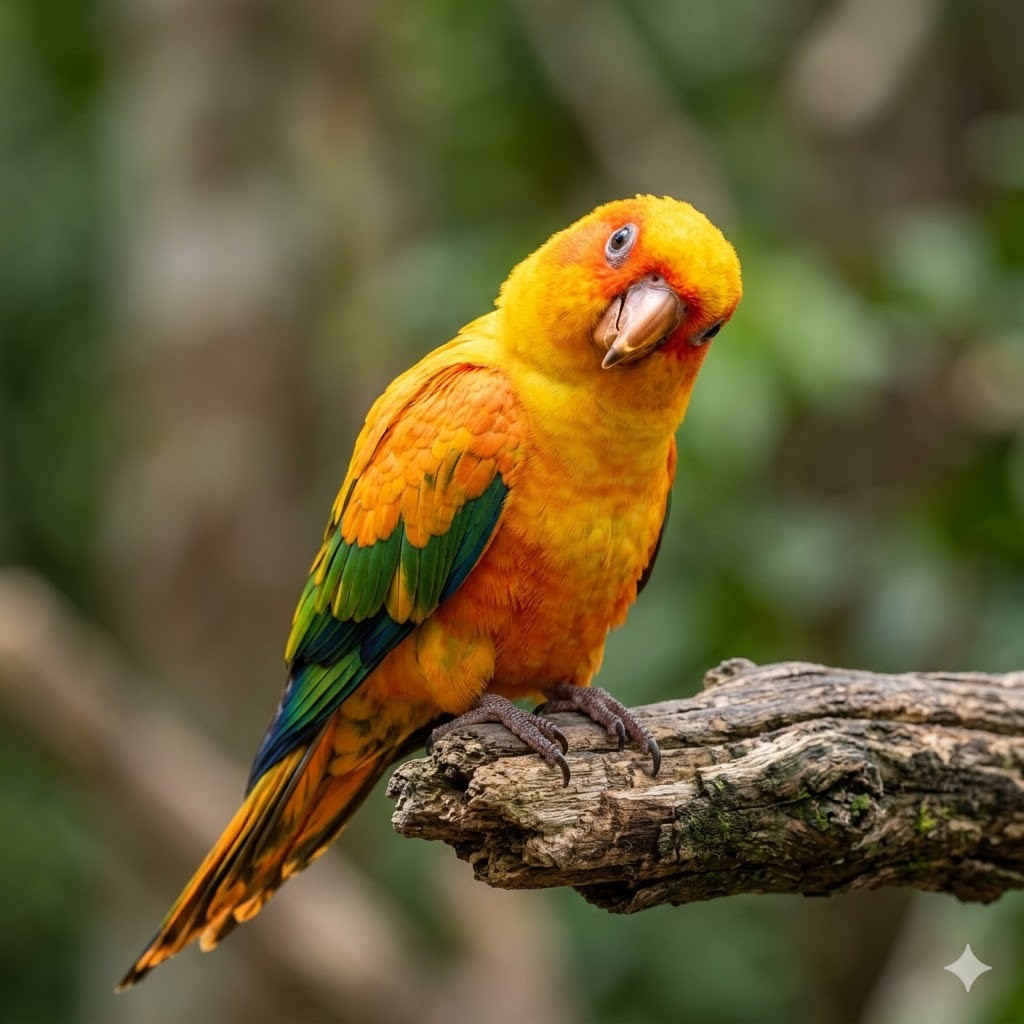
The sun conure is one of the most breathtakingly beautiful parrots kept as a pet - a blaze of yellow, orange, and green that looks almost too vivid to be real.
🗓️ Last reviewed: July 2026
Overview
The sun conure is one of the most breathtakingly beautiful parrots kept as a pet - a blaze of yellow, orange, and green that looks almost too vivid to be real. Affectionate, playful, and intensely social, sun conures form deep bonds with their owners and thrive on constant interaction. But there is one thing every prospective owner must understand before falling for those colors: the sun conure is extremely loud. This is not a minor quirk to be trained away - it is a defining trait of the species. A sun conure's scream can carry for a long distance and is genuinely apartment-unfriendly. Get the noise reality straight first, and the beauty and affection become a joy rather than a regret.
Natural History & Origin
Sun conures (Aratinga solstitialis) originate from northeastern South America, including regions of Brazil, Guyana, and Venezuela. In the wild they inhabit tropical forest edges, savannas, and palm groves, moving in loud, conspicuous flocks. Their brilliant coloring and piercing calls help flock members stay in contact across the canopy - the same loud contact-calling that becomes so noticeable in a home. As an Aratinga conure, the sun conure comes from a lineage built for volume: their calls are designed to travel long distances over open habitat, which is exactly why a pet sun conure's voice cuts through walls so easily. Wild populations have declined significantly due to habitat loss and historical trapping for the pet trade, and the species is now considered endangered in the wild. Nearly all pet sun conures today are captive-bred, and buying from a responsible breeder is important both for the bird's welfare and for wild conservation.
Appearance
Medium-small parrots, about 30 cm long including the tail, weighing roughly 100-120 g. Adults are spectacular: golden-yellow bodies washed with orange on the face and belly, green on the wings and tail, and flashes of blue on the flight feathers. Juveniles are duller and greener, developing their full fiery coloring over one to two years. The transformation from a plain green youngster to a radiant adult is part of the species' appeal.
Temperament & Noise
Sun conures are affectionate, cuddly, and playful - they love to be near their people, ride on shoulders, and engage in games. Their personalities are big and expressive, and a well-socialized sun conure is a devoted, entertaining companion.
The noise, however, cannot be overstated. Sun conures are among the loudest parrots commonly kept as pets. They scream to greet the day, to call their flock, when excited, when bored, and simply to make noise. The volume is piercing and carries through walls. No amount of training eliminates it - you can manage it, but you cannot silence a sun conure. Anyone in an apartment, with close neighbors, or sensitive to noise should think very carefully. This is the single most important honest fact about the species.
Housing & Flight
Minimum cage: roughly 60 x 60 x 90 cm, larger strongly preferred, with bar spacing around 1.5-2 cm. These active birds need room to climb, flap, and play.
Provide:
- Sturdy perches of varied natural-wood diameters.
- Robust, chewable toys and foraging puzzles, rotated to prevent boredom (a bored sun conure screams more).
- Space for daily out-of-cage time, which is essential for exercise and mental health.
- A bird-safe room for supervised flight and interaction every day.
Diet
- Quality pellets as the base (about 60-70%).
- Fresh vegetables and leafy greens daily.
- Fruit in moderation as treats.
- Seeds and nuts only as occasional treats and training rewards.
Never feed avocado, chocolate, caffeine, alcohol, onion, garlic, or salty and sugary foods. An all-seed diet causes obesity and shortens lifespan.
Health & Lifespan
Sun conures typically live 15-25 years, sometimes longer with excellent care.
Common concerns:
- Feather plucking from boredom, stress, or loneliness.
- Proventricular dilatation disease (PDD), a serious viral illness affecting conures.
- Psittacine beak and feather disease (PBFD).
- Obesity and fatty liver disease from poor diet.
- Respiratory sensitivity to non-stick cookware fumes, aerosols, and smoke.
- Psittacosis (a bacterial infection).
Establish care with an avian vet before acquiring a bird and keep up with regular checkups.
Training & Enrichment
Bright and food-motivated, sun conures learn tricks, step-up, and recall readily. They are not gifted talkers - a few words at most - and are prized instead for their looks and affection. Enrichment is critical: foraging toys, puzzles, and rotated novelty reduce boredom and, importantly, help manage the screaming that comes with an under-stimulated bird. Positive-reinforcement training and consistent daily interaction bring out the best in them. Owners can also teach an alternative "contact call" - a soft whistle the bird learns to use instead of a full scream - and reward quiet behavior rather than reacting to noise, which over time can take the edge off the volume even if it never eliminates it. Never punish screaming; it usually backfires and makes the bird louder.
Pros & Cons
Pros:
- Stunning, vivid coloring.
- Affectionate, cuddly, and playful.
- Intelligent and trainable.
- Deeply bonded companions.
- Entertaining, expressive personalities.
Cons:
- Extremely loud - a genuine dealbreaker for many homes.
- Apartment-unfriendly and hard on close neighbors.
- Needs constant attention and daily out-of-cage time.
- Prone to plucking and screaming if under-stimulated.
- 15-25 year commitment.
Best Suited For
- Owners in detached homes where noise is not an issue.
- Experienced bird keepers who understand conure volume.
- People able to devote substantial daily interaction time.
- Those who love the species' looks and can honestly accept the noise.
Not suited for apartment dwellers, homes with close neighbors, noise-sensitive households, anyone seeking a quiet pet, or homes with non-stick cookware in active use.
Sun Conure - frequently asked questions
Just how loud are sun conures?
Very loud - among the loudest pet parrots. Their scream is piercing, carries through walls, and cannot be trained away. This is the most important thing to know before getting one.
Can I keep a sun conure in an apartment?
It is strongly discouraged. The noise routinely causes problems with neighbors and is difficult to manage in shared buildings.
Do sun conures talk?
Rarely and not clearly - a few words at most. They are valued for beauty and affection, not speech.
How long do they live?
Typically 15-25 years, sometimes longer with excellent care.
Are they affectionate?
Yes - very. Well-socialized sun conures are cuddly, playful, and devoted, which is why so many owners tolerate the noise.
🧠 Test yourself: guess the bird
Three clues from our quiz bank, each about another of our birds. Can you name them?
Clue 1.Demanding loud companions, the scarlet and blue-and-gold kinds of this bird need very large cages and space.
It's the Macaw - read the full profile →
Clue 2.Native to Australasia, this crested parrot may be salmon-crested, sulphur-crested, or even smoky-black, and uses powder down to clean its plumage.
It's the Cockatoo - read the full profile →
Clue 3.Hailing from the rainforests of central Africa, this ash-colored parrot can mimic human speech and household sounds with uncanny accuracy.
It's the African Grey Parrot - read the full profile →
Social Needs
Sun conures are intensely social and need daily companionship. A single bird bonds strongly to its owner but demands significant time and attention; neglect leads to screaming, plucking, and depression. They can be kept in pairs or small groups, which provides company but may increase overall noise and can reduce their focus on human keepers. A sun conure left alone all day will make its loneliness heard, so this is not a bird for people who are rarely home. Ideally the cage is placed in a busy part of the household where the bird feels part of the flock, and several hours of direct interaction are built into the daily routine.