Society Finch (Bengalese)
The Society finch is the friendliest, easiest finch there is - a small, domesticated bird that exists nowhere in the wild, bred purely for its calm, sociable, indestructible nature.
🗓️ Last reviewed: July 2026
Overview
The Society finch is the friendliest, easiest finch there is - a small, domesticated bird that exists nowhere in the wild, bred purely for its calm, sociable, indestructible nature. Hardy, cheerful and famous for cheerfully raising any finch's chicks, it's the ideal first finch and the peacemaker of any mixed aviary.
Natural History & Origin
A fully domesticated finch (Lonchura striata domestica) that exists only in captivity; bred for centuries in Asia as a hardy, sociable cage bird.
Appearance
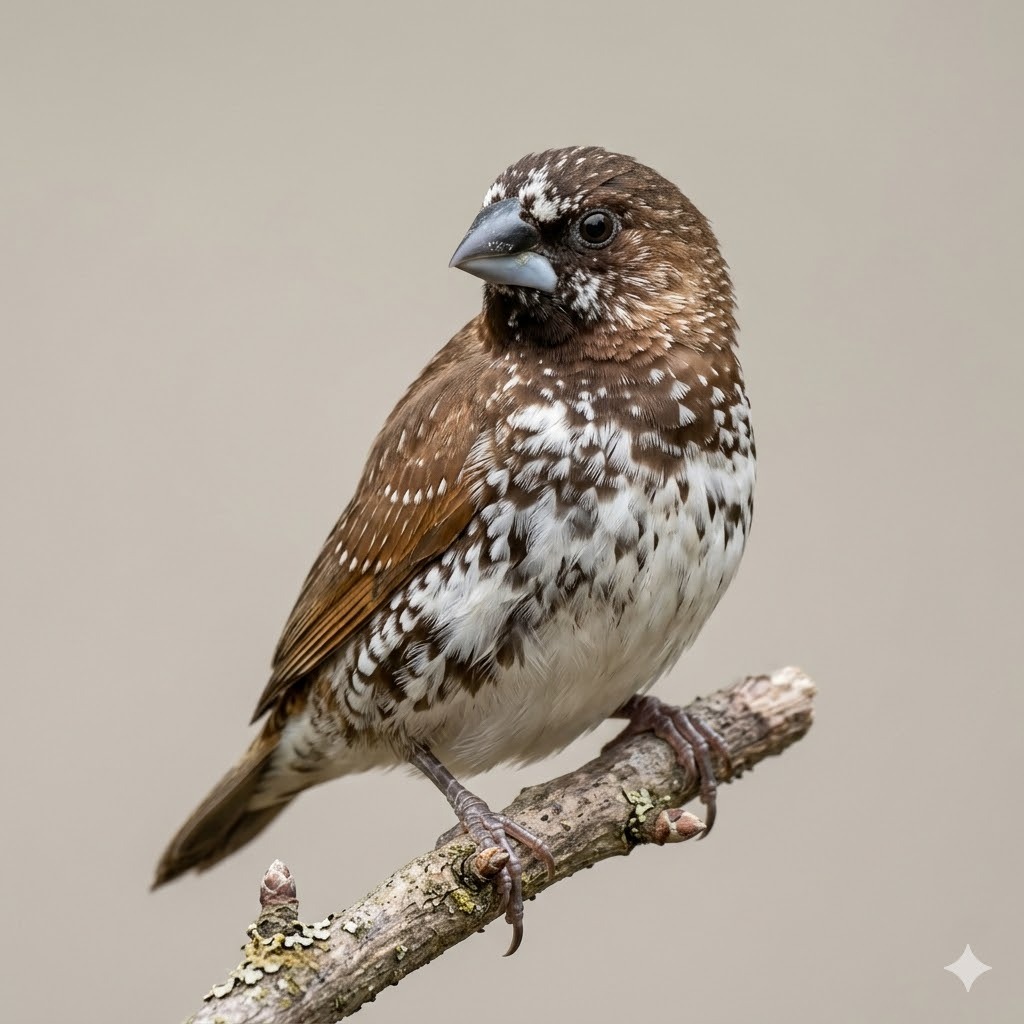
Small (about 15 g) in soft browns, fawns and whites in endless pied patterns; plain-looking but endlessly variable, with a chunky, contented shape.
Temperament & Noise
Extremely calm, social and gentle - Societies never squabble, tolerate handling better than most finches, and bustle about contentedly with a soft chattering call. The definition of an easy bird.
Housing & Flight
A roomy cage or flight aviary with perches; they're hardy and undemanding, needing only dry, draft-free housing. They huddle together to roost and mix peacefully with all calm finches.
Diet
A basic finch seed mix, sprouted seed, egg food (especially when breeding), greens, grit and calcium; fresh water and bathing. As simple to feed as birds get.
Health & Lifespan
Average lifespan is 7-9 years. Hardy and long-lived (7-9 years) - one of the most robust, forgiving finches, ideal for beginners; routine care and a good diet keep them thriving.
Training & Enrichment
Not trick birds, but calm enough to hand-tame lightly; the joy is their busy, peaceable colony life. Enrichment is company, nesting and a planted flight.
Pros & Cons
Pros
- The easiest, hardiest finch - ideal first bird
- Utterly peaceful and social
- Cheap and simple to keep
- Famous foster parents for other finches
Cons
- Plain-looking compared with Gouldians
- Must be kept in groups
- Not a hands-on or trick bird
- Breed readily - manage numbers
Best Suited For
- First-time finch and bird keepers
- Peaceful mixed-finch aviaries
- Children's family aviary (supervised)
- Breeders needing foster parents
Society Finch (Bengalese) - frequently asked questions
Why are Society finches recommended for beginners?
They're the hardiest, calmest, most forgiving finch - domesticated for centuries, they tolerate mistakes, never fight, and thrive on simple care, making them the ideal first finch.
Why are they used as 'foster parents'?
Societies are such reliable, devoted parents that breeders slip other finch species' eggs under them to raise - they'll happily rear almost any small finch chick.
Can I keep just one?
Better not - they're intensely social and huddle together to roost; a lone Society is a lonely bird. Keep at least a pair or small group.
🧠 Test yourself: guess the bird
Three clues from our quiz bank, each about another of our birds. Can you name them?
Clue 1.This noisy white or dark parrot family is defined by a showy, movable head crest and a powerful curved bill.
It's the Cockatoo - read the full profile →
Clue 2.This small grey Australian parrot, the smallest member of its crested family, sports orange cheek patches and a jaunty head crest.
It's the Cockatiel - read the full profile →
Clue 3.Named for its trembling, bobbing courtship motions, this gray-breasted parrot is a gifted talker for its small size.
It's the Quaker (Monk) Parakeet - read the full profile →
Social Needs
Intensely social - keep several; they roost in a huddle and are so parental they're famously used as foster parents for other finch species' eggs. Never keep just one.