Caique (Pionites melanocephalus / Pionites leucogaster)
The Caique (Pionites melanocephalus / Pionites leucogaster) is a small, stocky, brilliantly coloured parrot from the Amazon basin, often nicknamed the "clown of parrots" for its hopping, wrestling, and surfing antics.
🗓️ Last reviewed: June 2026
Overview
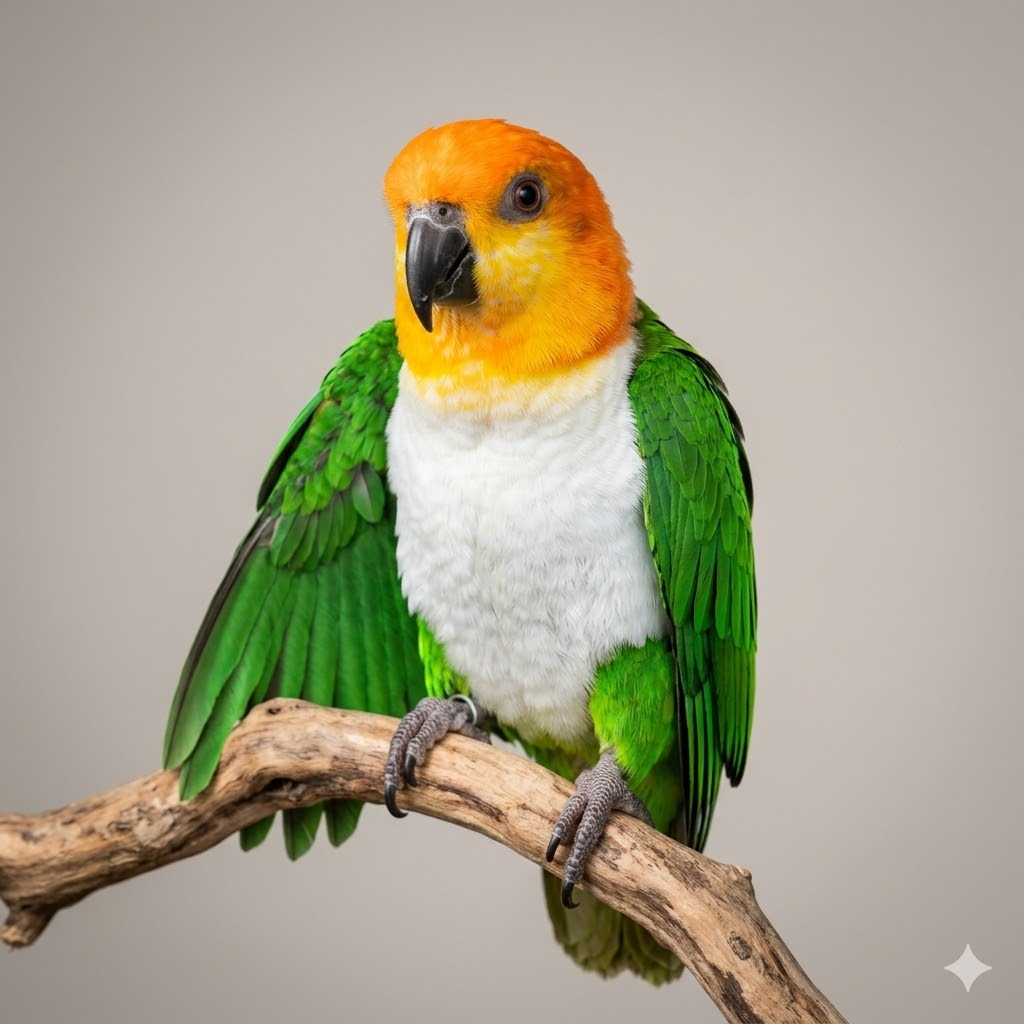
The Caique (Pionites melanocephalus / Pionites leucogaster) is a small, stocky, brilliantly coloured parrot from the Amazon basin, often nicknamed the "clown of parrots" for its hopping, wrestling, and surfing antics. With a crisp white belly, an orange or yellow head, and bright green wings, it is one of the most playful and high-energy companion parrots in the hobby. A caique is not a quiet ornament - it is a demanding, comical, full-contact bird that needs constant enrichment and supervision, and it rewards a committed keeper with years of laughter.
Natural History & Origin
Caiques come from the forests of the Amazon basin in South America. There are two main species kept as pets: the black-headed caique (Pionites melanocephalus) from north of the Amazon River, and the white-bellied caique (Pionites leucogaster) from south of it. In the wild they live in the canopy in small noisy flocks, foraging for fruit, seeds, and flowers, and they are active, restless climbers by nature. That energetic, social, foraging biology is exactly what shapes their care in captivity.
Appearance
Adults weigh roughly 150-170 g, length around 23 cm - a short, chunky build rather than a long-tailed silhouette.
Both species share a clean white chest and belly, green wings and back, and bright orange-yellow thighs and flanks. The black-headed caique has a black cap and an orange-and-yellow face and neck; the white-bellied caique has an orange cap and a more yellow face. The colours are vivid and well defined, giving the bird a painted, almost cartoonish look. Males and females look alike, so sexing is done by DNA testing rather than by eye.
Temperament & Noise
Bold, playful, and relentlessly energetic. Caiques are the comedians of the parrot world - they hop instead of walk, wrestle with toys and each other, lie on their backs to play, and "surf" or roll on towels and surfaces. They are curious, confident, and often fearless for their size.
That intensity has a flip side. Caiques can be loud, with piercing calls when excited, and many are nippy, stubborn, and territorial, especially as they mature. They are not strong talkers - some learn a few words or sounds, but they are valued for antics, not speech. They need firm, consistent, gentle handling and a lot of supervised play to stay sweet, and they can be a handful for an unprepared owner.
Housing & Flight
Minimum cage: a sturdy cage of about 90 cm wide by 60 cm deep or larger for a single bird, with appropriate bar spacing for a small parrot. Caiques are powerful chewers and escape artists, so the cage must be strong and securely latched. More space and out-of-cage time are always better.
Provide:
- Plenty of varied toys - chewables, foraging toys, ropes, and ladders - rotated often to fight boredom.
- A variety of perches of different sizes and textures for foot health.
- A safe, bird-proofed play area for daily supervised out-of-cage time, which caiques genuinely need.
- A quiet, draft-free location, and never leave a caique loose unsupervised, as their fearless curiosity gets them into trouble.
Diet
- A quality parrot pellet as the dietary base for balanced nutrition.
- Daily fresh vegetables and some fruit, offered in variety.
- A modest amount of seed or nuts as treats, not the main diet.
- Cooked grains and legumes in small amounts for variety and foraging.
- Fresh water daily, changed often as caiques love to dunk food and bathe.
Avoid: avocado (toxic to all birds), chocolate, caffeine, alcohol, onion, and salt.
Health & Lifespan
About 25-30 years with good care, sometimes longer.
Common concerns:
- Obesity and fatty liver disease from too many seeds, nuts, and fatty treats.
- Feather-destructive behaviour linked to boredom, stress, or too little stimulation.
- Respiratory infections - very sensitive to fumes from non-stick cookware, aerosols, and smoke.
- Injury from their own boldness - falls, scrapes, and accidents during fearless play.
- Nutritional deficiencies from an unbalanced all-seed diet.
- Bacterial and fungal infections that benefit from prompt veterinary care.
Find an avian or exotics vet experienced with parrots before acquisition, and arrange regular wellness checks. Any change in appetite, droppings, or energy warrants a prompt visit rather than waiting.
Training & Enrichment
Caiques are intelligent and trainable with patience and positive reinforcement. They learn tricks, targeting, and step-up readily, and training also channels their energy and curbs nipping. Enrichment is not optional for this species - they need a constant supply of foraging puzzles, destructible toys, swings, ropes, and supervised play to burn off their relentless energy. A bored caique becomes a noisy, nippy, or feather-plucking caique, so daily mental and physical activity is essential.
Pros & Cons
Pros:
- Brilliantly colourful and comical to watch.
- Endlessly playful and full of personality.
- Intelligent and trainable for tricks.
- Long lived - a 25-30 year companion.
Cons:
- Can be loud, nippy, and stubborn.
- Very high energy and demanding of time.
- Not a strong talker.
- Needs a sturdy cage and constant enrichment.
Best Suited For
- Experienced or dedicated owners wanting an interactive parrot.
- People with time for daily play and training.
- Keepers who enjoy a comical, high-energy bird.
Not suited for households with non-stick cookware in active use (Teflon fumes can kill birds quickly), smokers in the same room, people wanting a quiet or low-maintenance pet, anyone expecting a talking bird, or homes that cannot supervise a fearless, demanding parrot for decades.
Caique (Pionites melanocephalus / Pionites leucogaster) - frequently asked questions
Are caiques loud?
They can be. Caiques have piercing calls when excited and are not a quiet apartment bird, though they are not constant screamers like some larger parrots.
Do caiques talk?
Not really. Some learn a few words or sounds, but they are valued for their playful antics rather than for speech.
How long do they live?
About 25-30 years with good care, and sometimes longer, so they are a long-term commitment.
Are caiques good for beginners?
They can be challenging. Their energy, nipping, and stubbornness suit a dedicated owner with time to spend, rather than someone wanting an easy first bird.
Why is my caique so hyper?
That is normal - caiques are naturally high-energy "clowns." Plenty of toys, foraging, training, and supervised play give that energy a healthy outlet.
🧠 Test yourself: guess the bird
Three clues from our quiz bank, each about another of our birds. Can you name them?
Clue 1.Bred for centuries into 'song', 'color', and 'type' varieties, this seed-eater can be yellow, orange, white, or even reddish.
It's the Canary - read the full profile →
Clue 2.Among the tiniest parrots kept as pets, this short-tailed bird is bold and feisty despite its affectionate name.
It's the Lovebird - read the full profile →
Clue 3.This silver-feathered parrot with a bright red tail is widely regarded as one of the most intelligent birds, able to learn hundreds of words and use them in context.
It's the African Grey Parrot - read the full profile →
Social Needs
Highly social and bonded to their people - a caique that is ignored will become bored, frustrated, and often louder or nippier. They thrive on daily interaction, play sessions, and being part of household life. Many do well as a single well-socialised pet with an attentive owner, while some are kept in pairs or small groups.
Caiques can be feisty and territorial with other birds and may bully cage mates or other species, so any housing with other parrots must be supervised and introduced carefully. Their bold nature means they do not always back down from larger birds, which can be dangerous for them.