Macaw
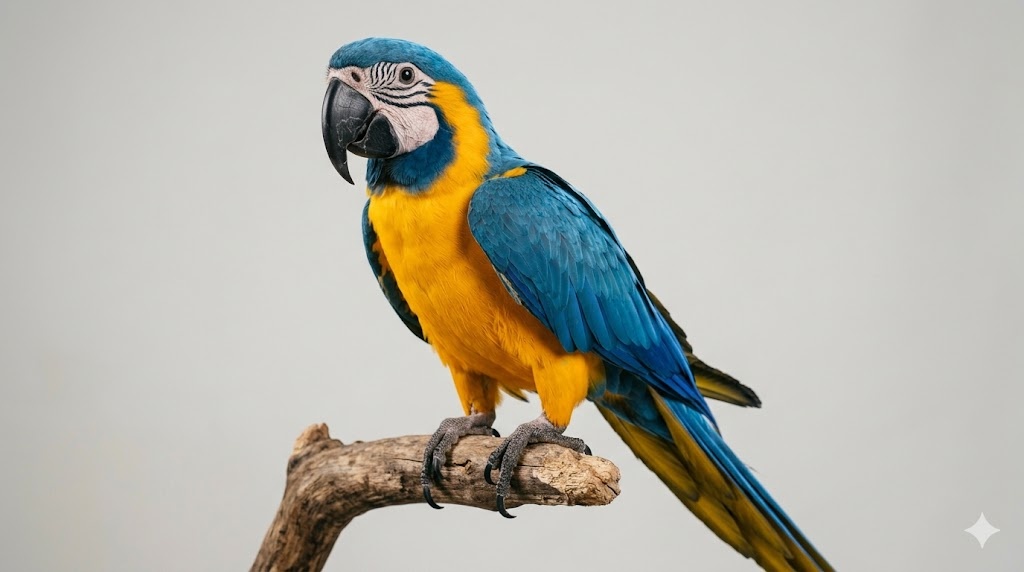
Macaws are the largest, most spectacular, and longest-lived of the common pet parrots - brilliantly coloured South American birds with massive beaks, intelligent personalities, and 50-80 year lifespans.
🗓️ Last reviewed: June 2026
Overview
Macaws are the largest, most spectacular, and longest-lived of the common pet parrots - brilliantly coloured South American birds with massive beaks, intelligent personalities, and 50-80 year lifespans. Macaws are extraordinary companions for prepared owners and a serious mistake for most homes.
Natural History & Origin
17 macaw species, all native to Central and South American forests. Common pet species:
- Blue-and-Gold Macaw - most common pet macaw.
- Scarlet Macaw - brilliant red, more demanding.
- Green-winged Macaw - large, less common.
- Hyacinth Macaw - largest parrot in the world; endangered.
- Hahn's Macaw, Severe Macaw - smaller "mini-macaws."
Several species are endangered; ethical sourcing is essential.
Appearance
80-100 cm length including long tail. 1-1.5 kg.
Brilliantly coloured - blue, gold, red, green, yellow depending on species. Massive beak capable of crushing Brazil nuts.
Temperament & Noise
Intelligent, affectionate, demanding, occasionally aggressive. Macaws bond intensely with family and can be wonderful companions for the right home.
Extremely loud. Macaw screams are heard for kilometres in the wild and approach 105 dB at close range. Not for apartments.
Bites are dangerous - adult macaws can break fingers and cause severe injuries.
Housing & Flight
Minimum cage: 1.5 × 1.5 × 2 m. Macaws need vast space. Custom aviary or dedicated bird room ideal.
Provide:
- Massive durable toys.
- Heavy-duty perches.
- Daily out-of-cage time - 6+ hours.
- Mental enrichment.
Diet
- Pellets (60%).
- Nuts (small portion daily - macaws evolved to eat fatty nuts, unlike most parrots).
- Fresh vegetables abundantly.
- Sprouted seeds and grains.
- Limited fruit.
Health & Lifespan
50-80 years.
Common concerns:
- Proventricular Dilatation Disease (PDD).
- PBFD.
- Aspergillosis.
- Feather plucking from stress.
- Foot necrosis from poor perch hygiene.
- Aggressive territorial behaviour in adolescence.
Pros & Cons
Pros:
- Magnificent appearance.
- Highly intelligent.
- Strong bond with humans.
- 50-80 year companion.
Cons:
- Extreme noise.
- Dangerous bite.
- Vast space requirement.
- Expensive - bird, vet, food.
- Lifetime commitment exceeding most owners' lives.
- Most homes cannot meet needs.
Best Suited For
- Experienced parrot owners with dedicated bird rooms.
- Detached homes far from neighbours.
- Lifetime commitment plan including succession.
- Significant disposable income.
Not suited for apartment dwellers, working households, families with children, first-time bird owners.
Macaw - frequently asked questions
How loud are they?
Among the loudest pet birds - 100-105 dB at close range. Heard kilometres away in nature.
How long do they live?
50-80 years. Plan succession in your will.
Are they good with kids?
No - bite power and lifetime commitment make them unsuitable.
Can they bite off a finger?
Yes. Adult macaws can crush Brazil nuts with their beaks. Severe finger amputation injuries are documented.
Are they legal?
Common pet species are generally legal. Some (Hyacinth, scarlet) are CITES-protected and require permits and ethical sourcing.
🧠 Test yourself: guess the bird
Three clues from our quiz bank, each about another of our birds. Can you name them?
Clue 1.These small seed-eating songbirds, such as the zebra and society varieties, are kept for their cheerful chirping rather than handling.
It's the Finch (Zebra & Society) - read the full profile →
Clue 2.Playful and clownish, these long-tailed Central and South American parrots love to cuddle and may sleep on their backs.
It's the Conure - read the full profile →
Clue 3.This small Australian grass parakeet, wild-colored green and yellow with black scalloping, is the world's most popular pet bird.
It's the Budgerigar (Budgie) - read the full profile →
Social Needs
Intense human bonding or paired with another macaw. Most pet macaws are single birds with their human family as the flock.