Parrotlet (Forpus coelestis)
The parrotlet - most commonly the Pacific or celestial parrotlet (Forpus coelestis) - is one of the smallest parrot species in the world, often described as a big parrot personality in a tiny body.
🗓️ Last reviewed: June 2026
Overview
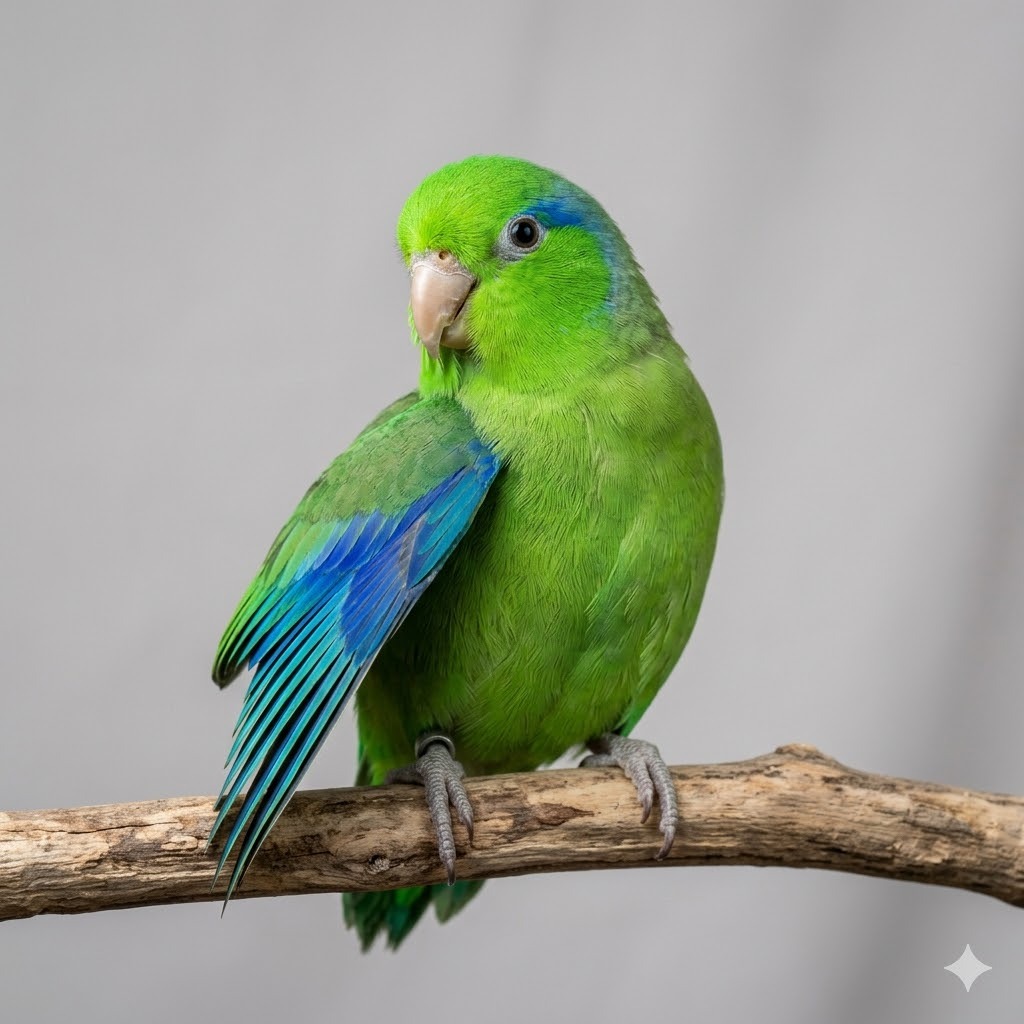
The parrotlet - most commonly the Pacific or celestial parrotlet (Forpus coelestis) - is one of the smallest parrot species in the world, often described as a big parrot personality in a tiny body. Bold, curious, and surprisingly fearless, this pocket-sized parrot packs the confidence and intelligence of much larger birds. Hand-raised parrotlets bond intensely with their owners and make engaging, characterful companions for keepers who can give them real daily attention.
Natural History & Origin
Pacific parrotlets are native to western Ecuador and northwestern Peru, where they live in dry forest, scrub, and arid lowlands in small flocks. They have adapted well to disturbed and agricultural areas in their range. They have been bred in captivity for decades, producing a range of colour mutations from the wild green and blue.
Appearance
Adults weigh 28-35 g, length around 12-13 cm including tail.
Colour varieties: the wild type is green with the male showing blue markings on the wings and rump; captive mutations include blue, yellow, white, fallow, and pastel forms. Males and females can usually be told apart by the blue markings on males.
Temperament & Noise
Bold, feisty, and confident well beyond their size. Parrotlets are quiet by parrot standards - their chatter is soft and apartment-friendly, with no loud screaming. They are not strong talkers, though some males learn a few words.
Hand-raised parrotlets bond closely with one person and can become devoted, but they need consistent handling to stay tame. Without regular interaction they can turn nippy and territorial, and their boldness means they will challenge much larger birds, so they should never be housed with bigger parrots.
Housing & Flight
Minimum cage: 45 × 45 × 60 cm for one bird, with bar spacing of about 1.0-1.3 cm to prevent escape or injury. Larger is always better - parrotlets are energetic and need room to move and climb.
Provide:
- Multiple perches of varied diameters (natural wood preferred).
- A rotating selection of toys - chewables, foraging puzzles, and shreddables for their busy beaks.
- Cuttlebone for calcium.
- Daily out-of-cage time in a bird-safe room (windows covered, ceiling fans off).
Diet
- Quality pellets as base (50-70% of diet).
- Seed mix as supplement (not as base - all-seed diet causes obesity and nutritional deficiency).
- Daily fresh vegetables - leafy greens, broccoli, carrot, sprouted seeds.
- Limited fruit - small piece 2-3 times weekly.
- Cuttlebone for calcium.
Avoid: avocado (toxic to all birds), chocolate, caffeine, alcohol, onion, salt.
Health & Lifespan
15-20 years.
Common concerns:
- Fatty liver disease and obesity from seed-only diets.
- Egg binding in females.
- Respiratory infections - sensitive to fumes (Teflon, aerosols, smoking).
- Psittacosis (bacterial).
- Feather plucking from boredom or stress.
- Injury from their fearless habit of challenging larger animals.
Find an avian vet experienced with parrots before acquisition.
Training & Enrichment
Intelligent and trainable. Many learn step-up, recall, and simple tricks, and they relish foraging puzzles and shreddable toys. Talking ability is limited, though some males pick up a few words and whistles. Consistent positive handling is key to keeping them sweet rather than nippy.
Pros & Cons
Pros:
- Tiny size, big personality.
- Quiet and apartment-friendly.
- Intelligent and trainable.
- Long-lived for such a small parrot.
Cons:
- 15-20 year commitment.
- Need consistent daily handling or turn nippy.
- Feisty and territorial; cannot mix with larger birds.
- Susceptible to airborne toxins (Teflon, aerosols).
Best Suited For
- Owners wanting a small parrot with a large personality.
- Apartment dwellers needing a quieter bird.
- Keepers able to give consistent daily attention.
Not suited for households with non-stick cookware in active use (Teflon fumes can kill birds quickly), smokers in the same room, very young children, or homes wanting a bird to mix freely with larger parrots.
Parrotlet (Forpus coelestis) - frequently asked questions
Can parrotlets talk?
Some males learn a few words and whistles, but they are not strong talkers. They are valued for personality, not vocabulary.
Should I get one or two?
One bonds best to people with daily handling. Two will bond to each other and need careful, spacious housing, as parrotlets can be aggressive with each other.
How long do they live?
15-20 years with good care. Plan accordingly.
Are they good for kids?
Better for older children with supervision. They are small and can deliver a sharp nip, and they are fragile.
Are they noisy?
No. Parrotlets are among the quieter parrots, with soft chatter rather than loud screaming.
🧠 Test yourself: guess the bird
Three clues from our quiz bank, each about another of our birds. Can you name them?
Clue 1.Native to Australasia, this crested parrot may be salmon-crested, sulphur-crested, or even smoky-black, and uses powder down to clean its plumage.
It's the Cockatoo - read the full profile →
Clue 2.Hailing from the rainforests of central Africa, this ash-colored parrot can mimic human speech and household sounds with uncanny accuracy.
It's the African Grey Parrot - read the full profile →
Clue 3.This small finch, named for the Atlantic islands it hails from, was famously carried into coal mines to detect deadly gas.
It's the Canary - read the full profile →
Social Needs
Highly social but intensely pair-bonded. A single parrotlet can thrive as a one-person bird only with committed daily interaction. They are often best kept singly per cage for tameness; parrotlets housed together bond to each other over their owner and can be aggressive, even toward their own kind, so introductions and pairings require care and space.
Never house a parrotlet with larger parrots - their fearlessness can get them seriously hurt.