Eclectus Parrot (Eclectus roratus)
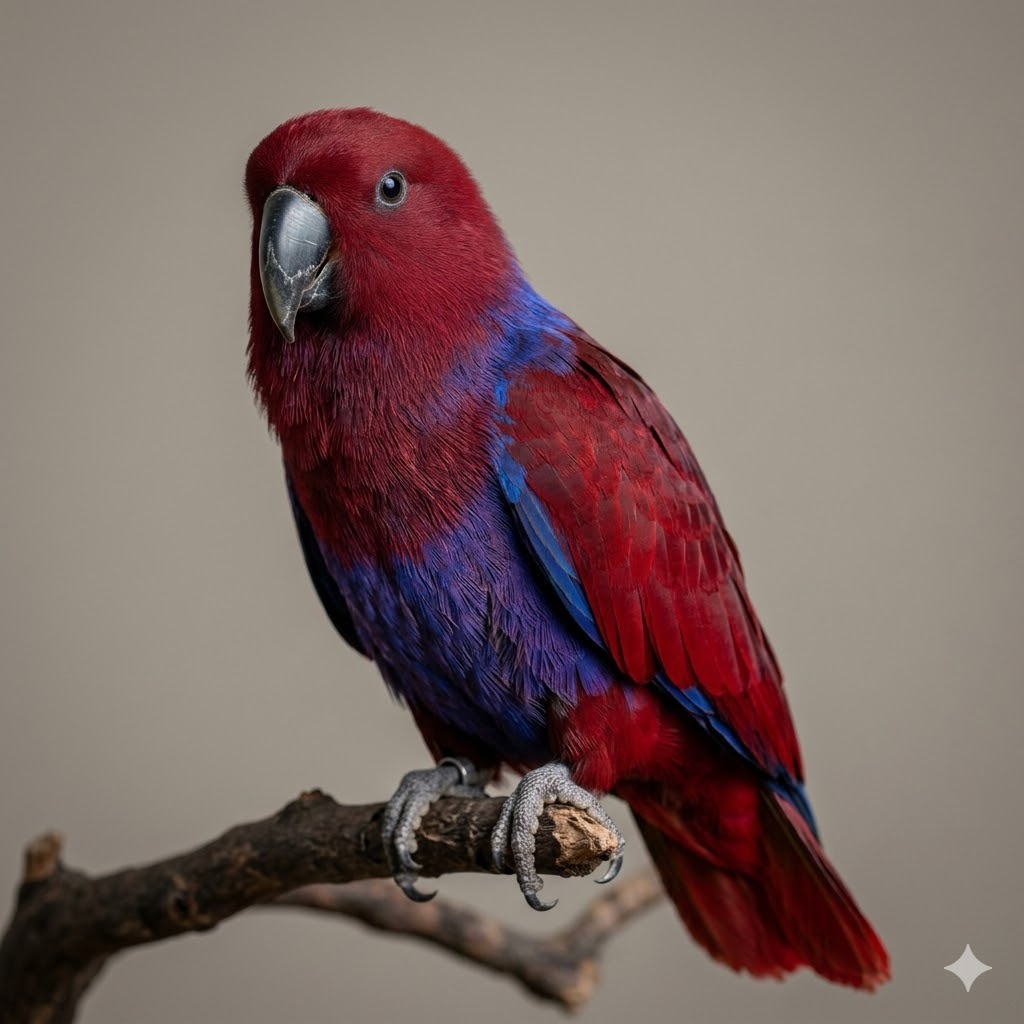
The Eclectus Parrot (Eclectus roratus) is a striking medium-to-large parrot famous for the most extreme sexual dimorphism of any parrot - males are brilliant emerald green, females vivid red and purple, so different that early naturalists believed they were two separate species.
🗓️ Last reviewed: June 2026
Overview
The Eclectus Parrot (Eclectus roratus) is a striking medium-to-large parrot famous for the most extreme sexual dimorphism of any parrot - males are brilliant emerald green, females vivid red and purple, so different that early naturalists believed they were two separate species. Beyond the spectacular looks, eclectus are intelligent, relatively calm, and capable talkers, but they have specialised dietary needs that make them a parrot for the committed, informed keeper.
Natural History & Origin
Eclectus parrots are native to the Solomon Islands, New Guinea, northeastern Australia, and surrounding islands, where they inhabit tropical rainforest. Their diet in the wild is unusually high in fruit, with flowers, buds, seeds, and nuts. They have an unusually long digestive tract suited to this high-fibre, fruit-rich diet, which is central to their care in captivity.
Appearance
Adults weigh 380-500 g, length around 35 cm.
Colour varieties: this species is naturally and dramatically dimorphic rather than mutation-driven. Males are bright emerald green with a candy-corn coloured beak; females are deep red with blue or purple on the chest and a black beak. Several subspecies vary in size and shade.
Temperament & Noise
Calm, intelligent, and observant, often more laid-back than many parrots of similar size, though individuals vary. Eclectus are good talkers with clear voices, and they can be loud at times, especially morning and evening calls, so they are not ideal for noise-sensitive apartments.
Hand-raised eclectus bond well with their people and can be gentle companions, but they dislike rough handling and respond best to calm, predictable routines. Females can become territorial, particularly around nesting-type spaces.
Housing & Flight
Minimum cage: 90 × 90 × 120 cm for one bird, with bar spacing of about 2-2.5 cm. Larger is always better - this is an active, full-bodied parrot that needs room to move and stretch its wings.
Provide:
- Sturdy perches of varied diameters (natural hardwood preferred).
- A rotating selection of robust toys - foraging puzzles, shreddables, and chewables.
- A cuttlebone or mineral block.
- Daily out-of-cage time in a bird-safe room (windows covered, ceiling fans off).
Diet
Eclectus have specialised needs and do best on a fresh, varied, lower-fat diet:
- Generous fresh vegetables and fruit daily - a larger share than for most parrots, reflecting their natural fruit-rich diet.
- Quality pellets in moderation as part of the diet (some keepers limit fortified pellets, as eclectus are considered sensitive to excess synthetic vitamins).
- Some seeds, sprouted seeds, and legumes in moderation.
- A high-fibre approach overall suited to their long digestive tract.
Avoid: avocado (toxic to all birds), chocolate, caffeine, alcohol, onion, salt, and excessive artificial colourings or additives, to which this species is thought to be particularly sensitive.
Health & Lifespan
30 years or more; commonly 30-50 years with good care.
Common concerns:
- Toe-tapping and wing-flipping - twitching movements often linked to diet, especially excess synthetic vitamins or additives.
- Obesity and fatty liver from over-rich diets.
- Feather plucking from boredom, stress, or diet issues.
- Egg binding in females.
- Respiratory infections - sensitive to fumes (Teflon, aerosols, smoking).
- Psittacosis (bacterial).
Find an avian vet experienced with parrots before acquisition.
Training & Enrichment
Highly intelligent and trainable. Many learn step-up, recall, and a clear vocabulary, and they enjoy foraging puzzles that mimic working for food in the wild. Calm, consistent, reward-based training suits their thoughtful temperament far better than pressure.
Pros & Cons
Pros:
- Spectacular, unmistakable appearance.
- Intelligent and capable talkers.
- Often calmer than similar-sized parrots.
- Very long-lived companion.
Cons:
- Specialised, fresh-food-heavy diet.
- Sensitive to additives and excess synthetic vitamins.
- Can be loud at dawn and dusk.
- 30-50 year commitment.
Best Suited For
- Experienced, informed parrot keepers.
- Owners able to prepare fresh, varied food daily.
- Households that can house and exercise a large parrot.
Not suited for households with non-stick cookware in active use (Teflon fumes can kill birds quickly), smokers in the same room, noise-sensitive apartments, or first-time owners unprepared for specialised feeding.
Eclectus Parrot (Eclectus roratus) - frequently asked questions
Why are the male and female so different?
Eclectus show the most extreme sexual dimorphism of any parrot. Males are green, females red and purple - so different they were once classed as separate species.
Can eclectus talk?
Yes. They are good talkers with notably clear voices and can learn a varied vocabulary.
How long do they live?
30 years or more, commonly 30-50 with excellent care. This is a multi-decade commitment.
What about toe-tapping?
A twitching of toes and wings often linked to diet, particularly excess synthetic vitamins and additives. A fresh, balanced diet and an avian vet's input help manage it.
Are they good for kids?
Better for households with calm older children and experienced supervision. They are large, long-lived, and dislike rough handling.
🧠 Test yourself: guess the bird
Three clues from our quiz bank, each about another of our birds. Can you name them?
Clue 1.This tiny aviary bird has a short, conical, cone-shaped bill perfectly built for cracking small seeds.
It's the Finch (Zebra & Society) - read the full profile →
Clue 2.One brilliant orange-and-yellow species in this group is now endangered in the wild despite being common in captivity.
It's the Conure - read the full profile →
Clue 3.Native to Australasia, this crested parrot may be salmon-crested, sulphur-crested, or even smoky-black, and uses powder down to clean its plumage.
It's the Cockatoo - read the full profile →
Social Needs
Highly social and intelligent. Eclectus need daily interaction and mental stimulation to stay content. A single well-handled bird can thrive as a family companion with committed attention. They are generally not as needy or clingy as some parrots, but loneliness and boredom still lead to plucking and behavioural problems.
Pairs or groups can be kept in spacious aviaries, but breeding females can become strongly territorial.