Finch (Zebra & Society)
Finches - particularly the Zebra Finch and Society (Bengalese) Finch - are small, colourful, social birds kept as observation pets.
Updated: October 2026
Overview
Finches - particularly the Zebra Finch and Society (Bengalese) Finch - are small, colourful, social birds kept as observation pets. They live in same-species flocks, communicate constantly through soft chirps, and provide an attractive low-maintenance alternative to parrot keeping.
Natural History & Origin
- Zebra Finch (Taeniopygia guttata): Australia. The most popular pet finch. Lives in flocks.
- Society (Bengalese) Finch (Lonchura striata domestica): entirely domesticated; descended from the white-rumped munia of Asia. Often used as "foster parents" for other finch species.
- Gouldian Finch: Australian, brilliantly coloured, more demanding to keep.
Appearance
Adults weigh 10-15 g, length 10 cm.
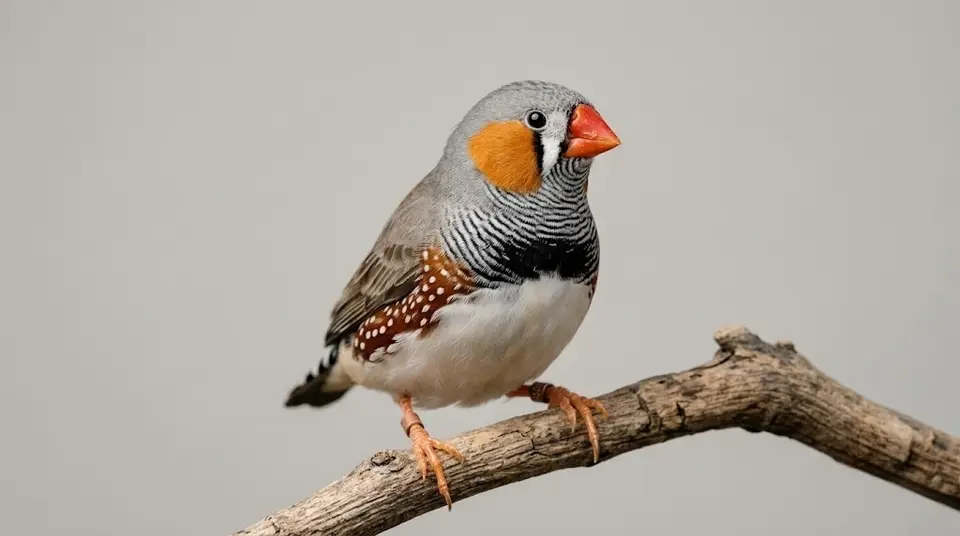
Zebra finches: grey body, black-and-white tail bars, orange cheeks (males), red beak. Many mutations.
Society finches: tan and white patterns; many varieties.
Temperament & Noise
Social, observation pets. Finches generally do not tame to handling and prefer their own kind. Vocal in a soft pleasant chirp - not loud.
Housing
Minimum cage for pair: 60 × 40 × 50 cm. Wider is better than taller. Flight cages strongly preferred for finches.
Provide:
- Multiple perches.
- Cuttlebone.
- Bath dish.
- Quiet location.
Diet
- Quality finch seed mix, though the RSPCA notes finches would also benefit from a good-quality pellet diet (RSPCA).
- Egg food during breeding/moulting.
- Fresh, washed greens - the RSPCA names dandelion, chickweed and groundsel.
- Cuttlebone and grit.
Health & Lifespan
5-8 years.
Common concerns:
- Mites.
- Egg binding.
- Respiratory infections.
- Goitre in some populations.
Pros & Cons
Pros:
- Quiet, pleasant chirping.
- Beautiful to observe.
- Inexpensive to keep.
- Less demanding than parrots.
- Tolerate apartment living.
Cons:
- Not for handling.
- Short lifespan.
- Need pairs or groups.
- Sensitive to drafts.
Best Suited For
- Observation pet keepers.
- Apartment dwellers.
- First-time bird owners wanting low-maintenance start.
Not suited for anyone wanting interactive bird, single-bird households.
Everyday gear for birds
Links go to Amazon or a partner brand's own store and may earn us a commission at no extra cost to you. As an Amazon Associate we earn from qualifying purchases. An Amazon link leads to a type of gear and you choose the exact product; a card that names a store leads to that partner's own shop.
Finch (Zebra & Society) - frequently asked questions
What do finches eat?
Finches are usually fed seed, but the RSPCA says they would also benefit from a good-quality pellet diet, plus fresh, washed greens such as dandelion, chickweed or groundsel (RSPCA). If you are unsure what suits your bird, ask a vet.
Can I keep just one finch?
Strongly discouraged. Finches are social. Always pairs or groups.
Do they sing?
Males sing softly. Zebra finch song is distinctive squeaking trill.
Are they good for kids?
Observation, yes. Handling, no.
How long do they live?
The typical lifespan of the Finch is 5-8 years.
Sources
Sources this profile draws on, as linked in the text:
- RSPCA(rspca.org.uk)
Test yourself: guess the bird
Three clues from our quiz bank, each about another of our birds. Can you name them?
Clue 1.Among the tiniest parrots kept as pets, this short-tailed bird is bold and feisty despite its affectionate name.
It's the Lovebird - read the full profile →
Clue 2.Named for its trembling, bobbing courtship motions, this gray-breasted parrot is a gifted talker for its small size.
It's the Quaker (Monk) Parakeet - read the full profile →
Clue 3.Hailing from the rainforests of central Africa, this ash-colored parrot can mimic human speech and household sounds with uncanny accuracy.
It's the African Grey Parrot - read the full profile →
Social Needs
Strongly social. Always keep at least in pairs (same-sex if breeding not desired). Most thrive in small flocks.