Gouldian Finch
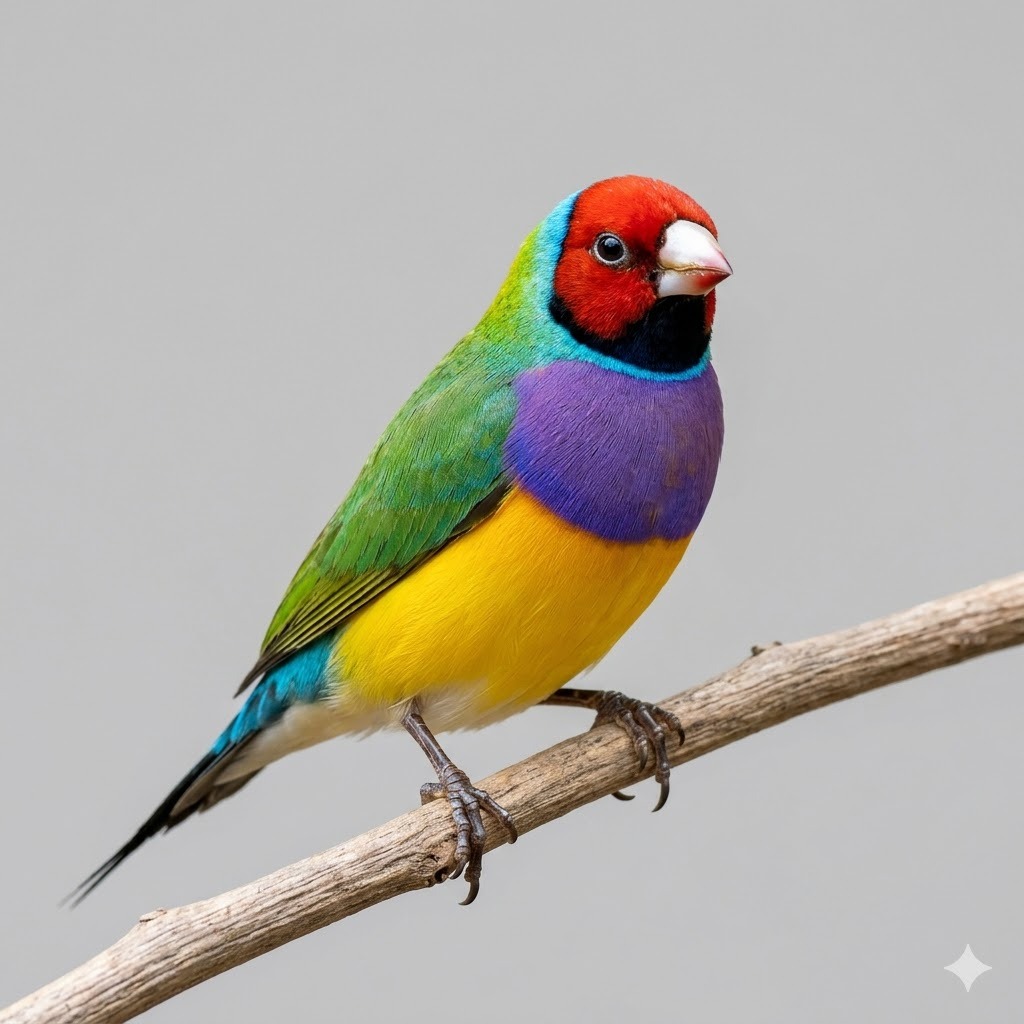
The Gouldian finch looks hand-painted - a small Australian grassfinch splashed with purple, yellow, green and a red, black or orange face, widely considered the most beautiful finch in the world.
🗓️ Last reviewed: July 2026
Overview
The Gouldian finch looks hand-painted - a small Australian grassfinch splashed with purple, yellow, green and a red, black or orange face, widely considered the most beautiful finch in the world. It's a classic aviary jewel: quiet, peaceful and social, though a little more delicate than a beginner's finch, rewarding attentive keepers with living colour.
Natural History & Origin
A dazzlingly colourful Australian grassfinch (Chloebia gouldiae), now bred worldwide in many colour forms as an aviary showpiece.
Appearance
Small (about 15 g), with a green back, purple chest, yellow belly and a black-, red- or orange-headed face; captive mutations add blue, silver and more.
Temperament & Noise
Gentle, peaceful and rather shy - a watch-don't-hold finch that thrives in a calm planted aviary or roomy flight cage. Soft, quiet twittering.
Housing & Flight
A roomy flight cage or planted aviary with warmth (they dislike cold and damp), perches, greenery and space to fly; excellent in a peaceful mixed finch aviary. Keep draft-free and warm, especially through moult.
Diet
A quality finch/grassfinch seed mix, sprouted and seeding grasses, egg food (especially when breeding), grit, greens and calcium; fresh water and bathing. Good nutrition is key to their colour and to surviving the moult.
Health & Lifespan
Average lifespan is 6-8 years. Somewhat delicate (6-8 years): sensitive to cold, to the air-sac mite, and to a stressful moult - warmth, clean air and good diet are essential. Not the hardiest first finch, but manageable with care.
Training & Enrichment
Not hand-tame or trainable - kept entirely for their spectacular colour and gentle aviary presence. Enrichment is flock company, flight space and planting.
Pros & Cons
Pros
- Possibly the most beautiful finch alive
- Peaceful, quiet colony bird
- Superb mixed-aviary showpiece
- Many colour mutations
Cons
- Delicate - cold-, damp- and mite-sensitive
- Not a hands-on pet
- Trickier moult than hardy finches
- Needs warmth and good diet
Best Suited For
- Aviary keepers wanting living colour
- Peaceful mixed-finch collections
- Keepers who can provide warmth
- Watchers rather than handlers
Gouldian Finch - frequently asked questions
Are Gouldian finches good for beginners?
They're a step up from zebra or society finches - beautiful but more sensitive to cold, damp and moult stress. A beginner can succeed with warmth, clean air and good diet.
Do they need heat?
Yes, in cool climates - they're warm-country birds that suffer in cold and damp, so a heated or sheltered draft-free space is important, especially during moult.
Can I keep them with other finches?
Yes - they're peaceful colony birds that mix well with other calm finches in a roomy planted aviary.
🧠 Test yourself: guess the bird
Three clues from our quiz bank, each about another of our birds. Can you name them?
Clue 1.This small, stocky African parrot is named for the strong pair bond mates form, sitting closely side by side.
It's the Lovebird - read the full profile →
Clue 2.This small grey Australian parrot, the smallest member of its crested family, sports orange cheek patches and a jaunty head crest.
It's the Cockatiel - read the full profile →
Clue 3.Playful and clownish, these long-tailed Central and South American parrots love to cuddle and may sleep on their backs.
It's the Conure - read the full profile →
Social Needs
Very social, peaceful colony birds - keep several together or in a mixed calm-finch aviary; they don't fight and show best in company.