Kakariki
The kakariki is a small, wonderfully energetic New Zealand parakeet whose name means "small parrot" in Maori.
🗓️ Last reviewed: July 2026
Overview
The kakariki is a small, wonderfully energetic New Zealand parakeet whose name means "small parrot" in Maori. What sets it apart from most pet parrots is its sheer busyness: the kakariki is a hyperactive, ground-foraging bird that spends its days digging, scratching, and rummaging like a tiny green whirlwind. It is not a clingy lap parrot and not a big talker, but it is endlessly entertaining, relatively quiet, and full of personality. The trade-off is that it needs a lot of space and constant foraging enrichment to satisfy that restless energy, and it is comparatively short-lived. For an owner who wants a busy, comical aviary bird rather than a cuddly companion, the kakariki is a delight.
Natural History & Origin
Kakariki are native to New Zealand and its surrounding islands, where several species and subspecies inhabit forest, scrub, and open country. The red-crowned and yellow-crowned kakariki are the best known in aviculture. Unusually for parrots, they spend a great deal of time on the ground, foraging through leaf litter and soil for seeds, shoots, insects, and roots. Some wild populations became rare through habitat loss and introduced predators, but the birds have bred readily in captivity and are now well established as aviary parakeets. Their ground-foraging lifestyle is the single most important thing to understand about keeping them well.
Appearance
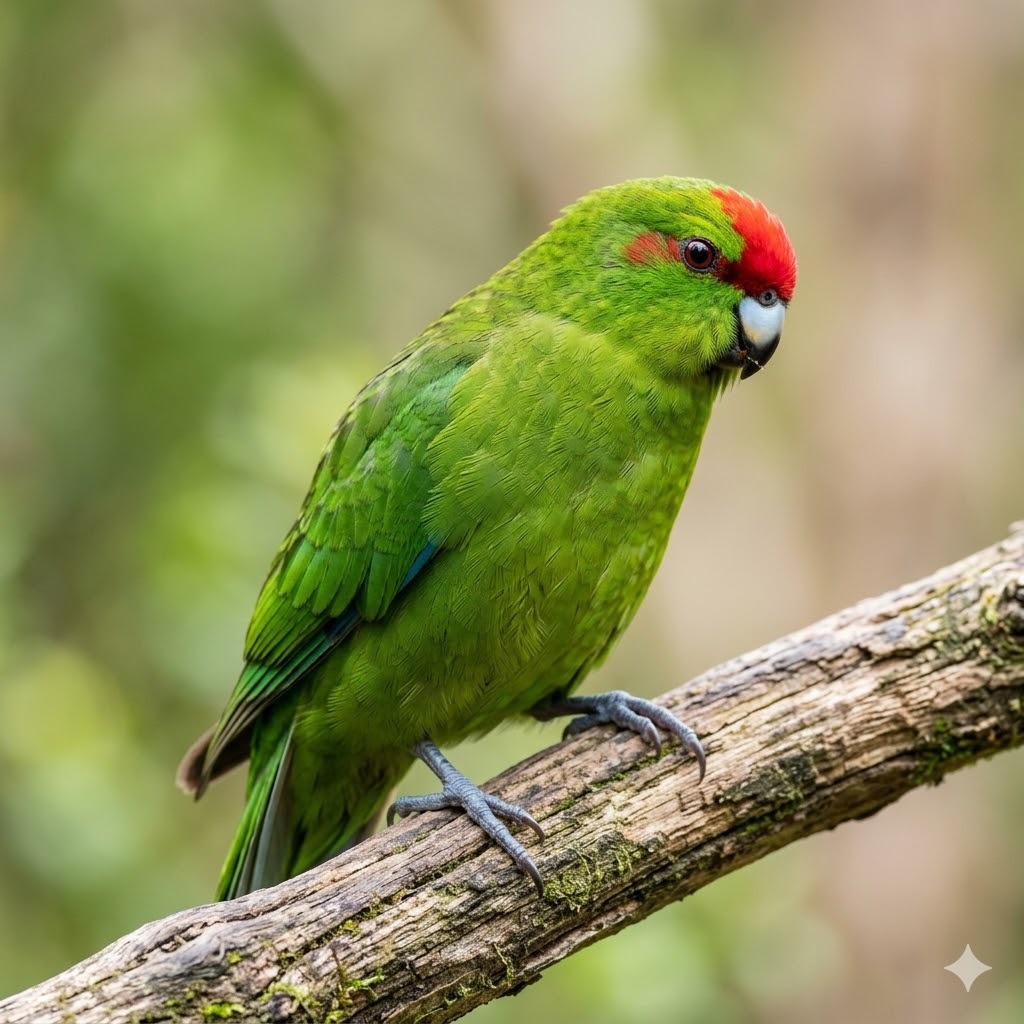
Adults measure around 25-28 cm in length including the tail and weigh roughly 60-90 g. Kakariki are mostly bright grass-green, slim and long-tailed, with a splash of colour on the crown - red in the red-crowned kakariki, yellow in the yellow-crowned - and a small red patch near the eye and rump. The body is streamlined and the tail long and tapering, suited to their quick, darting movement. Several colour mutations exist in captivity, including yellow and cinnamon variants. Both sexes look broadly similar, though males are often slightly larger with bigger heads and beaks.
Temperament & Noise
Kakariki are famously active - almost frantically so. They forage, dig, climb, and explore constantly, rarely sitting still, and this busyness is their defining charm. They are curious and can become tame and confident with people, though they are not typically cuddly and prefer activity to sitting quietly on a hand. On the plus side, they are relatively quiet compared with most parrots: their calls are soft chattering and gentle chirps rather than piercing screeches, which makes them more apartment-friendly on noise. They are not strong talkers, and their appeal lies in their comical, restless behaviour rather than mimicry or cuddling.
Housing & Flight
Because kakariki are so active and love to forage on the ground, they need a large flight aviary or a long flight cage with plenty of floor space to move and rummage. Height matters less than length and floor area. A cramped cage frustrates them quickly.
Provide:
- A long flight enclosure with room to fly and a generous floor for foraging.
- Foraging trays, scatter-fed food, and safe substrate to dig and rummage in.
- Natural branches, ropes, and plenty of chew toys.
- A shallow bath; they enjoy bathing.
- Clean substrate maintained regularly, since ground foraging raises parasite risk.
Diet
- Quality small-parrot pellets as a nutritional base.
- A good seed mix as a supplement, not the whole diet.
- Plenty of fresh vegetables, leafy greens, and sprouts - kakariki are keen vegetable eaters.
- Some fruit and edible greens for variety.
- A little animal protein such as egg food, reflecting their partly insectivorous wild diet.
- Cuttlebone or a mineral block for calcium.
Avoid: avocado (toxic to all birds), chocolate, caffeine, alcohol, onion, and salt. Scatter-feeding on a clean floor or in foraging trays taps into their natural digging behaviour and is excellent enrichment, but keep the substrate fresh to reduce disease risk.
Health & Lifespan
Kakariki are relatively short-lived for a parrot, typically living around 8-15 years with good care.
Common concerns:
- Intestinal worms and parasites - a real risk in ground-foraging birds, so regular worming and clean substrate are important.
- Bacterial and fungal infections from soiled floors or damp housing.
- Obesity from an all-seed diet.
- Feather and beak disorders including psittacine beak and feather disease.
- Sensitivity to fumes - Teflon, aerosols, and smoke are dangerous to all birds.
Because they breed readily and mature fast, they can also exhaust themselves through over-breeding if not managed. Find an avian vet experienced with parrots before acquisition.
Training & Enrichment
Intelligent and inquisitive, kakariki can learn to step up and take part in simple training, and they take to foraging challenges with enthusiasm. Enrichment is the heart of good kakariki care: because they are so active, they need constant things to do - foraging trays, scatter-fed food, shreddable toys, branches to strip, and substrate to dig in. A bored kakariki becomes stressed and restless. They are not notable talkers, so training focuses on tameness and enrichment rather than speech.
Pros & Cons
Pros:
- Endlessly active and entertaining to watch.
- Relatively quiet for a parrot.
- Confident and can become tame.
- Enthusiastic foragers - easy to enrich.
- Attractive bright-green plumage.
Cons:
- Short-lived compared with most parrots (8-15 years).
- Needs lots of space and floor area for foraging.
- Prone to worms as ground foragers.
- Not a cuddly or talkative companion.
- Can over-breed and exhaust themselves if unmanaged.
Best Suited For
- Owners who want a busy, comical aviary bird.
- People able to provide a large flight aviary with foraging space.
- Households wanting a relatively quiet parakeet.
- Keepers who enjoy watching active behaviour over cuddling.
Not suited for anyone wanting a cuddly or talking parrot, homes with only a small cage, or households with non-stick cookware in active use, smokers in the same room, or no room for a floor-foraging setup.
Kakariki - frequently asked questions
Why are kakariki always moving?
They are naturally hyperactive ground foragers. In the wild they spend the day digging and rummaging, so constant busy activity is normal and healthy for them.
Are they noisy?
No, relatively quiet for a parrot. Their calls are soft chatter and gentle chirps rather than loud screeches, which makes them fairly apartment-friendly on noise.
How long do they live?
Around 8-15 years, which is short for a parrot, so they are a moderate rather than lifelong commitment.
Can they talk?
Not really. They may mimic a few sounds, but they are valued for their active, comical behaviour, not their speech.
Do they need a big cage?
Yes. They need a large flight aviary or long cage with plenty of floor space to fly and forage; a small cage frustrates them.
🧠 Test yourself: guess the bird
Three clues from our quiz bank, each about another of our birds. Can you name them?
Clue 1.Native to American rainforests, this brilliantly colored bird can live 50 years or more in captivity.
It's the Macaw - read the full profile →
Clue 2.One brilliant orange-and-yellow species in this group is now endangered in the wild despite being common in captivity.
It's the Conure - read the full profile →
Clue 3.This small finch, named for the Atlantic islands it hails from, was famously carried into coal mines to detect deadly gas.
It's the Canary - read the full profile →
Social Needs
Kakariki are social and generally do well in pairs or small groups in a spacious aviary, though males can become aggressive toward each other during breeding season. They can be kept singly with plenty of interaction and enrichment, but they are not birds that thrive on human cuddling; their social needs are met more through activity and companionship of their own kind than through hands-on affection. A busy, well-stocked aviary with a compatible pair usually produces the happiest kakariki.