Aegean
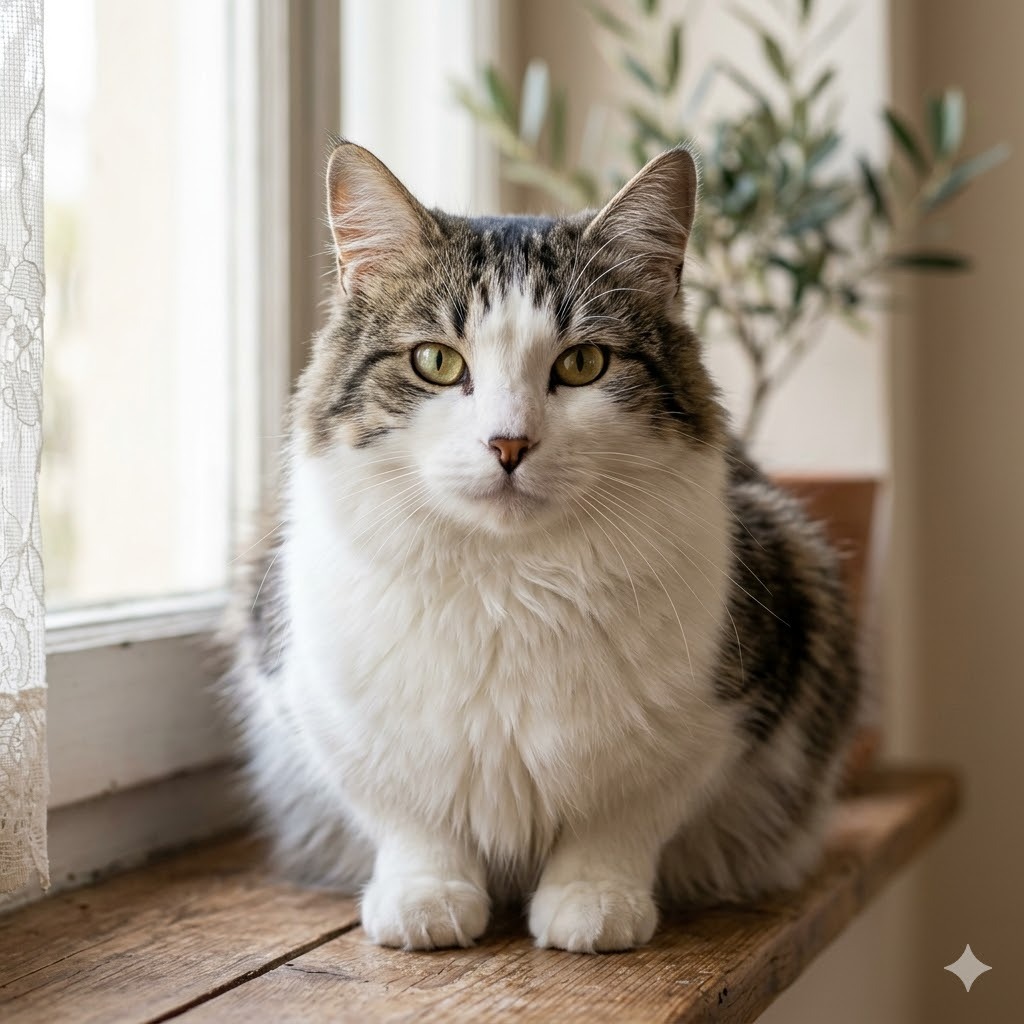
The Aegean is a natural, native cat breed from the Cycladic Islands of Greece - a hardy, friendly, bi- or tri-colour semi-longhair that developed with no human breeding programme behind it.
🗓️ Last reviewed: July 2026
Overview
The Aegean is a natural, native cat breed from the Cycladic Islands of Greece - a hardy, friendly, bi- or tri-colour semi-longhair that developed with no human breeding programme behind it. A medium-sized cat, the Aegean typically weighs 4-7 kg and enjoys a lifespan of about 12-16 years. It is one of Greece's only recognised native breeds, though it remains a landrace and is not standardised by the major international registries.
History & Origins
The Aegean is a landrace - a population of cats shaped by the environment rather than by deliberate selective breeding. For centuries these cats have lived semi-feral around the harbours, fishing villages, and tavernas of the Cyclades, the cluster of Greek islands in the southern Aegean Sea. They survived on scraps, on rodents around grain stores, and on fish left by fishermen, and over generations they became robust, adaptable, and comfortable living close to people.
Serious interest in the Aegean as a defined breed began only in the early 1990s, when Greek breeders started documenting and preserving the island cats to protect the type. This makes the Aegean a very young breed in the formal sense, despite the ancient roots of the free-living population it comes from. It is worth being honest here: the Aegean is not recognised by the large international bodies such as CFA or TICA, and its "standard" is maintained mainly within Greece. Most Aegeans in the world are still ordinary island cats rather than pedigreed animals.
Because the breed was never funnelled through a small number of founder cats, it retains a wide and healthy gene pool - one of the genuine advantages of a natural landrace.
Appearance
The Aegean is a medium-sized, well-muscled cat of moderate build - nothing about it is extreme. Body weight generally falls between 4 and 7 kg, with males heavier than females.
Key features:
- Coat: semi-longhair, without a heavy woolly undercoat. The coat is silky, lies fairly flat, and thickens noticeably in winter, especially around the neck and tail.
- Colour: almost always bi-colour or tri-colour, with white as a required and dominant component. White is usually combined with patches of black, red, blue, cream, or tabby. Solid-coloured Aegeans are not considered typical.
- Head: medium, moderately rounded, with a straight profile and a gently defined muzzle.
- Eyes: medium-large, almond-shaped, ranging from green through gold.
- Ears: medium to large, broad at the base, set fairly upright.
- Body: balanced and athletic rather than cobby or slender, reflecting a working-cat heritage.
- Tail: medium length, well-furred, often carried proudly.
Temperament & Character
The Aegean is a sociable, people-oriented cat with a confident, easy-going nature. Generations of living alongside island communities produced a cat that seeks out human company, enjoys attention, and adapts readily to household life.
Aegeans are active and playful without being frantic. They are curious, intelligent, and communicative, and many are quite vocal, "chatting" with their owners throughout the day. They tend to bond closely with their families and often follow a favourite person from room to room.
A defining trait is their comfort around water. Descended from harbour and fishing-village cats, many Aegeans are genuinely interested in water - batting at taps, watching the bath, and, in their island homes, even fishing at the water's edge. This is folklore backed by observation rather than a guaranteed trait, but it appears more often in this breed than in most.
They are generally friendly with children and other pets, tolerant of handling, and rarely nervous or aloof.
Care
Coat & Grooming
The semi-longhair coat is low to moderate maintenance because it lacks a dense woolly undercoat, so it mats far less than a Persian or even a Maine Coon coat. Brush once or twice weekly, increasing to a few times a week during the heavier seasonal shed in spring and autumn. Pay attention to the ruff and tail, where the coat is thickest. Routine care rounds things out: check and clean ears as needed, trim claws every couple of weeks, and brush the teeth regularly.
Exercise & Enrichment
The Aegean is an energetic, playful breed that stays active well into adulthood. Provide interactive wand toys, puzzle feeders, and climbing space such as a cat tree or shelves. Their intelligence and water curiosity make them good candidates for novel enrichment - a pet water fountain, for example, is often a hit. Daily play sessions keep an Aegean physically fit and mentally satisfied and help prevent boredom-driven mischief.
Health & Lifespan
Average lifespan is 12-16 years.
As a natural landrace with a broad gene pool and no history of intensive selective breeding, the Aegean has no well-documented breed-specific inherited diseases, which is a real advantage. General feline health care still applies:
- Dental disease - the most common chronic problem in cats.
- Obesity - preventable with measured feeding.
- Routine parasite and vaccination care.
- Standard age-related concerns such as kidney and thyroid changes in older cats.
Because the breed is not tracked by large registries, formal health data is limited; buy from anyone raising Aegeans who keeps cats vaccinated, vet-checked, and well-socialised.
Feeding & Nutrition
Adults typically eat around 50-80 g of quality cat food per day, adjusted for size and activity. Feed measured meals rather than leaving food out constantly, as this active but non-huge breed can still gain weight if overfed.
A high-protein, meat-forward diet suits the Aegean well. A mix of wet and dry food supports hydration and urinary health, and many of these water-loving cats readily use a fountain. There are no special breed dietary requirements.
Living With
Litter
Standard provisions work well: one box per cat plus one spare, scooped daily and kept in quiet, accessible spots. A medium-large box and a low-dust, unscented litter suit most Aegeans.
Multi-cat households
The Aegean's sociable, tolerant nature makes it a strong choice for multi-cat homes. Raised or introduced properly, they generally get along well with other cats and with cat-friendly dogs. Their confidence means they rarely become the anxious or bullied cat in a group.
Indoor vs outdoor
Although the ancestral population is semi-feral, indoor life with safe outdoor access is the modern recommendation. Aegeans adapt well to being indoor cats provided they have enrichment. A secure garden, catio, or harness walks satisfy their curiosity while keeping them safe from traffic and disease.
Pros & Cons
Pros
- Friendly, sociable, and people-oriented.
- Robust natural breed with a broad, healthy gene pool.
- Lower-maintenance coat than most semi-longhairs.
- Good with children, other cats, and dogs.
- Often fascinated by water - characterful and fun.
Cons
- Rare outside Greece and hard to find as a pedigree.
- Not recognised by the major international registries.
- Active and vocal - not a quiet, low-engagement cat.
- Limited formal breed or health documentation.
- Needs daily interaction and enrichment.
Best Suited For
- Owners wanting a friendly, interactive, characterful cat.
- Multi-pet and family households.
- People who appreciate a natural, low-fuss breed.
- Homes that can provide daily play and company.
- Anyone charmed by a water-loving cat.
Not suited for owners who want a strictly show-registered pedigree, people who are away for long hours with no feline company at home, or those wanting a silent, hands-off pet.
Aegean - frequently asked questions
Is the Aegean a recognised breed?
It is recognised within Greece as a native breed and is preserved by Greek breeders, but it is not accepted by the large international registries such as CFA or TICA. Most Aegeans are island cats rather than pedigreed animals.
Do Aegeans really like water?
Many do. Their descent from harbour and fishing-village cats seems to produce cats that are unusually comfortable with water, though not every individual will be.
What colours do Aegeans come in?
Almost always bi-colour or tri-colour, with white as the dominant component combined with black, red, blue, cream, or tabby patches. Solid colours are atypical.
Are they good with children and other pets?
Generally yes. The breed is sociable and tolerant, and usually does well in busy family and multi-pet households.
How much grooming do they need?
Little. The semi-longhair coat lacks a dense undercoat, so a weekly brush is usually enough, with more during seasonal sheds.
🧠 Test yourself: guess the cat
Three clues from our quiz bank, each about another of our cats. Can you name them?
Clue 1.Often called the 'Greyhound of cats' for its arched body and galloping play, this curly-coated breed first appeared on a southwest English farm in 1950.
It's the Cornish Rex - read the full profile →
Clue 2.Born white, this docile longhaired breed develops its dark color points on ears, face, and tail as it grows.
It's the Ragdoll - read the full profile →
Clue 3.One of the oldest cat breeds, named for the region of its origin, this placid feline sports a luxuriant flowing coat.
It's the Persian - read the full profile →
💛 Adoptable Aegeans near you
Real cats of this breed (and close mixes) waiting in shelters and rescues right now, live from Petfinder. We have no affiliation and earn nothing - if someone catches your eye, the link goes straight to their shelter. New to adopting? Start with our adoption guide.
Widget not loading (some ad-blockers hide it)? Search directly on petfinder.com.