Thai
The Thai is the traditional, old-style Siamese - a moderate, round-headed pointed cat that preserves the look of the original Siamese cats before decades of breeding pushed the modern show Siamese toward its extreme wedge shape.
🗓️ Last reviewed: July 2026
Overview
The Thai is the traditional, old-style Siamese - a moderate, round-headed pointed cat that preserves the look of the original Siamese cats before decades of breeding pushed the modern show Siamese toward its extreme wedge shape. Intelligent, deeply people-oriented, and famously vocal, it typically weighs 3.5-6 kg and lives 12-16 years. Recognised by TICA under the name "Thai," it offers the classic pointed beauty and rich personality of Siamese heritage in a sturdier, more natural body.
History & Origins
The cats that became the Siamese arrived in the West from Siam (modern Thailand) in the late 19th century, where pointed cats had existed for centuries and were depicted in old Thai manuscripts such as the "Tamra Maew" (cat poems). These early imports were moderate cats with rounded heads and athletic but not extreme bodies.
Through the 20th century, show breeders increasingly selected the modern Siamese toward a very long, angular, tubular body and an extremely elongated wedge-shaped head. Many enthusiasts preferred the older, moderate type and continued to breed it. To distinguish this traditional form, cat registries introduced separate recognition.
TICA recognises the traditional type as the "Thai," honouring the breed's country of origin, while some other bodies and hobbyists use terms like "Traditional" or "Old-Style" Siamese. The Thai is therefore not a new invention but a preservation of the original Siamese conformation. Careful breeders maintain the moderate head, sound structure, and vivid pointed colouring that defined the cats first admired in the West.
Appearance
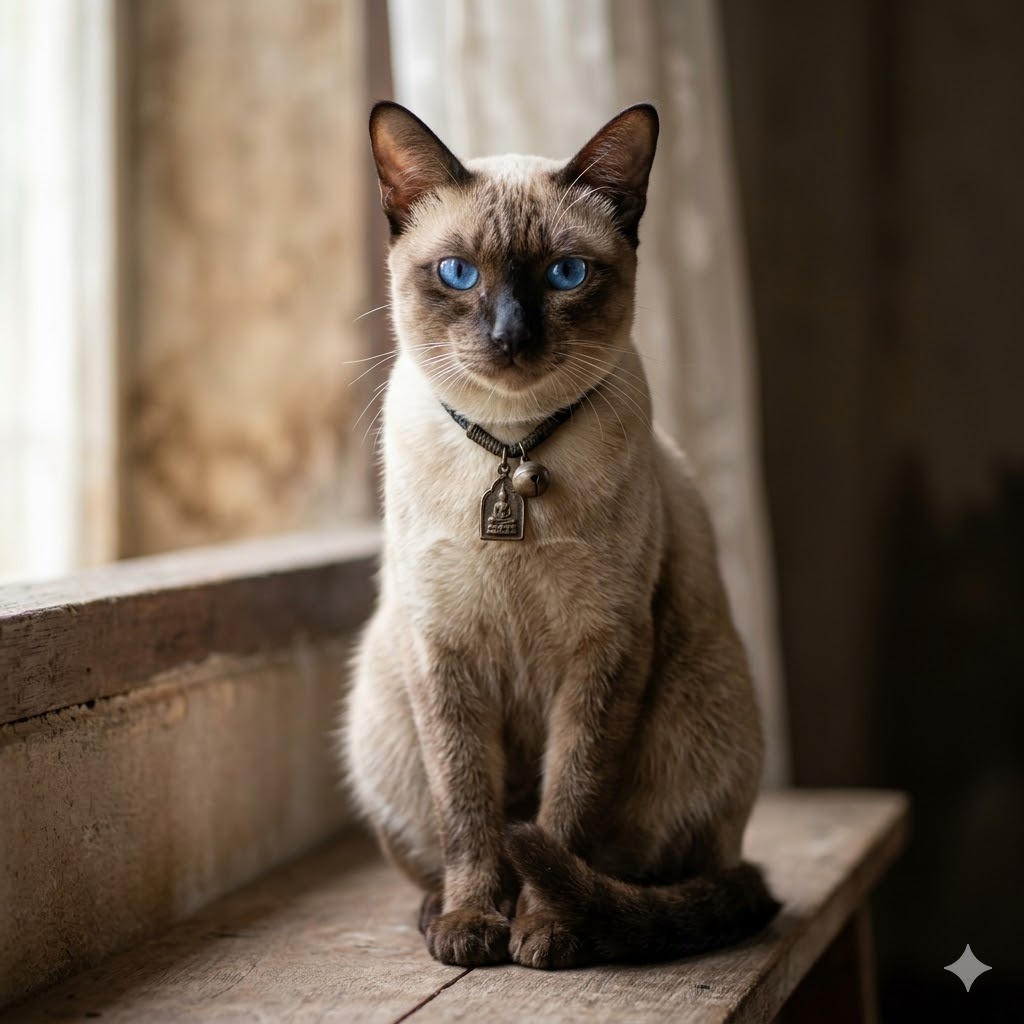
The Thai is a medium-sized, moderate cat - clearly pointed like a Siamese but rounder and sturdier than the modern show type. Males weigh roughly 4.5-6 kg; females 3.5-4.5 kg. The build is athletic and balanced rather than extreme.
Key features:
- Coat: short, fine, close-lying, and glossy, with little undercoat.
- Colour & pattern: classic pointed (colourpoint) - a pale body with darker "points" on the face mask, ears, legs, and tail. Seal, blue, chocolate, and lilac points are traditional, with red and tabby (lynx) points also seen.
- Head: a modified, gently rounded wedge with full cheeks and a moderate muzzle - distinctly rounder than the modern Siamese.
- Ears: medium to large and wide-set, but not the exaggerated flare of the modern type.
- Eyes: vivid deep blue, almond-shaped, and moderately slanted.
- Body: medium, muscular, and moderately long, with good substance.
- Legs & paws: proportionate and sturdy, with the hind legs slightly longer.
- Tail: medium-long and tapering.
Temperament & Character
The Thai is intelligent, affectionate, and intensely people-oriented - a true companion cat that wants to be involved in everything you do. Like its Siamese relatives, it bonds closely and often attaches strongly to its favourite person.
The breed is famously vocal. Thais "talk" a great deal, using a wide range of loud, expressive calls to comment, demand, and converse. Owners who enjoy a chatty cat love this; those wanting quiet will not.
They are highly active and mentally sharp, quick to learn tricks, open doors, and solve puzzles. Many enjoy fetch and harness walks. This intelligence needs an outlet - a bored Thai becomes noisy and inventive.
Emotionally, the breed is sensitive and social. Thais dislike being left alone for long, thrive on interaction, and often do best with company. They are playful and kitten-like well into adulthood and make demonstrative, devoted pets.
Care
Coat & Grooming
The short, fine coat is very easy to care for. A weekly brush or a rub with a grooming mitt removes loose hair and keeps the coat glossy. Shedding is modest and matting is not an issue.
Standard routine care covers the rest: check and clean ears as needed, trim claws every couple of weeks, and brush teeth regularly, as Oriental-type cats can be prone to dental disease. Most Thais enjoy the attention that grooming brings.
Exercise & Enrichment
The Thai is active and intelligent and needs daily engagement. Provide climbing furniture, interactive wand-toy sessions, and plenty of puzzle feeders and rotating toys. Many take enthusiastically to fetch, clicker training, and harness walks.
Because the breed is so social and clever, human interaction is itself a key form of enrichment. Two or more play sessions a day, plus time simply spent together, keep a Thai happy and prevent the boredom-driven vocalising and mischief the breed is known for.
Health & Lifespan
Average lifespan is 12-16 years.
The Thai benefits from a more moderate build than the extreme modern Siamese, but shares some Siamese-line health considerations:
- Dental disease - relatively common in Siamese-type cats; regular dental care helps.
- Amyloidosis - a liver/kidney protein disorder reported in Siamese lines.
- Progressive retinal atrophy (PRA) - can occur; DNA testing is available in related lines.
- Respiratory sensitivity - less of a concern than in extreme-headed cats, but worth noting.
- Heart and general screening - responsible breeders test breeding cats.
Choose a breeder who screens their lines and can discuss the health history behind their kittens.
Feeding & Nutrition
Adults typically eat 50-75 g of quality cat food per day, adjusted for size and activity. The Thai is active and often keeps a trim figure, but measured meals are still preferable to free-feeding.
A high-protein diet suits this lean, energetic breed. Wet food or a wet-and-dry mix supports hydration and urinary health, and fresh water should always be available.
Some Siamese-type cats can be enthusiastic, even fussy, eaters. Keep meals consistent, monitor body condition, and adjust portions as the cat matures.
Living With
Litter
Standard provision: one box per cat plus one spare, scooped daily. An uncovered box in a calm location suits the breed. Low-dust, unscented litter is generally preferred.
Multi-cat households
Thais are highly social and often do very well with other cats, especially another active, interactive companion. A second cat can provide company during the day. Introduce newcomers gradually, but the breed's sociability usually makes integration straightforward.
Indoor vs outdoor
Indoor-only, with a catio or supervised harness walks, is safest. The Thai's trusting, people-seeking nature and striking looks make free roaming risky. Their intelligence and need for interaction are easily satisfied indoors with enough play, climbing, and company.
Pros & Cons
Pros
- Classic, moderate Siamese looks with sound structure.
- Deeply affectionate and people-oriented.
- Highly intelligent and trainable.
- Low grooming needs.
- Playful and engaging well into adulthood.
Cons
- Very vocal - not for those wanting a quiet cat.
- Dislikes being left alone for long.
- High need for interaction and enrichment.
- Some Siamese-line health considerations.
- Can be demanding and attention-seeking.
Best Suited For
- Owners who want an interactive, affectionate, "talky" companion.
- Households where someone is home much of the day, or a second cat provides company.
- People who enjoy training and play.
- Fans of the traditional Siamese look over the modern extreme type.
- Homes ready for a demonstrative, involved pet.
Not suited for people wanting a quiet or independent cat, owners out for long hours with no feline company, or those unprepared for a vocal, attention-hungry personality.
Thai - frequently asked questions
How is the Thai different from a Siamese?
The Thai is the traditional, old-style Siamese - rounder-headed and sturdier - preserving the original conformation before the modern show Siamese was bred toward its extreme wedge shape. TICA recognises it under the name "Thai."
Are Thai cats very vocal?
Yes. Like all Siamese-type cats, they are famously talkative, using loud, expressive voices to communicate constantly. This is a defining trait and a key thing to consider before choosing the breed.
Are they good with children and other pets?
Generally yes. Their social, playful nature suits active families and multi-pet homes, especially with another interactive cat for company. Supervise interactions with young children as with any cat.
Do Thai cats need a companion?
Many do better with one. The breed is highly social and dislikes long periods alone, so a second cat or plenty of human interaction helps prevent boredom and stress.
What colours do they come in?
Classic pointed colours - seal, blue, chocolate, and lilac points are traditional, with red and tabby (lynx) points also seen. All have the pale body and darker points of the colourpoint pattern, with vivid blue eyes.
🧠 Test yourself: guess the cat
Three clues from our quiz bank, each about another of our cats. Can you name them?
Clue 1.A real cat of this breed inspired the grumpy comic-strip lasagna lover Garfield in some adaptations.
It's the Exotic Shorthair - read the full profile →
Clue 2.Despite a luxurious coat needing daily grooming, this point-colored, snub-nosed cat is calm and docile.
It's the Himalayan - read the full profile →
Clue 3.Often the largest domestic cat breed, this shaggy native of the northeastern U.S. has tufted lynx-like ears.
It's the Maine Coon - read the full profile →
💛 Adoptable Thais near you
Real cats of this breed (and close mixes) waiting in shelters and rescues right now, live from Petfinder. We have no affiliation and earn nothing - if someone catches your eye, the link goes straight to their shelter. New to adopting? Start with our adoption guide.
Widget not loading (some ad-blockers hide it)? Search directly on petfinder.com.