Toybob
The Toybob is one of the smallest cat breeds in the world - a naturally short-tailed, compact cat that stays kitten-sized throughout its life.
🗓️ Last reviewed: July 2026
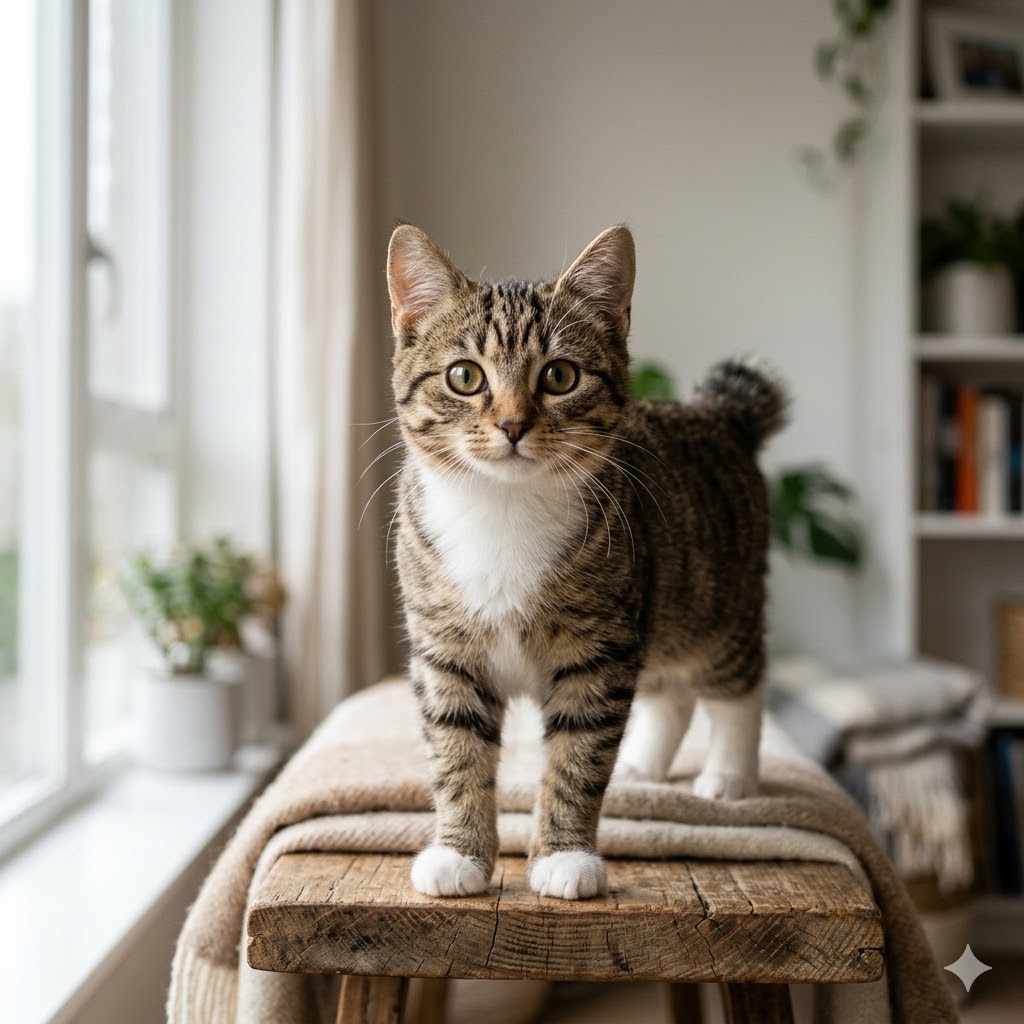
Overview
The Toybob is one of the smallest cat breeds in the world - a naturally short-tailed, compact cat that stays kitten-sized throughout its life. Originating in Russia, the Toybob developed from spontaneous natural mutations rather than deliberate hybrid crossing, and it is prized for its tiny stature, short pom-pom tail, and sweet, affectionate personality. Adults typically weigh just 2-3 kg, remaining remarkably small even when fully grown. Despite its diminutive size, the Toybob is a well-proportioned, healthy little cat with a gentle, loyal nature. It is a genuinely rare breed, recognised by TICA and a small number of other registries, and it is entirely distinct in origin from tailless breeds such as the Manx.
History & Origins
The Toybob is a natural breed that emerged in Russia in the late 1980s. The founding cats were small, short-tailed domestic cats discovered in the Rostov region, and later lines were developed in other parts of Russia. The breed was carefully bred to fix its small size and short, kinked pom-pom tail while maintaining good health and sound proportions.
Crucially, the Toybob's short tail arises from its own natural mutation - not from the genes responsible for the Manx (which is tailless due to a different, sometimes problematic gene) or the Japanese Bobtail. This distinction matters: the Toybob does not carry the spinal problems associated with the Manx taillessness gene, and its short tail is a defining, generally healthy feature rather than the result of a lethal or high-risk gene.
The breed remained obscure for years before gaining formal recognition. TICA accepted the Toybob, and it has slowly attracted interest among enthusiasts of small and unusual cats. Honest note: the Toybob is very rare outside Russia, with a small international breeder network, so availability is limited and prospective owners should research lines and health carefully.
Appearance
The Toybob's defining characteristics are its tiny size and short, kinked tail, packaged in a well-balanced, athletic little body.
Key features:
- Size: among the smallest of all cat breeds - a full-grown adult is roughly the size of a kitten of a normal breed.
- Tail: short and kinked, forming a small pom-pom, typically a few centimetres long. Tail shape varies from cat to cat.
- Coat: available in both shorthair and longhair (semi-long) versions, soft and close-lying.
- Colour: many colours and patterns occur; colourpoint (Siamese-style) with blue eyes is especially popular.
- Head: rounded with gentle contours, medium-sized ears, and a sweet expression.
- Eyes: large, round, and expressive, adding to the appealing look.
- Body: compact, muscular, and well-proportioned despite the small scale, with a straight back and sturdy legs.
The overall impression is of a perfectly formed miniature cat - small, tidy, and charming, with a distinctive little tail.
Temperament & Character
The Toybob is a gentle, affectionate, and loyal companion. Owners describe these cats as sweet-natured and people-oriented, forming close bonds with their families and enjoying being near their humans.
Despite their tiny size, Toybobs are playful and curious, retaining a kittenish enthusiasm for games and exploration well into adulthood. They are active enough to enjoy chasing toys and climbing, but they are not hyperactive or demanding.
The breed is typically calm, quiet, and undemanding compared with some active breeds, making it well suited to apartment living and quieter households. Many Toybobs enjoy sitting on laps and following their owners from room to room.
Toybobs generally get along well with children, other cats, and cat-friendly dogs, though their small size means gentle handling is essential. They are adaptable and even-tempered, thriving on companionship and affection.
Care
Coat & Grooming
Grooming needs are modest. Shorthaired Toybobs require only a weekly brush to remove loose hair. Semi-longhaired individuals benefit from brushing a couple of times a week to keep the coat tidy and tangle-free.
Bathing is rarely necessary. Clean ears when they look dirty, trim claws every couple of weeks, and brush teeth regularly to protect against dental disease. Overall, the Toybob is an easy-care breed in terms of grooming.
Exercise & Enrichment
Toybobs are playful but modest in their energy needs. Provide wand toys, small balls, puzzle feeders, and cat trees with accessible perches. Because they are so small, ensure climbing structures are safe and not too steep for a tiny cat.
Daily interactive play keeps them fit and mentally stimulated. They enjoy gentle games and time with their owners, and they generally do not require the intense enrichment that large, high-energy breeds demand.
Health & Lifespan
Average lifespan is 12-15 years.
The Toybob is generally considered a healthy, robust little breed. Its short tail comes from a natural mutation that does not carry the spinal risks associated with the Manx gene. Sensible considerations include:
- General small-breed care - ensure a kitten is genuinely from healthy, well-bred lines rather than simply undersized due to poor health.
- Tail - the natural bobtail is typically healthy, but reputable breeders monitor for any skeletal irregularities.
- Routine feline concerns such as dental disease and, less commonly, hereditary conditions found across cats generally.
Because the breed is rare, choose a breeder who is transparent about lineage and health, and who prioritises sound structure over extreme miniaturisation.
Feeding & Nutrition
Adults typically eat around 30-50 g of quality cat food per day, adjusted for size and activity. Because Toybobs are so small, precise portioning matters - even a small amount of overfeeding can lead to excess weight on such a little frame.
A balanced, high-protein diet suits the breed. Feed measured meals rather than free-feeding. Fresh water should always be available, and a mix of wet and dry food supports hydration and urinary health.
Living With
Litter
Standard provisions apply: 1 + 1 boxes per cat, scooped daily. Choose boxes with a lower entry so a very small cat can climb in and out easily. Low-dust, unscented litter is generally preferred.
Multi-cat households
Toybobs are typically friendly and adaptable with other cats and cat-friendly dogs, especially when introduced gradually. Their gentle, even temperament makes them good companions, though larger pets should be supervised given the Toybob's small size.
Indoor vs outdoor
Indoor-only living is strongly recommended. The Toybob's tiny size makes it especially vulnerable to traffic, predators, theft, and disease outdoors. A safe indoor environment with perches and toys, or a secure catio, is ideal for this little cat.
Pros & Cons
Pros
- Extremely small - stays kitten-sized for life.
- Sweet, affectionate, loyal temperament.
- Natural bobtail without Manx-related spinal risks.
- Calm and well suited to apartments.
- Easy-care coat and modest exercise needs.
Cons
- Very rare, especially outside Russia; limited breeders.
- Small size requires gentle handling and care around large pets.
- Availability and pedigree research can be difficult.
- Premium prices for a scarce breed.
- Not a good match for those wanting a large, robust cat.
Best Suited For
- Owners wanting a tiny, affectionate companion cat.
- Apartment dwellers and quieter households.
- Families with gentle children and cat-friendly pets.
- People who value a calm, loyal, easy-care cat.
- Owners charmed by an unusual, rare breed who accept limited availability.
Not suited for anyone wanting a large cat, homes with rough handling or very boisterous large dogs, or people expecting an easily available breed.
Toybob - frequently asked questions
How small does a Toybob stay?
Very small. Adults typically weigh just 2-3 kg and remain roughly the size of a kitten of a normal breed throughout their lives.
Is the Toybob the same as a Manx?
No. The Toybob's short tail comes from its own natural mutation and does not carry the spinal problems linked to the Manx taillessness gene. The two breeds are entirely distinct in origin.
Are Toybobs healthy?
Generally yes. The breed is considered robust, and its bobtail is a healthy natural trait. As with any rare breed, buy from a breeder who prioritises health and sound structure.
Are they good companions?
Very much so. Toybobs are gentle, affectionate, and loyal, enjoying laps, play, and close companionship with their families.
Where do Toybobs come from?
They originated in Russia in the late 1980s from small, naturally short-tailed domestic cats and were carefully bred to fix their tiny size and pom-pom tail.
🧠 Test yourself: guess the cat
Three clues from our quiz bank, each about another of our cats. Can you name them?
Clue 1.Essentially a long-haired version of a famous slender, blue-eyed breed, this elegant cat shares the same dark points on a pale body but has a silky, flowing coat.
It's the Balinese - read the full profile →
Clue 2.Famously curious and energetic, this short-haired breed is nicknamed the clown of the cat world and loves climbing to the highest perch in the room.
It's the Abyssinian - read the full profile →
Clue 3.A rare breed combining the dark points of a Siamese with bold white mittens and an upside-down white triangle on the muzzle.
It's the Snowshoe - read the full profile →
💛 Adoptable Toybobs near you
Real cats of this breed (and close mixes) waiting in shelters and rescues right now, live from Petfinder. We have no affiliation and earn nothing - if someone catches your eye, the link goes straight to their shelter. New to adopting? Start with our adoption guide.
Widget not loading (some ad-blockers hide it)? Search directly on petfinder.com.