Toyger (Felis catus)
The Toyger is a designer breed created with a single bold goal: to produce a domestic cat that looks like a miniature tiger.
🗓️ Last reviewed: June 2026
Overview
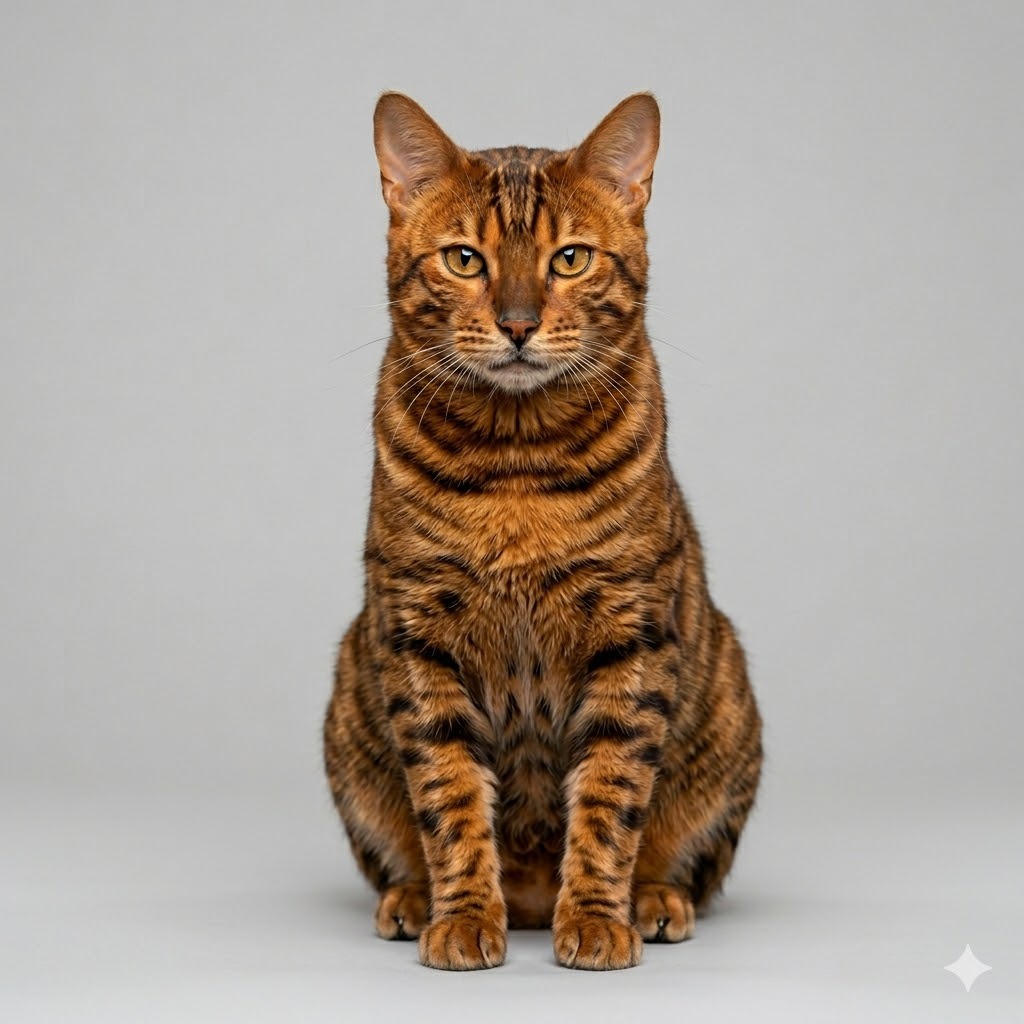
The Toyger is a designer breed created with a single bold goal: to produce a domestic cat that looks like a miniature tiger. Its name is a blend of "toy" and "tiger," and its defining feature is a coat of bold, branched, vertical stripes meant to mimic the markings of a wild tiger. Despite the wild appearance, the Toyger is a fully domestic cat - friendly, laid-back, and intelligent - bred not from wild stock but from carefully selected domestic shorthairs and Bengals.
History & Origins
The Toyger is a very young breed, conceived in the 1980s by American breeder Judy Sugden, daughter of Jean Mill, who was instrumental in developing the Bengal. Sugden noticed distinctive markings on one of her cats and set out to create a breed that captured the look of a tiger in a small domestic package, partly to inspire public interest in tiger conservation.
The breed was built from domestic shorthair tabbies and Bengals, with the deliberate selection of cats carrying the right pattern genes - particularly those producing branched, vertical, mackerel-like stripes rather than the usual horizontal or spotted tabby patterns. A street cat from Kashmir, India, with unusual spotted markings on the head, was reportedly imported to add to the gene pool.
TICA accepted the Toyger for registration in the 1990s and granted it full championship status in 2007. The breed is still being refined toward the breeder's vision of an ever-more tiger-like cat, and it remains relatively rare and sought-after, with breeders continuing to improve the boldness and circularity of its markings.
Appearance
Medium to large, long, and muscular with a powerful, athletic build that echoes the rolling gait of a big cat. Males weigh 5-7 kg (10-15 lb); females 3.5-5.5 kg (7-12 lb).
Key features:
- Coat: short, thick, plush, and luxuriously soft, often with a faintly glittered sheen that catches the light.
- Pattern: the heart of the breed - bold, dark, branched, vertical stripes on a bright orange to tawny ground, designed to resemble a tiger. Markings should be random and modified rather than the even rings of a classic tabby, with circular patterns on the head and a "makeup" of light marks around the eyes.
- Colour: brown mackerel tabby is the recognised colour, prized for a warm, rich orange ground and high contrast.
- Head: medium, long, and broad with a strong muzzle and a slight nose-leather extension; circular face markings are sought after.
- Eyes: small to medium, round, and deep-set, in rich colours that intensify the wild expression.
- Ears: small and rounded with thick fur, in keeping with the tiger look - never large or pointed.
- Body: long, low-slung, and muscular with a deep chest, giving a confident, big-cat presence and a rolling walk.
Temperament & Character
For all its wild looks, the Toyger is a relaxed, friendly, and easygoing companion. The breed is sociable and people-oriented, bonding well with its family and generally welcoming toward visitors rather than shy.
Toygers are highly intelligent and trainable - a legacy of their Bengal ancestry without the more demanding intensity. Many learn to walk on a harness, play fetch, respond to their name, and perform tricks. They take readily to clicker training and enjoy interactive puzzles.
The breed is active and playful but not hyperactive, striking a comfortable balance between energy and calm. Toygers are confident and adaptable, usually coping well with household changes, children, other cats, and cat-friendly dogs.
Affectionate without being clingy, the Toyger enjoys company and play and is content to relax with its family at the end of an active day. Its laid-back, outgoing nature makes it one of the more easygoing of the wild-look breeds.
Care
Coat & Grooming
The short, plush coat is low maintenance. A weekly brush with a soft brush or rubber grooming mitt removes loose hair and keeps the coat glossy. The breed sheds modestly.
The dense, soft texture means grooming is quick, and the breed's confident nature usually makes it cooperative. A soft cloth buffed over the coat enhances any natural glitter and sheen.
Clean ears as needed, trim claws every 2 weeks, and brush teeth several times weekly. Routine grooming doubles as bonding time for this people-oriented cat.
Exercise & Enrichment
The Toyger is athletic and intelligent and needs daily activity and mental challenge. Provide tall cat trees, climbing shelves, puzzle feeders, and interactive wand-toy sessions, and rotate toys to keep the breed engaged.
Toygers excel at clicker training and harness walks, which satisfy both body and mind. Because they are so trainable, structured games and trick training are excellent outlets. A well-exercised Toyger is calm and content; a bored one can become restless.
Health & Lifespan
Average lifespan is 12-15 years - the breed is generally healthy, though its young age and limited gene pool mean long-term data is still developing.
Common concerns:
- Hypertrophic cardiomyopathy (HCM) - the most relevant heart condition in the breed; responsible breeders echo-screen breeding cats.
- Heart murmurs - reported in some lines and worth veterinary attention.
- Limited gene pool - as a new breed, careful breeding is needed to maintain diversity and health.
- Obesity - a risk if a powerful, food-motivated cat is under-exercised.
- Dental disease.
Choose a breeder who screens breeding cats for HCM and is transparent about the health and lines of their cats.
Feeding & Nutrition
Adults typically eat 55-80 g of quality cat food per day, adjusted for the breed's larger size and athletic build.
A high-protein, meat-forward diet supports the muscular body and active lifestyle. Feed measured meals rather than free-feeding, as a powerful indoor cat can gain weight without enough exercise.
Fresh water should always be available; a mix of wet and dry food supports hydration and urinary health.
Living With
Litter
Standard provisions: 1 + 1 box per cat, scooped daily, in roomy boxes suited to a larger muscular cat. Low-dust unscented litter is generally preferred.
Multi-cat households
The sociable, easygoing Toyger generally does well with other cats and cat-friendly dogs, especially with proper introductions. Its confident, adaptable nature makes it a good fit for active multi-pet homes.
Indoor vs outdoor
Indoor-only is safest. The striking tiger coat attracts attention and theft, and the trusting, confident breed is ill-equipped for traffic and other outdoor dangers. Catios and harness walks let the Toyger explore the outdoors safely.
Pros & Cons
Pros
- Striking miniature-tiger appearance.
- Friendly, laid-back, and outgoing temperament.
- Highly intelligent and very trainable.
- Good with children, cats, and cat-friendly dogs.
- Low grooming needs.
Cons
- Rare and often expensive.
- Needs daily play and mental stimulation.
- Limited gene pool requires careful breeder choice.
- HCM warrants breeder screening.
- Can gain weight if under-exercised.
Best Suited For
- Active households wanting an interactive, trainable cat.
- Families with children and other pets.
- Owners who enjoy clicker training and harness walks.
- People wanting a wild look with an easygoing, fully domestic temperament.
- Homes that can provide climbing space and daily play.
Not suited for owners wanting a low-energy lap cat, people unable to provide daily enrichment, or those unwilling to seek out a responsible specialist breeder.
Toyger (Felis catus) - frequently asked questions
Is the Toyger part wild tiger?
No - despite the tiger-like coat, the Toyger is one hundred percent domestic. It was bred from domestic shorthairs and Bengals, with no wild tiger ancestry.
Are Toygers good family pets?
Yes - they are friendly, laid-back, and outgoing, generally excellent with children, other cats, and cat-friendly dogs.
Are Toygers easy to train?
Very - they are highly intelligent and take readily to clicker training, harness walks, fetch, and tricks.
Why are Toygers so expensive?
They are a rare, young breed with a limited gene pool, and well-marked cats from responsible breeders command premium prices.
Are they hypoallergenic?
No - they shed and produce dander and are not hypoallergenic.
🧠 Test yourself: guess the cat
Three clues from our quiz bank, each about another of our cats. Can you name them?
Clue 1.One of the oldest natural longhair breeds, this elegant cat from a Turkish capital region is often pure white with a silky single coat.
It's the Turkish Angora - read the full profile →
Clue 2.Essentially a long-haired version of a famous slender, blue-eyed breed, this elegant cat shares the same dark points on a pale body but has a silky, flowing coat.
It's the Balinese - read the full profile →
Clue 3.One of the oldest cat breeds, named for the region of its origin, this placid feline sports a luxuriant flowing coat.
It's the Persian - read the full profile →
💛 Adoptable Toyger (Felis catus)s near you
Real cats of this breed (and close mixes) waiting in shelters and rescues right now, live from Petfinder. We have no affiliation and earn nothing - if someone catches your eye, the link goes straight to their shelter. New to adopting? Start with our adoption guide.
Widget not loading (some ad-blockers hide it)? Search directly on petfinder.com.