Norwich Terrier
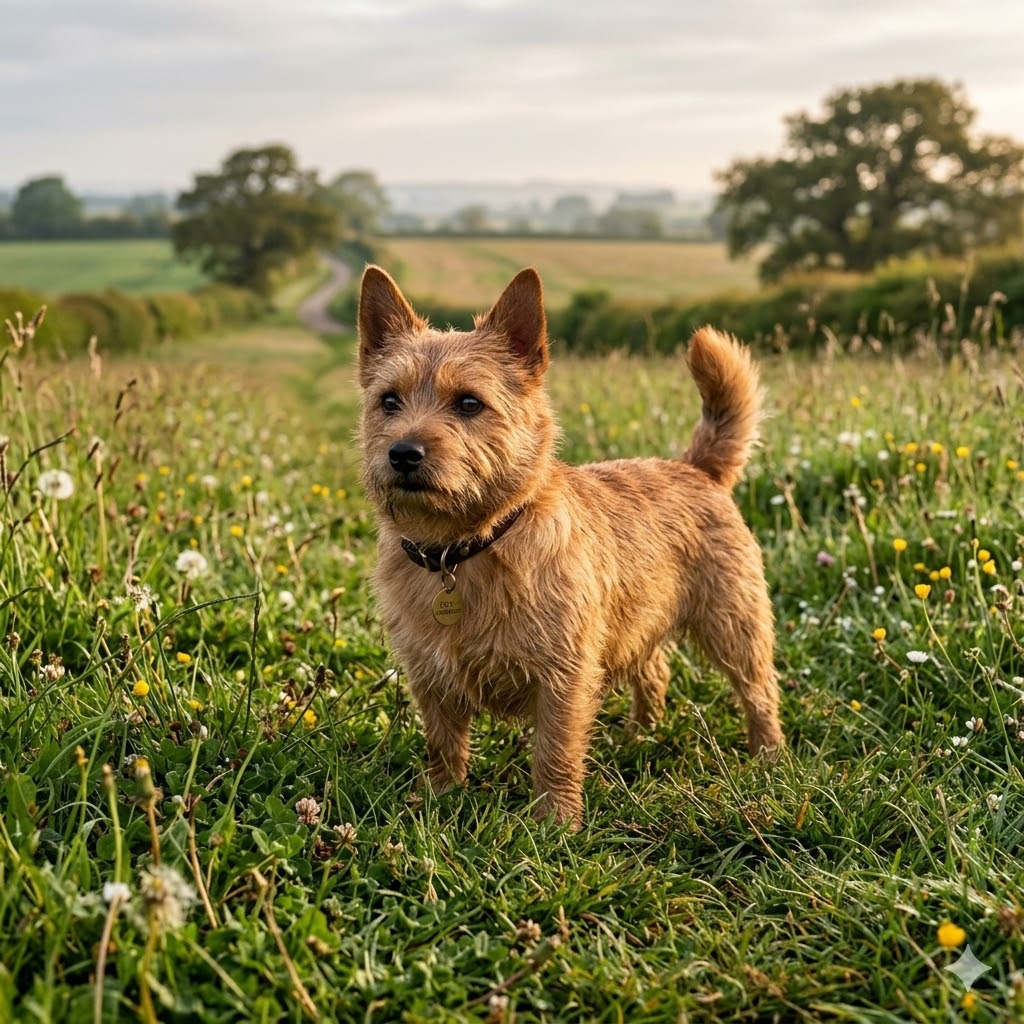
The Norwich Terrier is one of the smallest working terriers in the world - a sturdy, foxy little dog with pricked ears, bright eyes, and a surprisingly merry, sociable temperament for a member of the terrier tribe.
🗓️ Last reviewed: July 2026
Overview
The Norwich Terrier is one of the smallest working terriers in the world - a sturdy, foxy little dog with pricked ears, bright eyes, and a surprisingly merry, sociable temperament for a member of the terrier tribe. Bred in East Anglia to rout rats and bolt foxes, it packs genuine grit into a pocket-sized frame. Adults stand about 24-26 cm at the shoulder and weigh roughly 5-6 kg. Cheerful, affectionate, and hardy, the Norwich is often described as a big dog in a small body: bold enough for the field yet devoted enough to be a loving companion at home.
History & Origins
The Norwich Terrier developed in the countryside around Norwich, in the East Anglian region of England, during the late 19th century. Local ratting terriers were crossed and refined into a small, game red dog favoured by farmers, sportsmen, and Cambridge University students, where the breed earned the nickname "Trumpington Terrier" after a street where an influential early dog was kept. These little dogs became a fashionable companion and an effective vermin controller.
Early Norwich Terriers came with both pricked and drop ears, and for decades the two ear types were shown together. In 1932 the Kennel Club recognised the breed, and the American Kennel Club followed in 1936. In 1964 the drop-eared and prick-eared varieties were formally split into two separate breeds: the drop-eared dogs became the Norfolk Terrier, while the prick-eared dogs kept the name Norwich Terrier. The AKC recognised the split in 1979. The breed remains relatively uncommon, prized for its rarity, hardiness, and unusually agreeable temperament.
Appearance
One of the smallest of all terriers, yet solid and substantial for its size. Adults stand about 24-26 cm (about 10 in) at the shoulder and weigh roughly 5-6 kg (11-12 lb). The body is compact and well-boned, giving an impression of a small dog built for real work rather than a toy.
Key features:
- Coat: hard, wiry, and straight, lying close to the body, with a slightly longer, rougher mane around the neck and shoulders and a soft undercoat beneath.
- Colour: red, wheaten, black and tan, or grizzle.
- Head: foxy, with a slightly rounded skull, good width between the ears, and a strong wedge-shaped muzzle.
- Eyes: small, dark, oval, full of keen expression.
- Ears: small, pointed, and carried erect - the defining prick-eared feature that separates it from the Norfolk.
- Tail: medium-set, carried high, sometimes docked in countries where permitted, otherwise left natural.
The overall look is a hardy, foxy little terrier, alert and full of self-confidence.
Temperament & Character
The Norwich is famously merry and sociable - notably more companionable and less quarrelsome than many terriers. It is affectionate, loves human company, and thrives as part of the family rather than as a kennel dog. Bright, curious, and quick to join in whatever is happening, it is a genuinely fun little dog with a sunny outlook.
Despite the small size, this is a true terrier with courage and drive. Norwich were bred to face vermin underground, so they are fearless, energetic, and possess a strong prey drive. They are alert and will bark to announce visitors, making capable little watchdogs, though they are seldom aggressive toward people.
Because they were often worked and kennelled in packs, Norwich Terriers tend to be more tolerant of other dogs than many terriers, and they usually enjoy canine company. With children they are typically playful and sturdy. Small pets such as rodents, however, may trigger the hunting instinct. They do not like being left alone for long stretches and are happiest when included in daily life.
Care
Coat & Grooming
The hard, wiry coat is weatherproof and sheds little, but it needs regular upkeep. Brush and comb once or twice a week to prevent tangles, paying attention to the fuller mane and the leg furnishings. To preserve the correct harsh texture and colour, the coat should be hand-stripped - dead hairs plucked out - a few times a year rather than clipped, as clipping softens the jacket and fades the coat.
Bathe only when needed, since the coat naturally repels dirt. Clean the ears weekly, trim nails regularly, and brush the teeth several times a week, as small breeds are prone to dental problems.
Exercise & Activity Needs
Moderate and adaptable. A Norwich needs around 30-60 minutes of activity daily through walks, play, and exploration. They are energetic and enjoy games of fetch, terrier sports such as earthdog and barn hunt, and secure off-lead runs in safe areas.
Given the strong prey drive, they should be kept on lead near roads and wildlife, and gardens must be securely fenced. They are as happy in a town flat as in the country, provided their exercise and mental needs are met. Puzzle toys, training, and scent games keep this clever little dog engaged and prevent boredom-driven mischief.
Health & Lifespan
Average lifespan is 12-15 years - a hardy and long-lived breed.
Common concerns:
- Upper Airway Syndrome - a breed-associated breathing condition that can cause noisy or laboured respiration.
- Patellar luxation - slipping kneecaps.
- Hip dysplasia.
- Progressive retinal atrophy and cataracts.
- Dental disease - common in small breeds.
- Epilepsy in some lines.
Responsible breeders screen breeding stock for breathing, eye, and knee issues. Keeping the dog lean and dentally healthy supports a long, active life.
Feeding & Nutrition
Adults typically eat about ½-¾ cup of quality food per day, divided into two meals, adjusted to size and activity. The Norwich is a small dog with a good appetite and can gain weight easily, so portions should be measured and treats limited to protect the joints and airways.
A complete small-breed diet suited to the dog's life stage works well, and small kibble aids dental health. Fresh water should always be available. Because the breed is prone to weight gain, treats are best used sparingly and mainly for training.
Pros & Cons
Pros
- Merry, affectionate, and unusually sociable for a terrier.
- Very small and adaptable to town or country living.
- Hardy, weatherproof coat that sheds little.
- Generally good with other dogs and children.
- Long-lived and full of character.
Cons
- Strong prey drive; not safe off-lead near wildlife.
- Coat needs regular grooming and periodic hand-stripping.
- Dislikes being left alone for long periods.
- Can bark to alert and may dig.
- Relatively rare and can be expensive to acquire.
Best Suited For
- Owners wanting a small, cheerful, sociable terrier.
- Individuals, couples, and families with children.
- Town or country homes with a securely fenced garden.
- People who can include the dog in daily life and avoid long absences.
Not suited for homes with free-roaming small pets, owners away for long working days, anyone wanting a low-interaction dog, or those unwilling to keep up with grooming and daily engagement.
Norwich Terrier puppy growth chart
A typical growth curve for a toy breed like the Norwich Terrier, estimated from its adult weight of 5-6 kg. Puppies vary with sex, genetics and diet, so treat this as a guide - for your own puppy, use the puppy weight predictor.
| Age | Typical weight | % of adult |
|---|---|---|
| 2 mo | 1.7-2 kg | 33% |
| 3 mo | 2.3-2.7 kg | 45% |
| 4 mo | 2.8-3.3 kg | 55% |
| 6 mo | 3.8-4.5 kg | 75% |
| 9 mo | 4.8-5.7 kg | 95% |
| 12 mo | 5-6 kg | 100% |
| Adult | 5-6 kg | 100% |
Norwich Terrier - frequently asked questions
What is the difference between a Norwich and a Norfolk Terrier?
They were one breed until 1964. The Norwich Terrier has small pricked (erect) ears, while the Norfolk Terrier has folded, drop ears. Otherwise the two are very similar in size, coat, and temperament.
Are Norwich Terriers good family dogs?
Yes. They are among the most sociable and affectionate terriers, sturdy enough for children and generally tolerant of other dogs, making them well suited to family life.
Do Norwich Terriers bark a lot?
They are alert and will bark to announce visitors or unusual noises, but they are not typically excessive barkers. Enough exercise and mental stimulation keeps noise to a minimum.
Do Norwich Terriers shed?
Very little. The hard, wiry coat sheds minimally, but it does require regular brushing and hand-stripping a few times a year to stay in good condition.
Can a Norwich Terrier be left alone all day?
No. The breed is people-oriented and dislikes long solitude, which can lead to boredom and separation-related behaviours. Homes where someone is around much of the day suit them best.
🧠 Test yourself: guess the dog
Three clues from our quiz bank, each about another of our dogs. Can you name them?
Clue 1.A 19th-century cross of bulldog and terrier stock, this stocky dog has a famously stubborn, clownish personality.
It's the Bull Terrier - read the full profile →
Clue 2.One of the oldest Arctic sled dogs, this powerful freighting breed was developed by an Inuit people to haul heavy loads over long distances, not to race for speed.
It's the Alaskan Malamute - read the full profile →
Clue 3.Considered one of the most intelligent dog breeds, this hypoallergenic dog is the national breed of France.
It's the Poodle (Standard, Miniature, Toy) - read the full profile →
💛 Adoptable Norwich Terriers near you
Real dogs of this breed (and close mixes) waiting in shelters and rescues right now, live from Petfinder. We have no affiliation and earn nothing - if someone catches your eye, the link goes straight to their shelter. New to adopting? Start with our adoption guide.
Widget not loading (some ad-blockers hide it)? Search directly on petfinder.com.