Pharaoh Hound
The Pharaoh Hound is an ancient, elegant sighthound - a lean, tan, athletic hunter with an aristocratic profile and a warm, playful heart.
🗓️ Last reviewed: July 2026
Overview
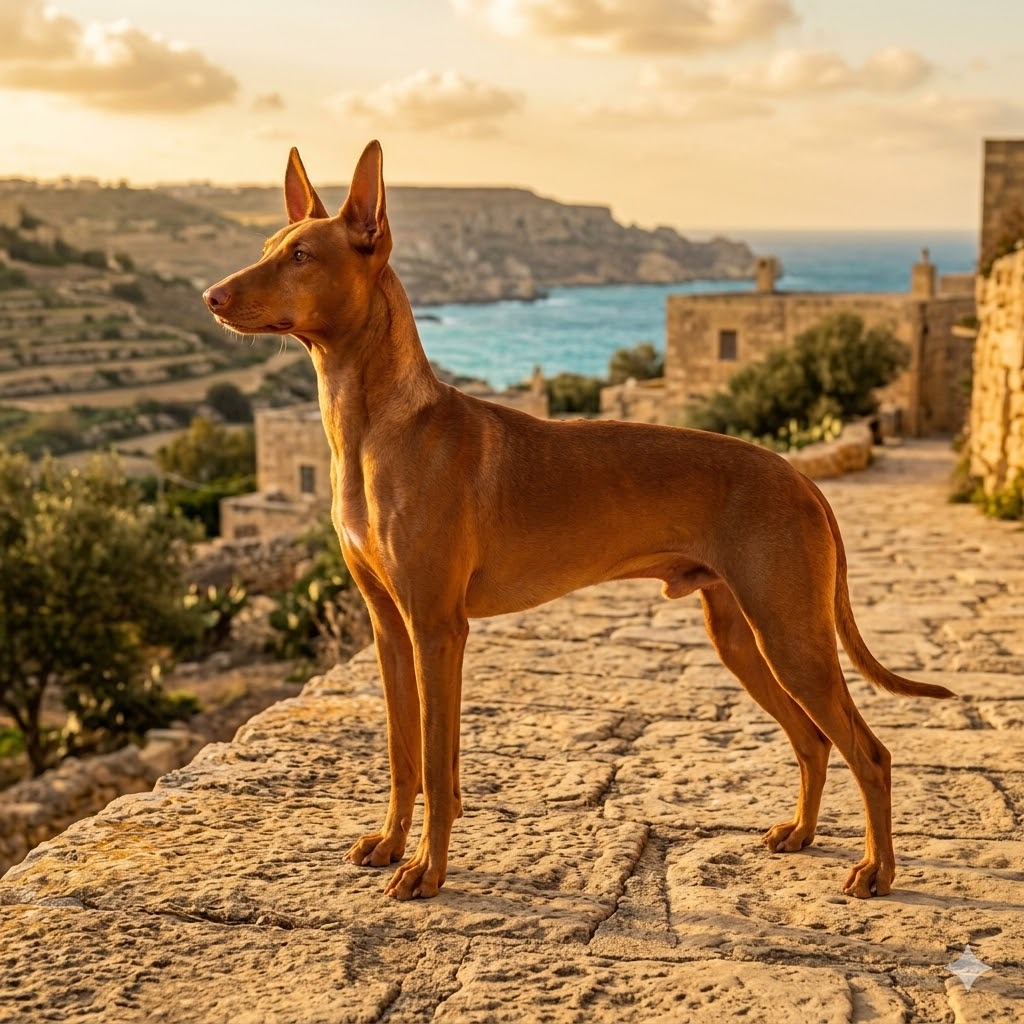
The Pharaoh Hound is an ancient, elegant sighthound - a lean, tan, athletic hunter with an aristocratic profile and a warm, playful heart. Despite the regal Egyptian-sounding name, this is the national hound of Malta, where it has hunted rabbits over stony terrain for thousands of years. The breed is famous for two endearing quirks: it "blushes" when happy or excited, its nose and ears flushing a deep rose, and it "smiles," pulling back its lips in a grin. Underneath the glamour is a true sighthound - a high-prey-drive sprinter that adores its family, needs securely fenced space, and cannot be trusted off-leash near wildlife.
History & Origins
The Pharaoh Hound is one of the oldest domesticated dog types still recognisable today. Elegant hunting dogs of this form appear in Egyptian tomb art dating back thousands of years, and for a long time the breed was believed to descend directly from those ancient Egyptian hounds. Modern DNA studies have since shown the Pharaoh Hound is not a direct genetic relic of ancient Egypt, but rather a breed reconstructed and preserved over centuries on the Mediterranean islands.
Its true home is Malta, where it is known as the Kelb tal-Fenek - "rabbit dog." For centuries Maltese farmers used these hounds to hunt rabbits across rocky, scrubby terrain, working with sight, scent, sound, and even ferrets. Isolated on the island, the breed retained its ancient type with little outside influence.
British visitors discovered the breed in the mid-20th century, and the first Pharaoh Hounds were exported to the United Kingdom in the 1960s. The breed was recognised by the Kennel Club and later the AKC in the 1980s. It remains rare worldwide, prized as both a companion and a graceful show and lure-coursing dog. Malta declared it a national treasure.
Appearance
Medium-sized, lean, and graceful, built for speed and agility. Adults stand 53-63 cm (21-25 in) at the shoulder and weigh 18-25 kg (40-55 lb); males are larger than females. The silhouette is clean and athletic, with a deep chest, tucked-up waist, and long legs - never coarse or heavy.
Key features:
- Coat: short, fine, and glossy, lying close to the body.
- Colour: rich tan to chestnut, sometimes with small white markings on the chest, toes, or tail tip.
- Head: long, lean, and chiselled, with a slight stop and a wedge shape.
- Ears: large, broad at the base, and carried erect - highly mobile and expressive.
- Eyes: amber, blending with the coat, giving an alert and intelligent expression.
- Nose: flesh-coloured, flushing rose-pink when the dog is excited - the famous "blush."
- Tail: long, tapering, carried low at rest and raised when active.
The overall impression is one of elegance and power in a compact, sculptural frame.
Temperament & Character
The Pharaoh Hound is affectionate, playful, and often clownish with its family, combining sighthound independence with a genuinely fun-loving personality. Adults form strong bonds and enjoy being close to their people, though they are not needy velcro dogs.
The breed is intelligent and curious but has an independent streak typical of sighthounds - it thinks for itself and will happily ignore a command that competes with an interesting sight or smell. Its famous "blush" and "smile" appear when the dog is happy, excited, or greeting loved ones.
With strangers the Pharaoh Hound is reserved but rarely aggressive, warming up on its own terms. With children it is usually gentle and playful, though its speed and exuberance can knock over toddlers. The overriding trait to respect is prey drive: small fleeing animals trigger an instant, intense chase, and no amount of training fully overrides it.
Care
Coat & Grooming
The short, fine coat is extremely low-maintenance. A weekly wipe with a hound glove or damp cloth keeps it gleaming, and baths are needed only occasionally. Shedding is minimal.
The single coat offers little insulation, so the breed feels cold quickly and needs a warm coat in winter and a soft bed away from draughts. Check the large ears weekly, trim nails every couple of weeks, and brush the teeth several times a week.
Exercise & Activity Needs
The Pharaoh Hound is a sprint-then-nap "couch potato" - explosive and energetic in bursts, then content to lounge for hours. Adults need around 60 minutes of daily exercise, including a chance to gallop safely.
Because prey drive is so strong, off-leash freedom is only safe in fully enclosed areas well away from wildlife. A secure, high fence is essential, as the breed will chase anything that runs. Lure coursing, fenced play, and long leash walks suit it perfectly. Mental enrichment - scent games, puzzle feeders, varied walks - keeps the sharp mind satisfied.
Health & Lifespan
Average lifespan is 12-14 years.
The Pharaoh Hound is one of the healthier purebred dogs, with few widespread inherited problems. Points to watch:
- Anaesthetic sensitivity - like most lean sighthounds, they can react strongly to certain anaesthetics, so an experienced vet is important.
- Cold intolerance - the thin coat and low body fat mean chilling is a real risk.
- Patellar luxation - occasional.
- Allergies and skin sensitivity - the fine skin can react to some products.
Overall the breed is robust, and responsible breeders help keep it that way.
Feeding & Nutrition
Adults typically eat around 1.5-2.5 cups of quality food per day, split into two meals, adjusted for size and activity. The breed maintains a naturally lean condition, and a light covering over the ribs with a visible waist is correct - excess weight strains the fine frame.
Feed a complete, balanced diet suited to an active dog. Because sighthounds can be prone to bloat, avoid heavy exercise within an hour of meals and consider two smaller feedings rather than one large one.
Pros & Cons
Pros
- Elegant, ancient, and eye-catching.
- Affectionate, playful, and clownish with family.
- Very low-maintenance coat with minimal shedding.
- Generally healthy and long-lived.
- The endearing "blush" and "smile."
Cons
- Strong prey drive - unsafe off-leash near wildlife.
- Needs secure, high fencing.
- Sensitive to cold and to harsh training.
- Independent and selectively deaf to commands.
- Rare and can be hard to find.
Best Suited For
- Owners who can provide a securely fenced space.
- Homes wanting an elegant, affectionate, low-shedding companion.
- Active people who enjoy lure coursing or fenced running games.
- Households with older, considerate children.
Not suited for homes without secure fencing, owners who want an off-leash trail dog in wildlife areas, harsh handlers, or anyone unable to provide warmth and gentle guidance.
Pharaoh Hound puppy growth chart
A typical growth curve for a medium breed like the Pharaoh Hound, estimated from its adult weight of 18-25 kg. Puppies vary with sex, genetics and diet, so treat this as a guide - for your own puppy, use the puppy weight predictor.
| Age | Typical weight | % of adult |
|---|---|---|
| 2 mo | 4.9-6.8 kg | 27% |
| 3 mo | 7.2-10 kg | 40% |
| 4 mo | 9-12.5 kg | 50% |
| 6 mo | 12.2-17 kg | 68% |
| 9 mo | 15.3-21.3 kg | 85% |
| 12 mo | 17.5-24.3 kg | 97% |
| Adult | 18-25 kg | 100% |
Pharaoh Hound - frequently asked questions
Do Pharaoh Hounds really blush?
Yes. When happy or excited, the nose and inner ears flush a deep rose-pink, and the dog often "smiles" by pulling back its lips - both genuine, endearing breed traits.
Are Pharaoh Hounds from Egypt?
Despite the name and ancient look, the breed's true home is Malta, where it has hunted rabbits for centuries. DNA studies show it is not a direct descendant of ancient Egyptian dogs.
Can a Pharaoh Hound be let off the leash?
Only in fully enclosed, wildlife-free areas. The prey drive is intense, and a running rabbit or cat will trigger an instant chase that recall cannot reliably stop.
Are they good family dogs?
Yes, for the right family. They are affectionate and playful with their people and usually gentle with older children, though their speed can overwhelm toddlers.
Do they need much grooming?
Very little. The short coat needs only a weekly wipe and sheds minimally, making it one of the easiest breeds to keep clean.
🧠 Test yourself: guess the dog
Three clues from our quiz bank, each about another of our dogs. Can you name them?
Clue 1.This sleek golden-rust Hungarian gundog is known as a 'velcro' breed for sticking closely to its owner's side.
It's the Vizsla - read the full profile →
Clue 2.Bred by a Siberian people to herd reindeer and pull sleds, this thick-coated spitz has a brilliant snow-white coat.
It's the Samoyed - read the full profile →
Clue 3.Named for the way it paws and spars with its front legs, this square-jawed German working dog has an undershot bite.
It's the Boxer - read the full profile →
💛 Adoptable Pharaoh Hounds near you
Real dogs of this breed (and close mixes) waiting in shelters and rescues right now, live from Petfinder. We have no affiliation and earn nothing - if someone catches your eye, the link goes straight to their shelter. New to adopting? Start with our adoption guide.
Widget not loading (some ad-blockers hide it)? Search directly on petfinder.com.