Emperor Scorpion (Pandinus imperator)
The Emperor Scorpion (Pandinus imperator) is one of the largest scorpions in the world - adults reach 15-20 cm and weigh up to 30 g.
🗓️ Last reviewed: June 2026
Overview
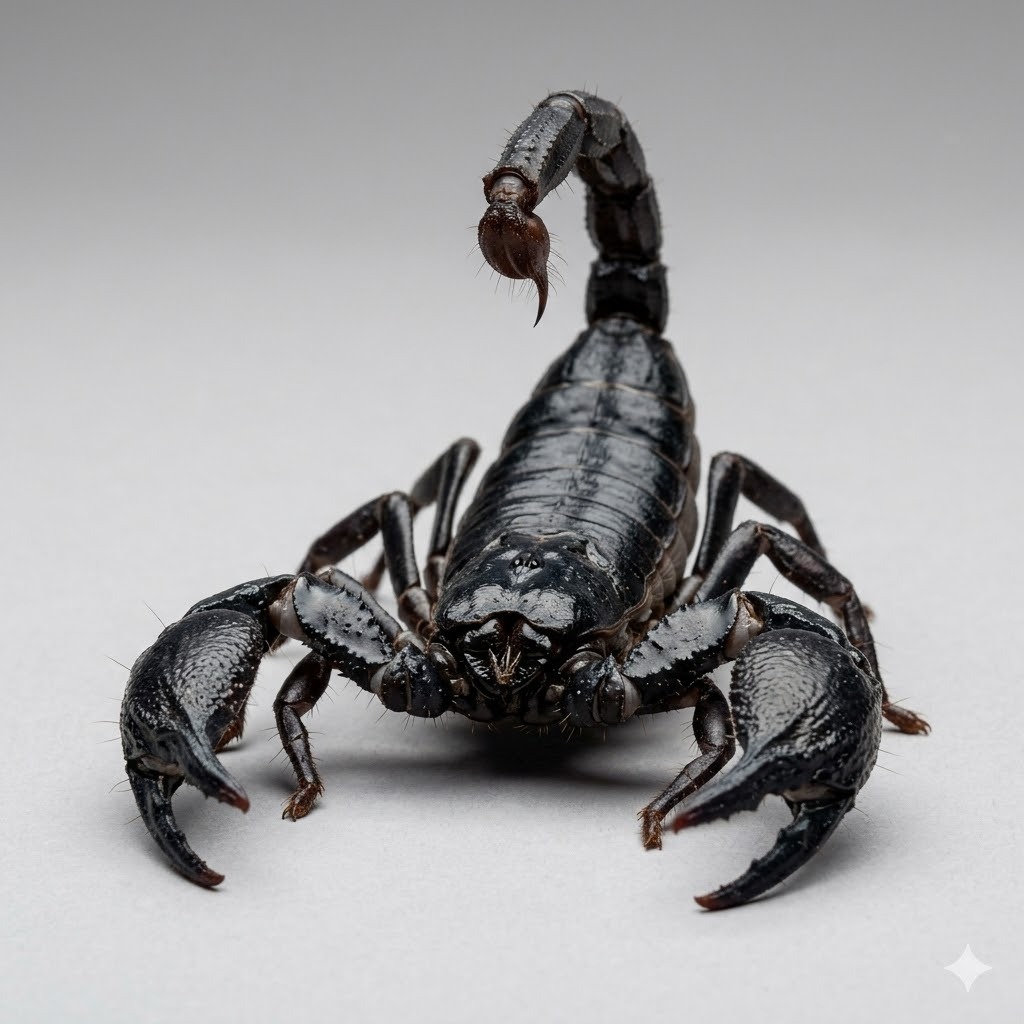
The Emperor Scorpion (Pandinus imperator) is one of the largest scorpions in the world - adults reach 15-20 cm and weigh up to 30 g. A large, glossy-black African forest scorpion kept as a calm, hands-off display invertebrate. Famous for glowing blue-green under UV light. Docile with mild venom, but it is a sting-capable animal and not a pet to handle.
Natural History
Native to the hot, humid rainforests and savannas of West Africa (Ghana, Togo, Nigeria and nearby). Nocturnal and fossorial - spends the day in burrows and under cover, hunting at night. Maternal: females carry their pale young (scorplings) on their backs until the first moult. CITES Appendix II listed due to heavy collection from the wild, so captive-bred animals are strongly preferred.
Legal Status
Legal to keep in most of the United States and much of Europe, but CITES Appendix II means international trade is regulated - buy captive-bred from a reputable seller. Some cities and states restrict venomous or exotic invertebrates. Check local laws before considering.
Appearance
Adults 15-20 cm including the tail, occasionally larger. Glossy black body with large, robust pincers (pedipalps). Fluoresces bright blue-green under UV light.
Temperament & Handling
Calm and slow-moving, with relatively mild venom - a sting is often compared to a bee sting. But this is a hands-off pet: do not handle. Stings hurt, the large pincers can pinch, and any venom carries an allergy/anaphylaxis risk for some people. Treat it as a display animal you observe, not one you hold.
Use long forceps for maintenance and never put hands near the animal. Anyone with insect-sting allergies should be especially cautious - keep antihistamines on hand and seek medical care for any severe reaction.
Enclosure
Minimum: 40 × 30 × 30 cm for one adult; larger for multiples (though communal keeping is risky).
Provide:
- Deep coco fibre or soil substrate (10-15 cm) - keep moist so the scorpion can burrow.
- A secure hide (cork bark, half-log, or flat rock).
- A shallow water dish.
- No sharp edges; sturdy, low decor (scorpions are not strong climbers but will explore).
- Tight-fitting, secure lid.
Heating, Humidity, Lighting
- Temperature: 25-30°C (warm). Use an under-tank heat mat on one side, controlled by a thermostat.
- Humidity: 70-80%. Mist regularly and keep substrate damp.
- Lighting: No special daytime lighting needed (nocturnal). A handheld UV torch can be used briefly to view fluorescence - do not leave UV on the animal.
Diet
Carnivore: appropriately sized live insects - crickets, dubia roaches, locusts, mealworms (in moderation). Feed 2-4 insects every 5-7 days for an adult; adjust to body condition. Gut-load feeders and dust occasionally with calcium.
Provide fresh water in a shallow dish at all times. Remove uneaten live prey - crickets can stress or nibble a moulting scorpion.
Health & Lifespan
6-8 years (sometimes longer for females).
Common concerns:
- Dehydration / low humidity - sluggishness, trouble moulting.
- Failed moult (dysecdysis) - often from incorrect humidity; do not handle a freshly moulted scorpion (soft and vulnerable).
- Mycosis (fungal infection) - from stagnant, overly wet, poorly ventilated setups.
- Impaction or injury from falls or wrong-sized prey.
See an exotics vet who treats invertebrates if something seems wrong - invert veterinary care is specialised and not every clinic offers it.
Pros & Cons
Pros: striking large display invertebrate, calm and quiet, low daily effort, UV glow novelty, long-lived for an invert, mild venom. Cons: not for handling, sting and allergy risk, needs consistent heat and humidity, CITES-listed (buy captive-bred), feeds on live insects.
Emperor Scorpion (Pandinus imperator) - frequently asked questions
Are they legal?
Legal in most of the US and Europe, but CITES Appendix II regulates trade - buy captive-bred. Confirm local law.
Can I handle it?
No - treat it as a hands-off display animal. Stings are mild (bee-like) but painful, and there is a real allergy risk. Use forceps for maintenance.
How long do they live?
6-8 years, sometimes longer.
Are they good for kids?
No. They are best as a look-but-do-not-touch pet for older, careful keepers - not a child's handling pet.
Why does it glow?
The cuticle fluoresces blue-green under UV light. View it briefly with a UV torch; do not leave UV on the animal.
🧠 Test yourself: guess the exotic
Three clues from our quiz bank, each about another of our exotic. Can you name them?
Clue 1.This crustacean has a soft, spiraled abdomen and must borrow an empty snail shell to protect its body.
It's the Hermit Crab - read the full profile →
Clue 2.Used in classrooms and films, this docile, climbing insect cannot fly and grows several inches long.
It's the Madagascar Hissing Cockroach - read the full profile →
Clue 3.This predatory insect, named for its folded, spiked forelegs held as if in prayer, is the only insect that can swivel its head nearly 180 degrees.
It's the Praying Mantis - read the full profile →