Giant African Land Snail
The Giant African Land Snail (Achatina species) is one of the largest land snails in the world - adults reach 20 cm shell length and over 200 g.
🗓️ Last reviewed: June 2026
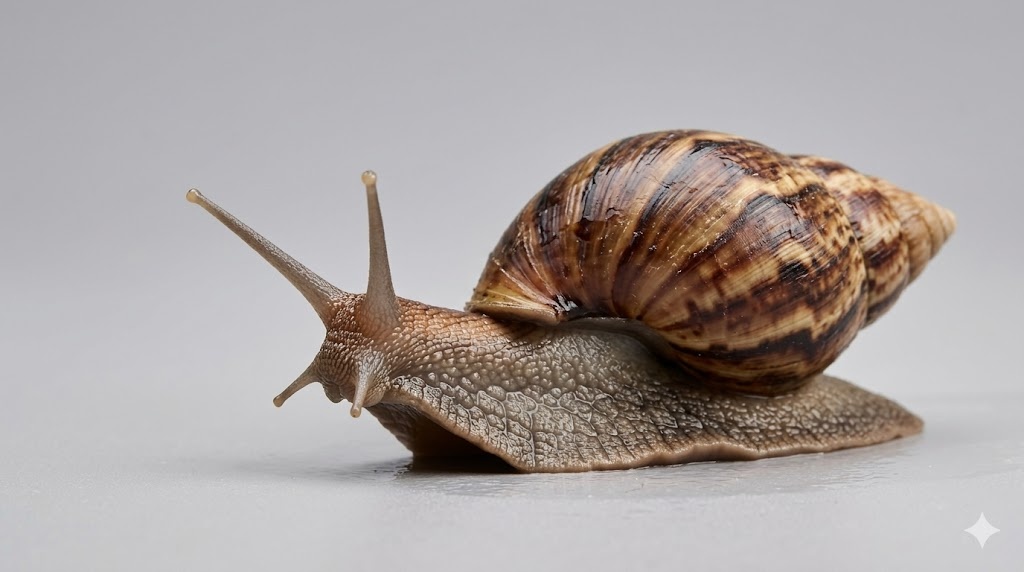
Overview
The Giant African Land Snail (Achatina species) is one of the largest land snails in the world - adults reach 20 cm shell length and over 200 g. Kept as low-maintenance educational pets, but heavily restricted or banned in many countries (especially the US) due to invasive potential and agricultural concerns.
Natural History
Native to East Africa. Invasive in many tropical regions worldwide. Nocturnal/crepuscular. Hermaphrodites - every snail can lay eggs.
Legal Status
Illegal as pets throughout the United States - federal restriction due to crop damage potential. Legal in much of Europe and other regions. Check local laws before considering.
Appearance
Adults 15-20 cm shell length, occasionally larger. Brown or striped shell.
Temperament & Handling
Slow, calm, easily handled. Among the safest exotic pets for children. Note: handle on wet hands and over soft surfaces - falls damage the shell.
Wash hands after every handling - wild populations carry parasites; even captive-bred snails are best handled with hygiene precautions.
Enclosure
Minimum: 40 × 30 × 30 cm for one adult; larger for multiples.
Provide:
- Deep coco fibre substrate (10+ cm) - keep moist.
- Cuttlebone for calcium.
- Hides.
- No sharp edges in enclosure.
- Tight-fitting lid.
Heating, Humidity, Lighting
- Temperature: 22-28°C.
- Humidity: 70-90%. Daily misting.
Diet
Vegetarian: leafy greens, cucumber, zucchini, sweet potato, fruit (varied). Calcium source (cuttlebone or eggshell) essential - shell needs calcium continuously.
Avoid: salt (deadly), citrus (acidic), processed foods.
Health & Lifespan
5-10 years.
Common concerns:
- Shell damage from falls.
- Calcium deficiency - soft shell.
- Parasites.
- Egg overproduction if kept in groups - one snail lays hundreds of eggs.
Pros & Cons
Pros: safe and easy to handle, child-friendly, low cost, long-lived for invertebrate. Cons: illegal in many places, eggs require freezing (cannot release), wild populations are agricultural pest.
Giant African Land Snail - frequently asked questions
Are they legal?
No in the entire United States. Legal in much of Europe and other regions. Confirm local law.
Can I keep two together?
Yes - but expect massive egg production. All eggs must be frozen before disposal (release is illegal and environmentally damaging).
How long do they live?
5-10 years.
Are they good for kids?
With supervision and hygiene, yes - safe and slow.
What happens to the eggs?
Hermaphrodites lay viable eggs even with one snail kept alone (sometimes). Freeze for 48+ hours before disposal to prevent escape and ecological release.
🧠 Test yourself: guess the exotic
Three clues from our quiz bank, each about another of our exotic. Can you name them?
Clue 1.Sold cheaply at beach shops, this pet has one oversized claw used to seal the entrance of its home.
It's the Hermit Crab - read the full profile →
Clue 2.With triangular head, swiveling neck, and grasping front limbs, this stick-mimicking insect strikes prey in a fraction of a second.
It's the Praying Mantis - read the full profile →
Clue 3.This twig-mimicking insect is a master of camouflage and can sometimes regrow a lost leg when it molts.
It's the Stick Insect (Phasmid) - read the full profile →