Hermit Crab
Hermit Crabs are a frequently mis-housed pet - small crustaceans sold cheaply at beach souvenir shops without adequate care information.
🗓️ Last reviewed: June 2026
Overview
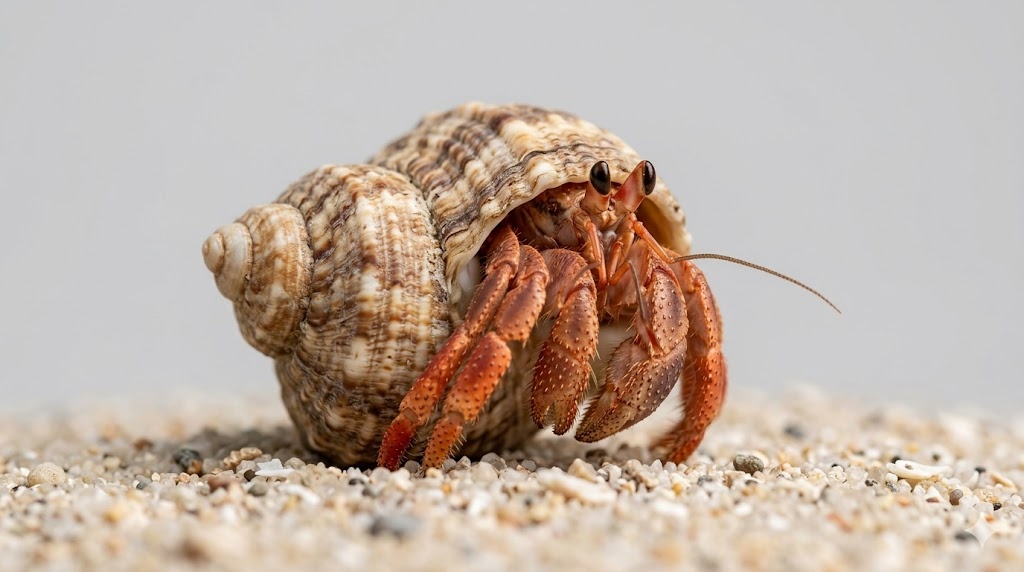
Hermit Crabs are a frequently mis-housed pet - small crustaceans sold cheaply at beach souvenir shops without adequate care information. With proper care (large humid enclosure, group housing, shell collection) hermit crabs can live 10-30+ years. With typical pet-shop housing they usually die within months.
Natural History
Land hermit crabs (Coenobita species) live in coastal tropical regions worldwide. Most pet hermit crabs are wild-caught; captive breeding is rare and difficult.
Common pet species:
- Caribbean Hermit Crab (Coenobita clypeatus) - most common.
- Ecuadorian Hermit Crab (Coenobita compressus).
Appearance
Body 5-15 cm. Tucked into a borrowed snail shell - the crab grows and must move into progressively larger shells throughout life.
Temperament & Handling
Hermit crabs are social and active when properly housed. They are not handling pets - too much handling causes stress and shell drops. Pinches from large hermit crabs can be painful.
Enclosure (Crabitat)
The single biggest factor in hermit crab welfare:
Minimum: 75 L (20 gallon) for a colony of 3-5 small crabs. Larger preferred. Glass tank with secure lid.
Provide:
- 6+ inch (15+ cm) deep substrate - sand and coco fibre mix that holds tunnels (essential for moulting; hermit crabs bury for weeks).
- Two water dishes - fresh and saltwater (use marine salt, not table salt).
- Climbing structures.
- At least 5 spare shells per crab in graduated sizes.
- Hide caves.
Heating, Humidity, Lighting
- Temperature: 22-28°C.
- Humidity: 70-80% - essential. Crabs cannot breathe in dry air. Daily misting and proper substrate help.
Diet
Omnivore: commercial hermit crab food (no preservatives), fresh fruit and vegetables, raw fish and meat occasionally, calcium source (cuttlebone). Variety important.
Health & Lifespan
10-30+ years with proper care. Typical pet-shop crabs die within 1-6 months from inadequate housing.
Common concerns:
- PPS (post-purchase syndrome) - stress from wild-caught + retail conditions; many die soon after purchase.
- Moulting failure - from inadequate substrate or humidity.
- Shell evictions in stressed colonies.
- Mites.
Pros & Cons
Pros: long-lived (with proper care), social, fascinating moulting and shell-changing behaviour, low daily maintenance once set up. Cons: widely mis-housed, sold under false "easy pet" marketing, wild-caught populations declining, not for handling.
Hermit Crab - frequently asked questions
Do hermit crabs live in those small "Crabitat" kits?
No - those kits are inhumane. Crabs in such setups typically die within months.
Can I keep just one?
Hermit crabs are social. Always keep at least 3.
Why so many shells?
Crabs grow and must move to larger shells throughout life. Without options of varied shells, crabs cannot upgrade and may be evicted by stronger crabs.
How long do they live?
10-30+ years properly housed. Typical pet-shop crabs die in months.
Are they good for kids?
For observation, with adult-managed care. The traditional "kids' first pet" image leads to widespread suffering.
🧠 Test yourself: guess the exotic
Three clues from our quiz bank, each about another of our exotic. Can you name them?
Clue 1.New World species of this arachnid defend themselves by kicking urticating hairs, while Old World species rely on faster, more potent bites.
It's the Tarantula - read the full profile →
Clue 2.Belonging to an order whose name means 'apparition,' this insect includes some of the longest insects on Earth.
It's the Stick Insect (Phasmid) - read the full profile →
Clue 3.Used in classrooms and films, this docile, climbing insect cannot fly and grows several inches long.
It's the Madagascar Hissing Cockroach - read the full profile →