Giant African Millipede (Archispirostreptus gigas)
The Giant African Millipede (Archispirostreptus gigas) is one of the largest millipedes in the world - adults reach roughly 25-30 cm (10-12 inches) and the thickness of a thumb.
🗓️ Last reviewed: June 2026
Overview
The Giant African Millipede (Archispirostreptus gigas) is one of the largest millipedes in the world - adults reach roughly 25-30 cm (10-12 inches) and the thickness of a thumb. Slow, docile, and genuinely beginner-friendly, it is a detritivore that spends its life eating decaying leaf litter and rotting wood. It needs a warm, humid tank with deep moist substrate to burrow. Harmless to handle (no bite, no sting), though it secretes a mild defensive fluid - wash hands after handling.
Natural History
Native to the tropical forests of West and Central Africa, mostly near the equator. A detritivore - it breaks down dead plant matter on the forest floor and returns nutrients to the soil. Nocturnal and burrowing. Despite "millipede" meaning thousand feet, it actually has a few hundred legs, two pairs per body segment.
Legal Status
Generally legal as a pet in most of Europe and many other regions. In the United States, live giant African millipedes are restricted - USDA permits are required for import and interstate movement because of the harmless but unwanted mites they often carry, and they are not freely sold. Check local laws before considering.
Appearance
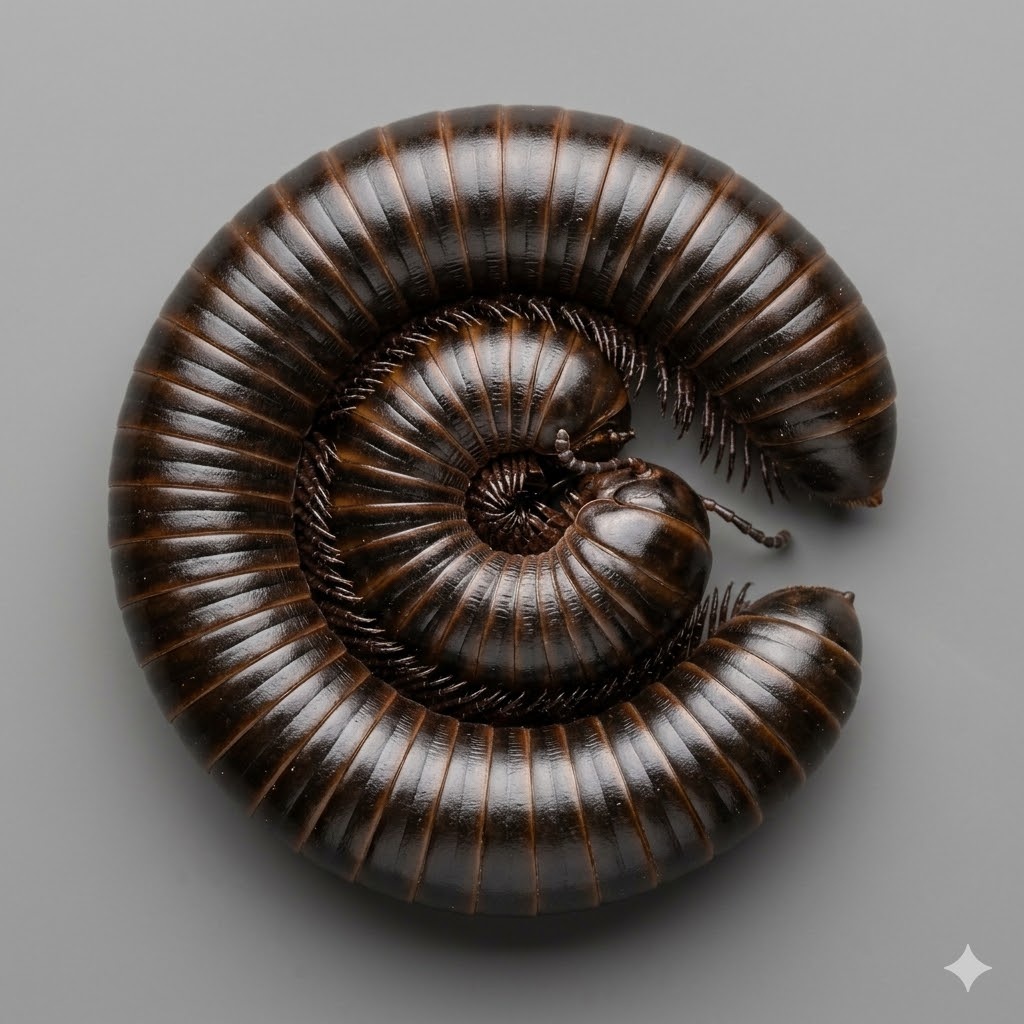
Adults 25-30 cm long, occasionally larger, and as thick as a thumb. Glossy dark brown to black cylindrical body made of many ringed segments, each with two pairs of short legs. Often carries small reddish mites on its body - these are harmless and usually a sign of a healthy animal.
Temperament & Handling
Slow, calm, and easily handled - among the safest exotic pets for children. It has no bite and no sting. When startled it curls into a tight spiral and may release a mild defensive fluid.
Wash hands after every handling and never rub your eyes - the defensive secretion can stain skin yellow-brown and irritate eyes and broken skin. Handle low and over a soft surface; falls can crack the exoskeleton.
Enclosure
Minimum: 40 × 30 × 30 cm for one adult; larger for multiples.
Provide:
- Deep organic substrate (10-15 cm) - coco fibre mixed with rotting hardwood leaves and decayed wood; keep moist so the animal can burrow.
- Pieces of rotting wood and dead leaves as both shelter and food.
- Cuttlebone or calcium source for the exoskeleton.
- Hides and bark.
- A shallow water dish.
- Tight-fitting, ventilated lid.
Heating, Humidity, Lighting
- Temperature: 24-28°C.
- Humidity: 75-90%. Mist regularly and never let the substrate dry out.
- No special lighting needed - they are nocturnal and avoid bright light.
Diet
Detritivore: the bulk of the diet is decaying leaf litter and rotting hardwood, which should always be present in the substrate. Supplement with soft vegetables and fruit - cucumber, zucchini, sweet potato, pumpkin, banana, apple. Calcium source (cuttlebone or crushed eggshell) is essential for the exoskeleton.
Avoid: citrus, onion, garlic, salt, and anything treated with pesticides. Wild-collected leaves and wood must be from untreated, pesticide-free sources.
Health & Lifespan
7-10 years.
Common concerns:
- Exoskeleton damage from falls.
- Dehydration if humidity drops - the most common killer.
- Calcium deficiency - soft or weak exoskeleton.
- Mites - the small mites they carry are harmless; only an unusually heavy infestation needs attention.
- Failed moult if substrate is too dry; they bury to moult and are fragile afterward.
Pros & Cons
Pros: safe and easy to handle, child-friendly, low cost, quiet, long-lived for an invertebrate. Cons: restricted in the US, needs constant humidity, defensive secretion stains and irritates, easily harmed by a fall.
Giant African Millipede (Archispirostreptus gigas) - frequently asked questions
Are they legal?
Legal in much of Europe and many regions, but restricted in the United States (USDA permit required, not freely sold). Confirm local law.
Do they bite or sting?
No - they have no bite and no sting. The only defence is curling up and releasing a mild fluid that can stain and irritate, so wash hands afterward.
Why does mine have tiny bugs on it?
Those are harmless mites that ride along on healthy millipedes. They are not a problem unless extremely numerous.
How long do they live?
7-10 years.
Are they good for kids?
With supervision and hand-washing, yes - slow, gentle, and safe. Just keep handling low so a fall cannot crack the body.
🧠 Test yourself: guess the exotic
Three clues from our quiz bank, each about another of our exotic. Can you name them?
Clue 1.With triangular head, swiveling neck, and grasping front limbs, this stick-mimicking insect strikes prey in a fraction of a second.
It's the Praying Mantis - read the full profile →
Clue 2.A heavy-bodied arachnid kept as a pet, the females of which can live for decades, far longer than the short-lived males.
It's the Tarantula - read the full profile →
Clue 3.One of the world's largest land mollusks, this shelled creature can grow as long as an adult's hand and is a serious invasive pest.
It's the Giant African Land Snail - read the full profile →