Isopods
Isopods are small terrestrial crustaceans - the familiar "roly-poly", "pill bug", or "woodlouse" - that have become one of the most popular starter invertebrates in the exotic pet hobby.
🗓️ Last reviewed: July 2026
Overview
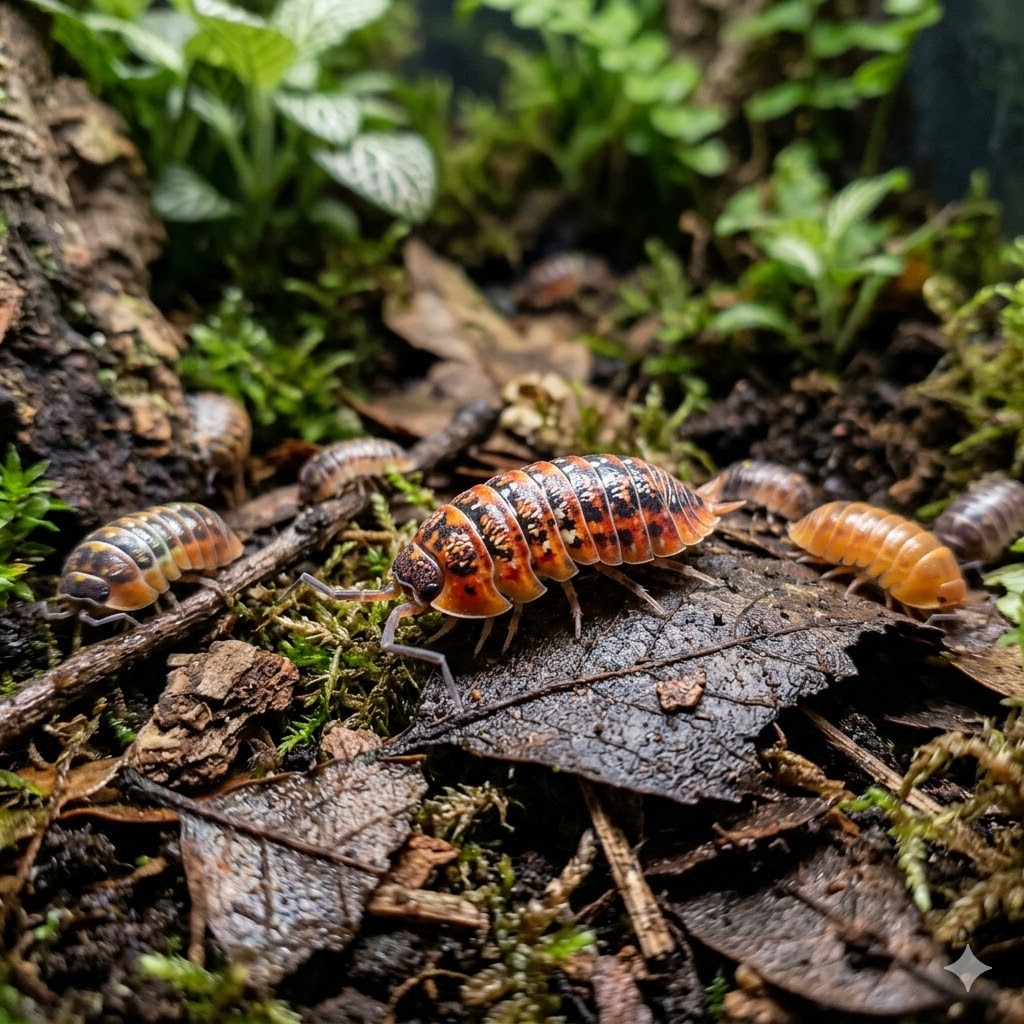
Isopods are small terrestrial crustaceans - the familiar "roly-poly", "pill bug", or "woodlouse" - that have become one of the most popular starter invertebrates in the exotic pet hobby. They are kept both as a fascinating colony pet in their own right and as a clean-up crew in bioactive terrariums, where they break down waste and leaf litter alongside springtails. Selective breeding has produced dozens of striking colour and pattern morphs, from creamy dairy cows to bright powder oranges and speckled rubber duckies. A colony is cheap, quiet, breeds readily, and needs only a humid bin with leaf litter and a little calcium. For a first invertebrate - or for children learning to care for small animals - isopods are hard to beat.
What makes isopods especially rewarding is that they are truly living animals you can keep on a windowsill or shelf with almost no equipment. There is no heater, no special lighting, and no daily feeding routine to manage. Instead you tend a tiny ecosystem: the isopods graze on decaying leaves and wood, breed on their own schedule, and slowly grow into a self-sustaining population that can outlast the keeper's interest. Because a starter culture is inexpensive and the animals are completely harmless, isopods are also a popular classroom and family project, teaching patience and simple biology without any risk of bites or stings. Many keepers who start with a single tub of "clean-up crew" isopods end up collecting several colourful morphs.
Common Pet Species
- Dairy Cow (Porcellio laevis "Dairy Cow") - fast-breeding black-and-white morph, a hobby favourite.
- Powder Orange (Porcellionides pruinosus) - bright orange, quick, prolific.
- Powder Blue (Porcellionides pruinosus) - the blue-grey version of the same species.
- Rubber Ducky (Cubaris species) - speckled "duck-faced" morph, slower breeding.
- Spanish Orange (Porcellio scaber "Orange") - hardy and colourful.
- Zebra (Armadillidium maculatum) - striped roller that curls into a ball.
Appearance
Body 0.5-2 cm depending on species, with the larger Porcellio reaching up to 2 cm. The body is oval and segmented with a curved armoured back, seven pairs of legs, and two short antennae. Colours range from grey and brown wild types to bred morphs in orange, blue, white, yellow, and bold patterns. Some species (the true pill bugs, such as Armadillidium) can roll into a tight ball for defence, while others (Porcellio) cannot.
Temperament & Handling
Harmless, slow, and undemanding. Isopods do not bite, sting, or spray. They can be gently scooped onto a hand for a closer look, though they are best appreciated as a colony going about its business. Rollers will curl into a ball if disturbed and open up again once they feel safe.
Handling causes them no harm as long as hands are clean and dry of chemicals, but return them to their humid bin quickly so they do not dry out. Most keepers interact with the colony mainly at feeding and misting time, lifting a piece of bark to check on the population or watching the tiny young graze along a leaf. This hands-off relationship suits nervous beginners and children, since there is no animal that can hurt them and no pressure to tame anything.
Enclosure
A colony thrives in a simple plastic tub. A 6-15 litre container suits a starter colony, with more surface area preferred over height. Ventilation holes on the sides or lid keep the air fresh while holding humidity, which prevents the stale, mould-prone conditions that cause colonies to crash.
Substrate: 5-8 cm of a moisture-holding mix such as coco fibre and topsoil, topped generously with dead leaf litter (oak, beech, or magnolia) and pieces of rotting wood. This litter is both shelter and food, so it should never run out completely. Add a cuttlebone or crushed eggshell for calcium and a cork bark hide where the colony can gather. Keep one side of the bin damp and one side drier so the colony can choose the humidity it prefers, moving between zones as it moults and breeds. A layer of sphagnum moss over one corner helps hold moisture and gives babies a safe, humid refuge. There is no need for a heater in a normal room, and the setup takes only minutes to refresh.
Heating, Humidity, Lighting
- Temperature: 20-26°C; most species tolerate normal room temperature.
- Humidity: keep part of the substrate damp; provide a moisture gradient rather than a soaked bin.
- No special lighting or UV needed.
Diet
Detritivores that eat decaying plant matter. The base of the diet is leaf litter and rotting wood, which they graze constantly and which should always be present in the bin. Supplement with vegetable scraps (carrot, cucumber, squash, potato), a little fish flake or dried shrimp for protein, and always-available calcium from cuttlebone or eggshell. Protein and calcium together support healthy moulting and strong breeding, but offer protein sparingly, as too much can trigger population booms and attract pests. Remove uneaten fresh food before it moulds, and drop new pieces onto a small dish or bark rather than directly on the substrate so leftovers are easy to clear.
Health & Lifespan
Individual isopods live 1-3 years, but a well-kept colony is effectively self-sustaining and can last indefinitely as it breeds. Females carry eggs in a fluid-filled pouch and release tiny live young called mancae.
Common concerns:
- Drying out - the main killer; the bin must never fully dry.
- Mould and mites - from overfeeding fresh food or poor ventilation.
- Calcium shortage - leads to soft, failed moults.
- Overheating - colonies crash in hot, stagnant conditions.
Pros & Cons
Pros: extremely easy, cheap, odourless, self-breeding, no heating or lighting needed, a great bioactive clean-up crew, and an ideal beginner and kids' invertebrate. Cons: individuals are tiny, not interactive, some colourful morphs are slow to multiply, and the bin needs steady humidity and occasional pest control.
Isopods - frequently asked questions
Are isopods good for beginners?
Yes - they are one of the easiest invertebrates to keep and forgiving of small mistakes.
Do they bite or sting?
No. They are completely harmless to people and pets.
Do I need to feed them much?
Very little. Leaf litter and rotting wood form most of the diet, with occasional vegetables and calcium.
How fast do they breed?
Species like dairy cows and powder oranges multiply quickly; Cubaris morphs such as rubber duckies breed much more slowly.
Can I keep them with other animals?
Yes. They make an excellent clean-up crew in bioactive terrariums for reptiles, amphibians, and other inverts, eating droppings, shed skin, and leftover food while helping keep the substrate healthy.
Why has my colony stopped growing?
Usually the cause is a bin that is too dry, too hot, or short on calcium and leaf litter. Restore humidity, add cuttlebone and fresh leaves, and the population normally recovers.
🧠 Test yourself: guess the exotic
Three clues from our quiz bank, each about another of our exotic. Can you name them?
Clue 1.This twig-mimicking insect is a master of camouflage and can sometimes regrow a lost leg when it molts.
It's the Stick Insect (Phasmid) - read the full profile →
Clue 2.New World species of this arachnid defend themselves by kicking urticating hairs, while Old World species rely on faster, more potent bites.
It's the Tarantula - read the full profile →
Clue 3.This large wingless insect, popular as a hardy pet, forces air through breathing holes to make a loud hiss.
It's the Madagascar Hissing Cockroach - read the full profile →