Regal Jumping Spider (Phidippus regius)
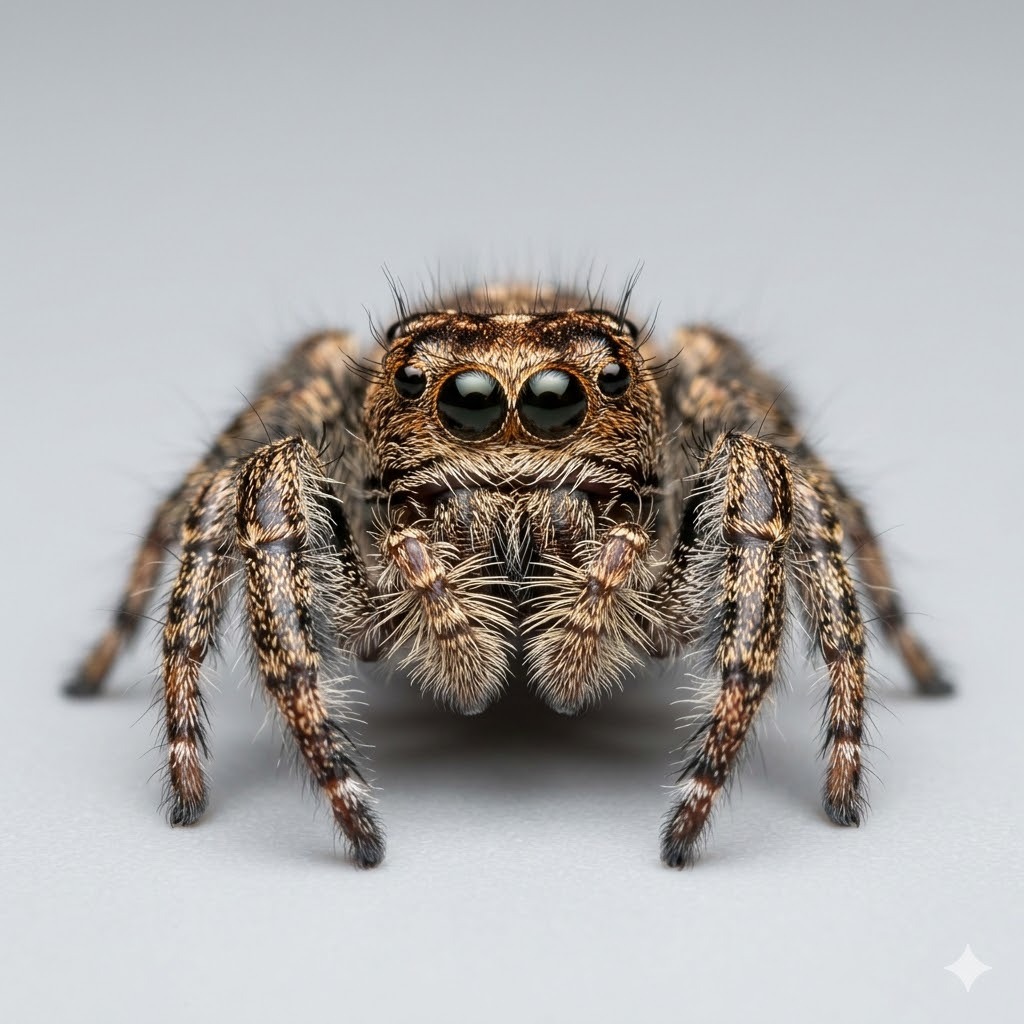
The Regal Jumping Spider (Phidippus regius) is a tiny, charismatic invertebrate pet famous for its huge forward-facing eyes and "puppy-like" curiosity.
🗓️ Last reviewed: June 2026
Overview
The Regal Jumping Spider (Phidippus regius) is a tiny, charismatic invertebrate pet famous for its huge forward-facing eyes and "puppy-like" curiosity. Adults are small - females reach about 18-22 mm body length, males a little less - yet they are alert, visual hunters that will tilt their heads and actually watch their keeper. Kept in a small tall ventilated enclosure, they are a gentle, low-cost beginner invertebrate. Harmless to people: shy, reluctant to bite, and a bite is no worse than a bee sting.
Natural History
Native to the southeastern United States and parts of the Caribbean. Diurnal (active by day). Unlike web-building spiders, jumping spiders are active hunters - they stalk prey, judge distance with excellent eyesight, and pounce, anchoring themselves with a silk dragline rather than catching food in a web. They build small silk "retreats" to rest, molt, and hide in.
Legal Status
Generally legal to keep as pets, including throughout the United States and much of Europe. Phidippus regius is native to the US, so it is not an exotic-import concern there. No special permits are typically required. As always, confirm local law before buying.
Appearance
Females about 18-22 mm body length, males slightly smaller and more slender. Stocky, fuzzy body with iridescent green or violet chelicerae (jaws). Four large forward-facing eyes plus four smaller ones give the wide, expressive "face." Colour varies - females are often grey with white markings; males tend to be black with white spots and bands.
Temperament & Handling
Curious, alert, and remarkably aware - they turn to look at movement and will track a finger. Shy rather than aggressive; their instinct is to flee or jump, not to bite. Keep handling minimal and gentle. If you do let one walk on your hand, do it low over a soft surface - a fall can injure such a small animal, and they are fast.
A bite is rare and harmless to humans - roughly comparable to a bee sting and only happens if the spider is squeezed or trapped. Respect the animal, avoid grabbing, and let it move at its own pace.
Enclosure
Minimum: a small tall enclosure, around 15 × 15 × 20 cm (taller than wide) for one adult.
Provide:
- Vertical climbing decor - twigs, cork bark, fake or live plants.
- Plenty of ventilation (cross-ventilation, not a sealed jar).
- A thin layer of coco fibre substrate to hold a little humidity.
- Anchor points near the top - they like to build a silk retreat up high.
- A secure, well-fitting lid - they are quick and will explore any gap.
House one spider per enclosure. They are not social and will treat a tankmate as prey.
Heating, Humidity, Lighting
- Temperature: room temperature, about 20-26°C. No special heating needed in a normal home.
- Humidity: moderate. Light misting on one side every few days - they drink the droplets. Let it dry out between mistings; a constantly soggy enclosure causes mold and harms them.
- Lighting: natural daylight (indirect) is enough. No UV or heat lamp required.
Diet
Insectivore. Hunts small live feeders by stalking and pouncing:
- Flightless fruit flies (ideal for spiderlings and juveniles).
- Small crickets, roaches, or mealworms for adults - prey should be no larger than the spider's body.
Feed every 2-4 days; an adult may eat less often. Remove uneaten prey - loose crickets can stress or bite a molting spider. Always offer water by misting; no standing water dish needed.
Health & Lifespan
About one year total; females tend to live a bit longer than males. Much of their life is spent as juveniles, so a captive-bred adult may only have months left.
Common concerns:
- Molting problems (dysecdysis) - usually from too-dry conditions. Never disturb a spider in its retreat; it may be preparing to molt.
- Falls - injuries from drops; handle low and gently.
- Dehydration - keep up light misting for drinking.
- Old age - lifespan is naturally short; decline near the end is normal, not necessarily illness.
Vet care is impractical for an animal this small - good husbandry is the whole of preventive care.
Pros & Cons
Pros: charismatic and genuinely interactive for an invertebrate, harmless to people, tiny footprint, very low cost, no heating or special equipment, great gentle beginner pet. Cons: short lifespan (about a year), needs live feeder insects, fragile and easily injured by falls, not a true "handling" pet, must be kept alone.
Regal Jumping Spider (Phidippus regius) - frequently asked questions
Are they dangerous?
No. They are tiny, shy, and reluctant to bite. A bite - which is rare - is roughly like a bee sting. Harmless to people, but still respect the animal and avoid squeezing it.
Do they really watch you?
Yes - their large forward eyes give excellent vision, and they will turn, tilt their head, and track movement. That curiosity is why they are called "puppy-like."
How long do they live?
About a year total, with females usually outliving males. A captive-bred adult may only have a few months remaining.
What do they eat?
Small live feeder insects - flightless fruit flies for young spiders, small crickets or roaches for adults. They stalk and pounce rather than web.
Can I keep two together?
No. They are solitary and will treat a tankmate as prey. One spider per enclosure.
🧠 Test yourself: guess the exotic
Three clues from our quiz bank, each about another of our exotic. Can you name them?
Clue 1.New World species of this arachnid defend themselves by kicking urticating hairs, while Old World species rely on faster, more potent bites.
It's the Tarantula - read the full profile →
Clue 2.One of the world's largest land mollusks, this shelled creature can grow as long as an adult's hand and is a serious invasive pest.
It's the Giant African Land Snail - read the full profile →
Clue 3.This twig-mimicking insect is a master of camouflage and can sometimes regrow a lost leg when it molts.
It's the Stick Insect (Phasmid) - read the full profile →