Leaf Insect
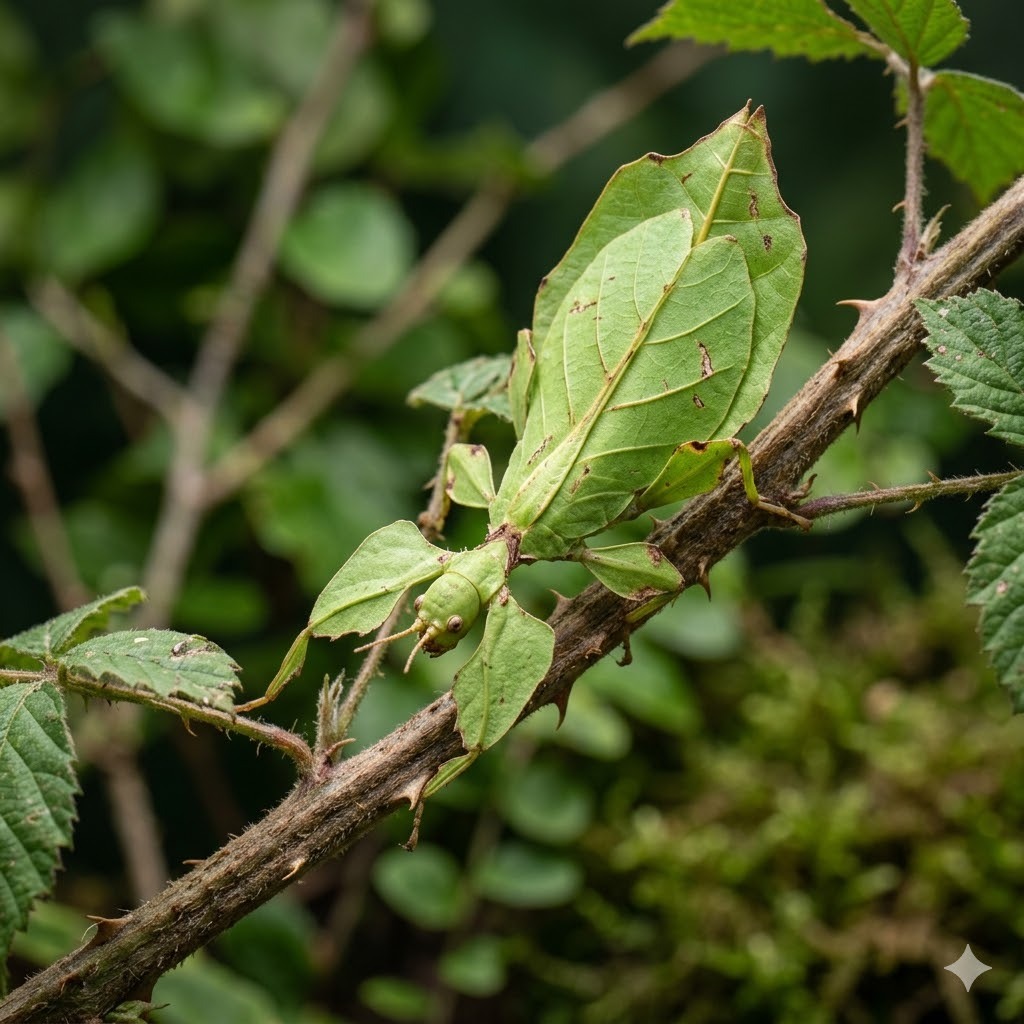
Leaf insects are among the most remarkable camouflage artists in the animal world - flat, green, walking leaves that mimic foliage so closely they even sway as if in a breeze.
🗓️ Last reviewed: July 2026
Overview
Leaf insects are among the most remarkable camouflage artists in the animal world - flat, green, walking leaves that mimic foliage so closely they even sway as if in a breeze. Belonging to the genus Phyllium, they are close relatives of stick insects and are kept as delicate, low-interaction display pets. Their broad, veined, leaf-shaped bodies and slow, swaying movements make a planted enclosure look almost alive with foliage that occasionally walks. Most kept species are parthenogenetic, meaning females can produce fertile eggs without a male, so a colony can be sustained from females alone. They are more delicate than stick insects and need the right leaves, humidity, and ventilation, but for a patient keeper they are one of the most beautiful invertebrates in the hobby.
The main draw of leaf insects is simply watching the illusion at work. A well-planted enclosure holding several of them can look like a bunch of ordinary leaves until one shifts position or reaches out a leg, at which point the disguise becomes astonishing. Their leaf-edge markings even include tiny nibbled-looking notches and blemishes that imitate a real, imperfect leaf. Because they are so easily overlooked, keepers learn to move slowly and observe carefully, which is part of the charm. They are not a pet for handling or interaction, but as a living centrepiece they are hard to match, and raising a new generation from a female's eggs adds a rewarding breeding project for anyone who enjoys quiet, meticulous care.
Common Pet Species
- Phyllium philippinicum - the most widely kept and beginner-friendly leaf insect.
- Phyllium giganteum - one of the largest species, with broad females.
- Phyllium bioculatum - the classic Javan leaf insect.
- Phyllium celebicum - a slender, attractive species.
- Pulchriphyllium species - closely related, similarly leaf-like insects.
Appearance
Body 5-10 cm depending on species and sex, with the broad females being much larger and wider than the slim, winged males. The body is flattened and leaf-green (sometimes yellowish or brown), veined like a real leaf, with flanged, leaf-shaped extensions on the legs. Females have broad, non-functional wing covers shaped exactly like a leaf; males are narrower and can fly. Nymphs often start reddish or brown before turning green as they feed.
Temperament & Handling
Extremely docile but fragile. Leaf insects do not bite, sting, or defend themselves beyond staying perfectly still and swaying. They tolerate very gentle handling, but their legs are easily damaged and they can drop from a hand suddenly, so handling should be kept to a minimum.
If you must move one, coax it onto a leaf or let it walk onto your hand rather than gripping it, and never pull a clinging insect free, as legs can tear off and do not always grow back. The safest approach is to move the whole branch the insect is sitting on rather than the insect itself. Young nymphs are especially fragile and are best left entirely undisturbed until they have grown and hardened through a few moults.
Enclosure
Ventilation matters as much as space. A mesh or well-ventilated enclosure at least three times the insect's body length in height suits them, roughly 30 x 30 x 45 cm for adults, taller than it is wide so they can hang to moult.
Furnish it with living or cut branches of their food plant standing in water. Avoid glass tanks with poor airflow, which trap stale, overly wet air and cause deaths. A soft substrate of tissue or coco fibre on the floor cushions any falls and helps hold gentle humidity.
Heating, Humidity, Lighting
- Temperature: 22-28°C.
- Humidity: 60-80%; mist lightly once or twice a day, but ensure good ventilation so the enclosure never stays soaking wet.
- No UV needed; normal daylight is enough.
Diet
Leaf insects are leaf-eaters that graze on the fresh foliage of specific plants. The staples are bramble (blackberry), oak, and rose, with guava and other plants accepted by some species. Bramble is the usual go-to because it is widely available and stays fresh in water, and it can be found even in winter as an evergreen. Provide fresh, pesticide-free branches standing in a water container with the opening blocked so insects cannot fall in and drown, and replace the foliage before it wilts or dries out. Introduce fresh leaves alongside the old ones for a day or two so the insects can move across on their own rather than being handled. Nymphs can be fussy at first and may need young, tender leaves to get started. Mist the leaves lightly so the insects can drink the droplets, which is their main source of water. Never collect leaves from roadsides or gardens that may have been sprayed, as pesticide residue is quickly fatal.
Health & Lifespan
Leaf insects are relatively short-lived: nymphs mature over several months, and adults typically live only a few months more, giving a total lifespan of roughly 6-12 months. Females often lay eggs steadily through their adult life, and because many species are parthenogenetic, those eggs can hatch without a male.
Common concerns:
- Dehydration and poor moulting - from air that is too dry or too still.
- Rot and mould - from an enclosure kept too wet with no airflow.
- Fallen or damaged limbs - from rough handling or lack of climbing space to moult.
- Refusing food - fussy nymphs may need fresh, tender leaves of the right plant.
Pros & Cons
Pros: stunning living camouflage, calm and silent, self-sustaining via parthenogenesis, a rewarding breeding project, and mesmerising to watch. Cons: fragile and easily injured, short-lived, needs a constant supply of the right fresh pesticide-free leaves, and sensitive to humidity and airflow.
Leaf Insect - frequently asked questions
Are leaf insects hard to keep?
They are more delicate than stick insects, mainly because they need fresh leaves, gentle humidity, and good ventilation, but they are manageable for an attentive beginner.
Do they bite or sting?
No. They are completely harmless and defend themselves only by staying still and mimicking a leaf.
Do I need a male to breed them?
Usually not. Most kept species are parthenogenetic, so females lay fertile eggs on their own.
What do they eat?
Fresh leaves - most commonly bramble, oak, and rose - which must be pesticide-free and replaced regularly.
How long do they live?
Around 6-12 months in total, with adults living only a few months after maturing.
Why did my leaf insect fail to moult properly?
Almost always the enclosure was too dry, too still, or too short for it to hang freely. Give it height to shed, light misting, and good airflow to prevent moulting problems.
🧠 Test yourself: guess the exotic
Three clues from our quiz bank, each about another of our exotic. Can you name them?
Clue 1.This predatory insect, named for its folded, spiked forelegs held as if in prayer, is the only insect that can swivel its head nearly 180 degrees.
It's the Praying Mantis - read the full profile →
Clue 2.Kept as a low-maintenance pet abroad, this slow nocturnal animal needs calcium to build its huge spiral shell.
It's the Giant African Land Snail - read the full profile →
Clue 3.New World species of this arachnid defend themselves by kicking urticating hairs, while Old World species rely on faster, more potent bites.
It's the Tarantula - read the full profile →