Rhinoceros Beetle
Rhinoceros beetles are large, horned beetles of the subfamily Dynastinae, prized in the exotic pet hobby for their impressive size, gleaming armour, and gentle nature.
🗓️ Last reviewed: July 2026
Overview
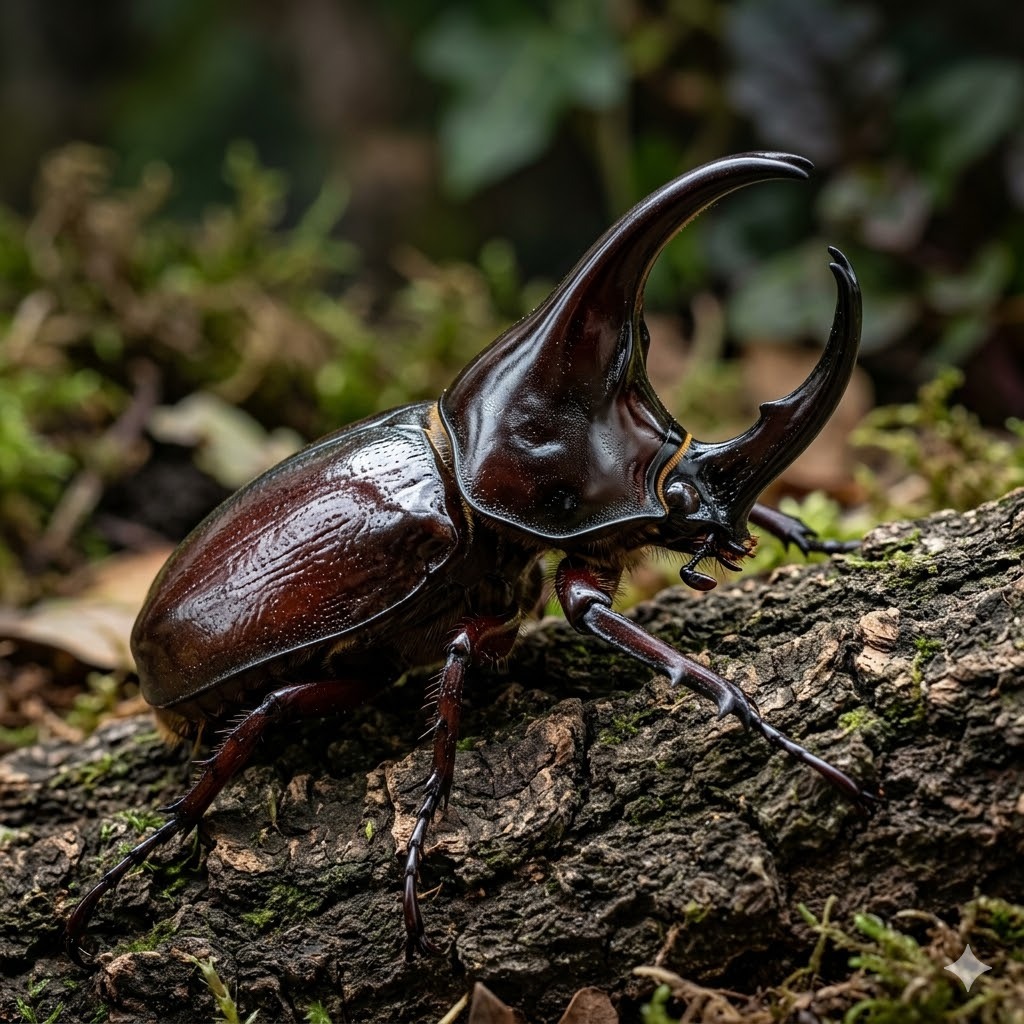
Rhinoceros beetles are large, horned beetles of the subfamily Dynastinae, prized in the exotic pet hobby for their impressive size, gleaming armour, and gentle nature. The males carry curved horns used to wrestle rivals, yet toward people they are calm and easy to handle. What makes them unusual as pets is their life cycle: most of their life is spent as a fat, C-shaped larva (grub) growing for many months in deep, rotting-wood substrate, followed by a comparatively short-lived adult stage that lasts only a few months. Keepers often start with grubs and raise them through to the spectacular adult. Popular around the world - especially in Japan, where beetle-keeping is a beloved tradition - rhinoceros beetles are a rewarding project for patient invertebrate enthusiasts.
The appeal of keeping them is as much about the journey as the destination. Watching a soft white grub feed and swell through its stages, form a pupal chamber, and finally emerge as a huge horned adult is one of the most dramatic transformations available in a home terrarium. Because the grubs simply eat their substrate and grow, day-to-day care is minimal - the main task is keeping the wood-based soil damp and undisturbed. Adults, when they arrive, are docile enough to sit calmly on a hand, making them a favourite with children and first-time invertebrate keepers under supervision. Their combination of harmlessness, striking looks, and a fascinating complete-metamorphosis life cycle has made them a gateway into the wider world of beetle-keeping for many hobbyists.
Common Pet Species
- Hercules Beetle (Dynastes hercules) - one of the largest, with enormous males.
- Japanese Rhinoceros Beetle (Trypoxylus dichotomus) - the classic Asian pet beetle.
- Elephant Beetle (Megasoma elephas) - bulky and heavily horned.
- Eastern Hercules Beetle (Dynastes tityus) - a hardy North American species.
- Atlas Beetle (Chalcosoma atlas) - three-horned Southeast Asian species.
Appearance
Adults range widely, from around 4 cm to over 15 cm in the giant Hercules males, whose horns make up much of that length. Females are hornless and generally smaller and stockier. The body is a hard, glossy shell in black, brown, or olive-green, sometimes with a velvety sheen. Males bear one or more forward-curving horns on the head and thorax used for wrestling. The grubs are pale, C-shaped, and can grow surprisingly large - several centimetres long and thumb-thick before pupation.
Temperament & Handling
Gentle and handleable. Rhinoceros beetles do not bite or sting; the horns are for pushing rival males, not for defence against people. Adults can be picked up calmly and will grip a hand with their strong legs, which feels ticklish but does no harm.
Handle low over a soft surface, as a fall onto a hard floor can injure them. Support the body, let the beetle walk, and avoid pulling if the tarsal claws catch on skin or clothing, since forcing a stuck foot free can tear a leg. Keep handling sessions short so the beetle does not overheat or exhaust itself, and always return it to its enclosure to feed and rest. Males may raise their horns or push against a finger, but this is display rather than aggression and causes no harm.
Enclosure
Adults need a container with more floor space than height, around 30 x 20 x 20 cm for a single beetle, with a secure ventilated lid (they are strong and can push covers off). Add branches or bark for grip so a beetle flipped on its back can right itself.
Larvae are raised separately in deep containers of rotting-wood substrate. The grub stage is where most of the setup effort goes: fill a tall tub with 15-25 cm of decayed hardwood flake soil or specialist beetle substrate, kept damp, and let the larva feed and grow undisturbed for months. Larger grubs are often given their own containers to prevent them disturbing or injuring one another. As pupation nears, the larva builds a firm chamber in the substrate, and it is vital not to dig it up or shake the container at this stage - a disturbed pupa often deforms or dies. Once the adult emerges, give it a week or two to harden before handling, and keep its enclosure lightly humid with a source of clean water and grip surfaces so it can right itself.
Heating, Humidity, Lighting
- Temperature: 20-27°C (species-specific; some prefer the cooler end).
- Humidity: keep substrate damp for larvae; moderate humidity with a water source for adults.
- No UV needed; adults are largely nocturnal.
Diet
The two life stages eat completely differently. Larvae feed on their rotting-wood substrate itself, consuming decayed hardwood for months as they grow. Adults eat sugary foods - beetle jelly, ripe banana, apple, and other soft fruit - which fuels their short, active adult life. Replace fruit before it ferments or attracts flies, and keep jelly cups clean.
Health & Lifespan
The larval stage lasts several months to over a year depending on species, followed by a pupal stage, then an adult life of only 3-12 months. Total life from egg to death is often around one to two years, with the eye-catching adult phase being brief.
Common concerns:
- Substrate drying out - stalls or kills growing larvae.
- Failed pupation - from disturbance or the wrong substrate depth.
- Falls and being stuck on the back - adults need grip surfaces to flip over.
- Mites and mould - from overripe fruit left in the enclosure.
Pros & Cons
Pros: spectacular size and horns, gentle and handleable, a fascinating full life cycle to raise, quiet, odourless, and inexpensive to feed. Cons: short adult lifespan, long and patient larval rearing, deep substrate needed, sensitive at pupation, and adults are seasonal and do not last long.
Rhinoceros Beetle - frequently asked questions
Do rhinoceros beetles bite or sting?
No. They are harmless; the horns are only used by males to wrestle each other.
Can I handle them?
Yes, gently and low over a soft surface. They grip with strong legs but cause no harm.
Why is the adult stage so short?
Most of the life cycle is spent as a growing larva. The adult lives only a few months, mainly to mate and lay eggs.
What do I feed them?
Larvae eat rotting-wood substrate; adults eat beetle jelly and soft fruit like banana and apple.
Are they good for beginners?
Yes, if you enjoy a patient project. Raising a grub through to an adult beetle is straightforward but takes many months.
Why is my grub not growing?
The most common cause is substrate that has dried out or run low on nutrition. Keep the wood-based soil damp, top it up as it is consumed, and avoid digging the larva up, which stresses it.
🧠 Test yourself: guess the exotic
Three clues from our quiz bank, each about another of our exotic. Can you name them?
Clue 1.A slow-moving herbivore whose elongated body resembles a branch; it may sway gently to imitate a twig in the breeze.
It's the Stick Insect (Phasmid) - read the full profile →
Clue 2.New World species of this arachnid defend themselves by kicking urticating hairs, while Old World species rely on faster, more potent bites.
It's the Tarantula - read the full profile →
Clue 3.Social by nature, these scavengers form lines to swap shells and breathe through gills needing humid air.
It's the Hermit Crab - read the full profile →