Endler
The Endler (Poecilia wingei), often called Endler's livebearer, is a tiny, dazzlingly colourful relative of the common guppy from Venezuela.
🗓️ Last reviewed: July 2026
Overview
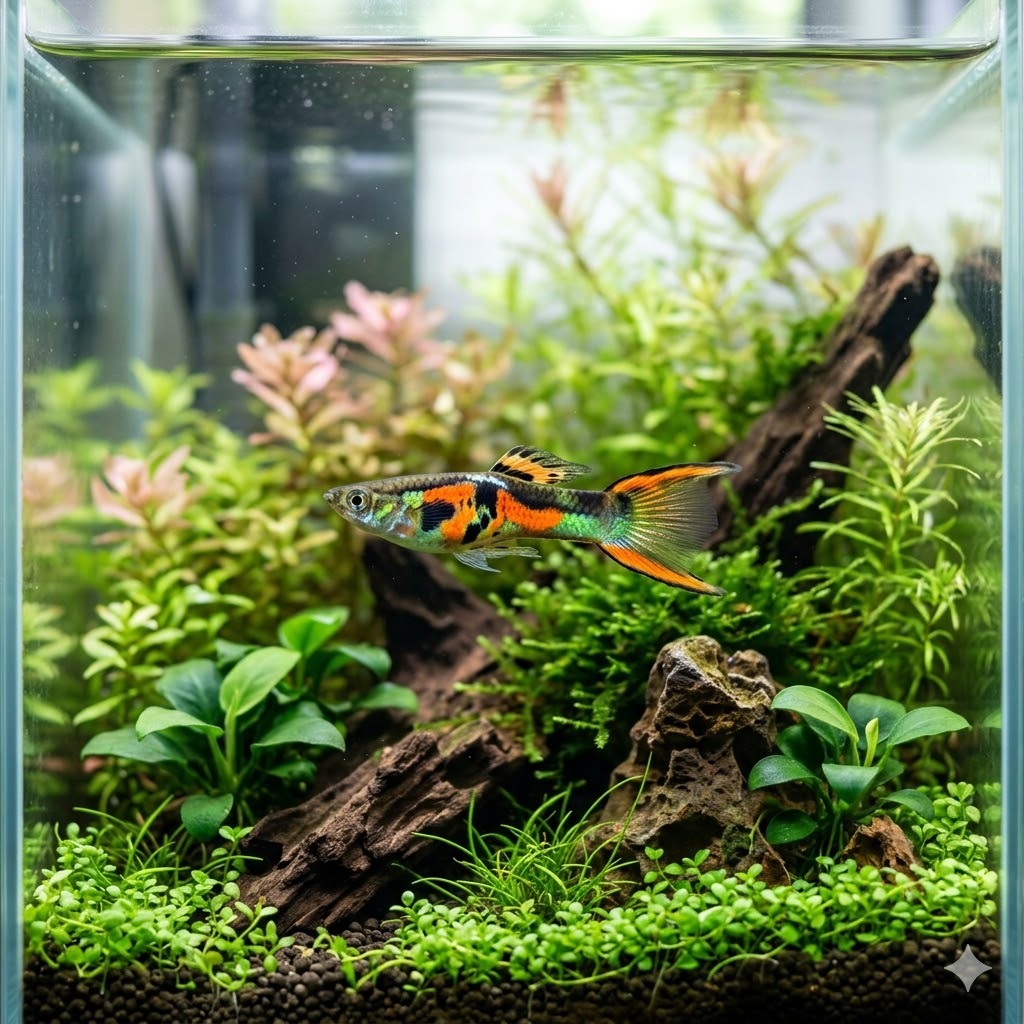
The Endler (Poecilia wingei), often called Endler's livebearer, is a tiny, dazzlingly colourful relative of the common guppy from Venezuela. Males rarely exceed 2-3 cm yet are painted with electric orange, metallic green, black and iridescent blue patches that seem almost too vivid for such a small fish. Like guppies they are livebearers, giving birth to fully formed free-swimming fry rather than laying eggs. Endlers are peaceful, endlessly active and breed constantly, making them a joy for nano-tank keepers. Their small size, hardiness and non-stop colour make them one of the most rewarding little livebearers in the hobby - provided you have a plan for the steady stream of fry.
Natural History
Endlers originate from the warm, often brackish-influenced coastal lagoons and ponds of the Paria Peninsula in north-eastern Venezuela, most famously the Laguna de Patos. These waters are warm, hard and alkaline, sometimes fluctuating in temperature and salinity. Endlers evolved to reproduce rapidly in these variable habitats, a strategy that lets small populations bounce back quickly from environmental swings. Wild populations have at times been threatened by pollution and habitat loss, and some original locations have been badly degraded, which has made hobbyist-maintained lines all the more important for preserving the pure wild forms. Because they interbreed freely with guppies, truly pure Endler strains are treasured by keepers, who go to considerable lengths to keep their lines uncrossed and clearly labelled by origin.
Appearance
Endlers are famous for the intensity of the males' colour. On a body of just 2-3 cm, males display bold blocks and bars of neon orange, black, metallic emerald green and shimmering blue, often with a distinctive black double sword or peacock-eye marking. The colours have a metallic, almost fluorescent quality that catches the light as the fish moves, which is why even a small group makes such an impact. Females are much larger, plainer and silvery-grey, built for carrying fry, and their subdued look makes the flashy males stand out even more. Many named strains exist - such as black bar, tiger and peacock - each with its own colour arrangement, all descended from the wild types and prized for their consistency when bred true.
Tank Size & Setup
Endlers are ideal nano fish. A group thrives in a minimum tank size of 20 litres, though larger is always welcome and helps buffer water conditions in such a small volume. Because Endlers breed continuously, a slightly bigger tank also gives the colony room to grow before it needs thinning. Plant the tank densely with fine-leaved and floating plants, which give fry hiding places and adults grazing surfaces, and greatly improve fry survival if you want them to grow up alongside the adults. A gentle filter is essential, since these tiny fish and their fry can be pulled into strong intakes - a sponge filter is ideal and doubles as a grazing surface. A secure lid prevents jumping and reduces evaporation, which matters more in a small tank where conditions change quickly.
Water Parameters
- Temperature: 22-28°C.
- pH: 7.0-8.5 - they prefer hard, alkaline water.
- Hardness: moderately hard to hard.
- Ammonia 0, nitrite 0, nitrate kept low with regular water changes.
Endlers appreciate the mineral-rich, alkaline conditions of their native lagoons and do best when water is kept stable and clean.
Diet
Omnivore with a hearty appetite for such a small fish. Offer finely crushed flake, micro-pellets and plenty of small live or frozen foods such as baby brine shrimp, daphnia and micro-worms. They also graze constantly on soft algae and biofilm growing on plants and surfaces, which forms a natural part of their diet and helps sustain fry between feedings. A varied diet rich in small live foods keeps males vividly colourful and females in good condition for breeding. Feed small amounts two or three times daily, taking care not to foul such a small volume of water, and remove any uneaten food promptly so the tank stays clean.
Health & Lifespan
Average lifespan is 2-3 years. Endlers are hardy for their size, but their tiny bodies and fast metabolism mean they respond quickly to poor conditions.
Common concerns:
- Ich (white spot) - often stress-related.
- Fin rot and bacterial infections from poor water quality.
- Overpopulation stress - constant breeding can crowd a small tank.
- Chilling if the tank drops too cool.
Keeping numbers in check and maintaining stable, clean, hard water keeps a colony healthy. To preserve their beauty, keep the line pure and never house them with guppies unless deliberate hybrids are wanted.
Pros & Cons
Pros: stunning colour, tiny nano-friendly size, peaceful, hardy, easy to breed. Cons: breed constantly and can overpopulate; interbreed with guppies so lines must be kept pure; small volumes need attentive maintenance.
Endler - frequently asked questions
How big do Endlers get?
Males around 2-3 cm; females a little larger. They are true nano fish.
Do Endlers breed easily?
Yes - almost too easily. A mixed group will produce fry continuously.
Can I keep Endlers with guppies?
Only if you accept hybrids. They interbreed readily, so keep them separate to preserve pure lines.
What size tank do they need?
A dense-planted nano tank of 20 litres or more suits a small colony.
Are they good for beginners?
Yes, they are hardy and forgiving, as long as you plan for the fry.
🧠 Test yourself: guess the fish
Three clues from our quiz bank, each about another of our fish. Can you name them?
Clue 1.This tall, laterally compressed blackwater fish needs warm, soft, acidic water and is famously sensitive for keepers.
It's the Discus - read the full profile →
Clue 2.This tooth-carp's name comes from a Dutch word for a creek or ditch where it is often found.
It's the Killifish - read the full profile →
Clue 3.Native to the rice paddies of Southeast Asia, this fish has a special organ that lets it gulp air directly from the surface to survive low-oxygen water.
It's the Betta (Siamese Fighting Fish) - read the full profile →