Kuhli Loach
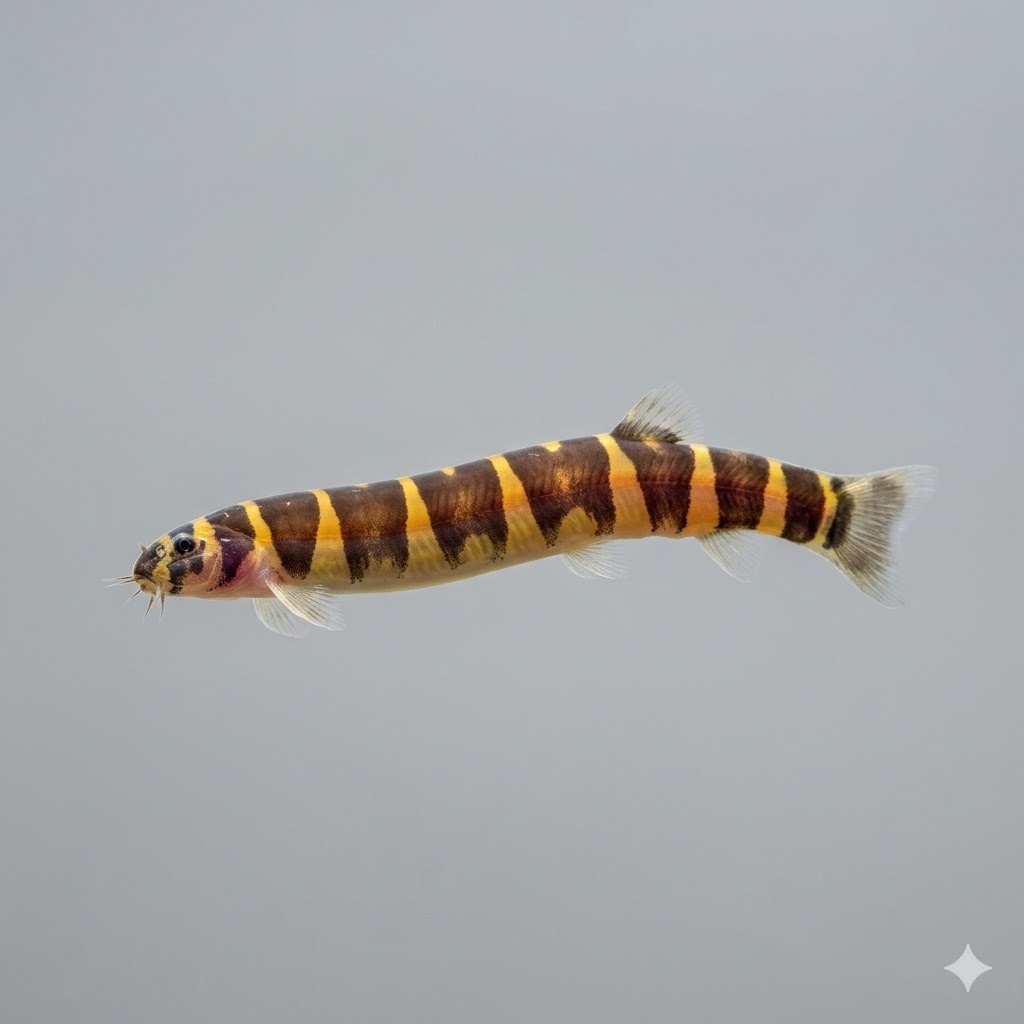
The Kuhli Loach (Pangio kuhlii) is a small, peaceful, eel-shaped bottom-dweller from Southeast Asia, easily recognised by its slender banded body of brown and yellow rings.
🗓️ Last reviewed: June 2026
Overview
The Kuhli Loach (Pangio kuhlii) is a small, peaceful, eel-shaped bottom-dweller from Southeast Asia, easily recognised by its slender banded body of brown and yellow rings. Shy, nocturnal, and harmless to tankmates, it spends much of the day hidden and emerges to forage at dusk. It is a charming addition to a mature, well-planted community tank, though its sensitivity means it suits a keeper who can offer stable, established water rather than a brand-new setup.
Natural History
Native to the slow forest streams, peat swamps, and leaf-littered riverbanks of Malaysia, Sumatra, Borneo, and parts of Thailand. These waters are soft, acidic, and often stained brown with tannins, with sandy or silty beds covered in fallen leaves, roots, and driftwood. Kuhli loaches burrow and sift through this soft substrate for tiny invertebrates, staying close to cover and becoming most active after dark.
Appearance
Adults reach 8-11 cm. The body is long, slim, and almost eel-like, ringed with alternating dark brown and pale yellow to salmon bands, though the pattern and intensity vary between individuals. Four pairs of small barbels surround the mouth for sifting the substrate. The fins are tiny and set far back, and the scaleless skin is thin and delicate. Several closely related Pangio species are sold under the same name.
Temperament & Tankmates
Gentle, peaceful, and social. Kuhli loaches should be kept in groups of at least 5-6; in a proper group they feel secure, forage more openly, and are far more likely to be seen. Kept singly or in pairs they hide almost permanently and can waste away from stress.
They mix well with other small, calm, non-aggressive species such as small rasboras, tetras, corydoras, dwarf gouramis, and peaceful shrimp. Avoid large, boisterous, or predatory tankmates that may bully them or eat them, and avoid fin-nippers. Because they are slow, deliberate feeders, fast or greedy tankmates can outcompete them at mealtimes.
Tank Size & Setup
Minimum: 75 L (20 gallon) for a small group of 5-6.
A mature, heavily planted tank with soft sandy substrate suits them best. Sand is important: their delicate barbels and skin are easily damaged by sharp or coarse gravel, and they like to burrow. Provide plenty of hiding places - driftwood, rounded rock caves, dense planting, and leaf litter - so they feel safe enough to come out. Gentle filtration, tannin-stained water, and a fully cycled, established system bring out their best behaviour. A tight-fitting lid and sealed filter intakes are essential, as these slim fish are escape artists that can slip through small gaps.
Water Parameters
- Temperature: 23-28°C.
- pH: 6.0-7.0 (acidic preferred).
- Soft water (low hardness).
- Ammonia 0, nitrite 0, nitrate <20 ppm.
Diet
Omnivore and bottom-feeding scavenger with a small downturned mouth. Offer sinking pellets or wafers as a staple, supplemented with frozen or live bloodworms, daphnia, blackworms, and baby brine shrimp. Because they feed slowly at the bottom and are most active at night, feed sinking foods and consider an evening feeding so they get their share. They will also pick at leftover food, but should not be relied on as a clean-up crew.
Health & Lifespan
Around 10 years, sometimes longer in a stable tank.
Common concerns:
- Ich (white spot) - they are scaleless and very prone to it.
- Medication sensitivity - their thin, scaleless skin absorbs treatments readily, so copper-based and many standard medicines must be used at reduced doses or avoided; always treat scaleless fish with caution.
- Skin and barbel damage from sharp substrate or rough decor.
- Stress and hiding from being kept in too-small groups or in an immature tank.
- Tank-cycle deaths from being added before the tank is established.
Pros & Cons
Pros: peaceful, harmless to tankmates, long-lived, fascinating eel-like form and behaviour, helps stir the substrate. Cons: shy and often hidden; scaleless and sensitive to medications and poor water; needs a group, soft sand, and a mature tank; not for impatient keepers or new setups.
Kuhli Loach - frequently asked questions
How many kuhli loaches should I keep?
At least 5-6. In a proper group they feel secure, come out far more often, and are much more rewarding to watch.
Why do I never see my kuhli loaches?
They are shy and nocturnal, and they hide more when kept in small numbers or in a tank without enough cover. A larger group, plenty of hiding spots, and dim or evening lighting all help coax them out.
Are they good beginner fish?
Not really for a first tank - they are peaceful and undemanding to feed, but their scaleless skin makes them sensitive to medications and unstable water. They do best in a mature, established aquarium.
What can I keep them with?
Other small, peaceful fish: small rasboras, tetras, corydoras, dwarf gouramis, and peaceful shrimp. Avoid large, aggressive, or fin-nipping species.
🧠 Test yourself: guess the fish
Three clues from our quiz bank, each about another of our fish. Can you name them?
Clue 1.Unlike most aquarium fish, this beginner-friendly group gives birth to free-swimming young instead of laying eggs.
It's the Molly / Platy / Swordtail (Livebearers) - read the full profile →
Clue 2.Often confused with a deeper-red cousin, this small fish has red only on its back half, not its whole belly.
It's the Neon Tetra - read the full profile →
Clue 3.Fancy varieties of this fish include bubble-eye and telescope-eye types bred for unusual looks.
It's the Goldfish - read the full profile →