Molly
The Molly (Poecilia sphenops / Poecilia latipinna) is a hardy, peaceful livebearer popular with beginners and breeders alike.
🗓️ Last reviewed: June 2026
Overview
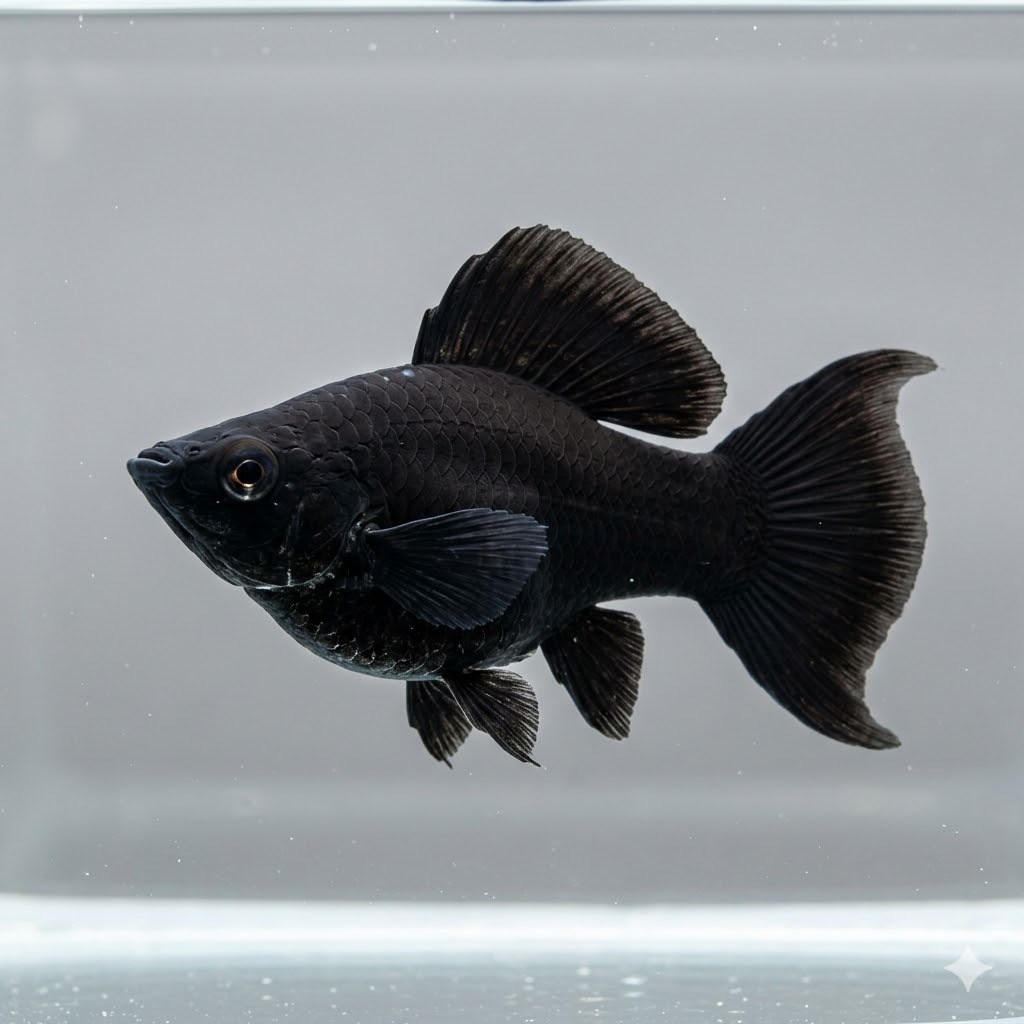
The Molly (Poecilia sphenops / Poecilia latipinna) is a hardy, peaceful livebearer popular with beginners and breeders alike. Available in many forms - black molly, dalmatian, sailfin, and the rounded balloon molly - it is active, sociable, and easy to keep once it has a stable, mature tank. Mollies prefer hard, alkaline, warm water and run a little larger than a guppy or platy, so they need more swimming room than the smallest community fish.
Natural History
Mollies come from the coastal streams, ditches, estuaries, and brackish lagoons of the Americas, from the southern United States through Mexico and into northern South America. Many wild populations live where fresh water meets the sea, which is why mollies are noted for tolerating a little aquarium salt. These waters tend to be hard, mineral-rich, alkaline, and warm, with plenty of algae and plant matter to graze.
Appearance
Adults typically reach 6-10 cm depending on the variety, with sailfin and larger strains at the top of that range - clearly bigger than a guppy or platy. The wild form is a plain silver-grey, but selective breeding has produced solid black, dalmatian (white with black speckles), gold, silver, and lyretail forms. Sailfin males carry a tall, showy dorsal fin; balloon mollies have a shortened, rounded body. Males are slimmer with a pointed gonopodium (modified anal fin); females are fuller-bodied and larger.
Temperament & Tankmates
Peaceful, active, and sociable. Mollies do best in groups and are happiest with more females than males, since males can pester females persistently. Kept in a good-sized group they spread out attention and behave more naturally. The occasional male may squabble over space, but mollies are not aggressive toward other species.
They mix well with other peaceful community fish that enjoy similar hard, alkaline water - platies, guppies, swordtails, and other livebearers are natural companions. Avoid fin-nippers and large or aggressive fish. Note that tankmates should share the molly's preference for harder, warmer water rather than soft acidic conditions.
Tank Size & Setup
Minimum: 75 L (20 gallon) for a small group, with more for sailfin varieties.
Mollies are active swimmers and grow larger than tiny community fish, so give them open horizontal swimming space. A mature, well-filtered, well-oxygenated tank suits them best. Hard substrate or crushed coral helps keep the water hard and alkaline. Live plants, some algae growth to graze, and gentle to moderate flow all work well. Keep a lid on - they can jump.
Water Parameters
- Temperature: 24-28°C.
- pH: 7.5-8.5 (hard, alkaline preferred).
- Hard, mineral-rich water.
- A little aquarium salt is tolerated but not required; avoid it if you keep salt-sensitive tankmates or plants.
- Ammonia 0, nitrite 0, nitrate <30 ppm.
Diet
Omnivore that leans heavily on plant matter. Offer a quality flake or pellet with a good vegetable content, and supplement generously with algae, blanched vegetables, spirulina, and algae wafers. Occasional frozen or live foods such as daphnia, brine shrimp, and bloodworms round out the diet. Plenty of greens and natural grazing keep mollies healthy. Feed small portions once or twice daily.
Health & Lifespan
3-5 years.
Common concerns:
- The "shimmies" - a rocking, shimmying motion in place, usually a sign of poor or unstable water quality, wrong parameters (too soft or acidic), or temperature stress.
- Ich (white spot).
- Fin rot from poor water quality.
- Tank-cycle deaths from being added before the tank is mature and stable.
Mollies are hardy but genuinely sensitive to poor water quality, so a stable, mature, well-maintained tank matters more for them than for many beginner fish.
Pros & Cons
Pros: hardy, peaceful, active, lots of colour varieties, easy to breed, beginner-friendly, helps graze algae. Cons: needs more swimming room than tiny fish; wants hard alkaline water (not soft acidic); breeds readily so you will get fry to manage; sensitive to poor or unstable water quality.
Molly - frequently asked questions
How many mollies should I keep?
Keep a small group, and aim for more females than males so the males do not pester one female. A larger tank lets you keep a balanced group comfortably.
What water do they prefer?
Hard, alkaline, warm water - around pH 7.5-8.5 and 24-28°C. They tolerate a little aquarium salt but do not require it.
Are they good beginner fish?
Yes - hardy and forgiving once the tank is cycled and stable, though they are fussier about water quality than some beginner fish, so a mature tank is best.
Will they breed?
Almost certainly. Mollies are livebearers and breed readily, so expect fry. Plants or a breeding setup help fry survive if you want to raise them.
What can I keep them with?
Other peaceful fish that like hard, alkaline water: platies, guppies, swordtails, and other livebearers. Avoid fin-nippers and large or aggressive species.
🧠 Test yourself: guess the fish
Three clues from our quiz bank, each about another of our fish. Can you name them?
Clue 1.Easy to breed and colorful, the males of this small species sport flashy fan-shaped tails to court drab females.
It's the Guppy - read the full profile →
Clue 2.This tooth-carp's name comes from a Dutch word for a creek or ditch where it is often found.
It's the Killifish - read the full profile →
Clue 3.Diamond-shaped with long flowing dorsal and anal fins, this popular tank fish needs a tall aquarium to accommodate its towering body.
It's the Angelfish - read the full profile →