Gargoyle Gecko (Rhacodactylus auriculatus)
The Gargoyle Gecko (Rhacodactylus auriculatus) is a hardy, docile, low-maintenance arboreal gecko from New Caledonia and an excellent close relative of the popular crested gecko.
🗓️ Last reviewed: June 2026
Overview
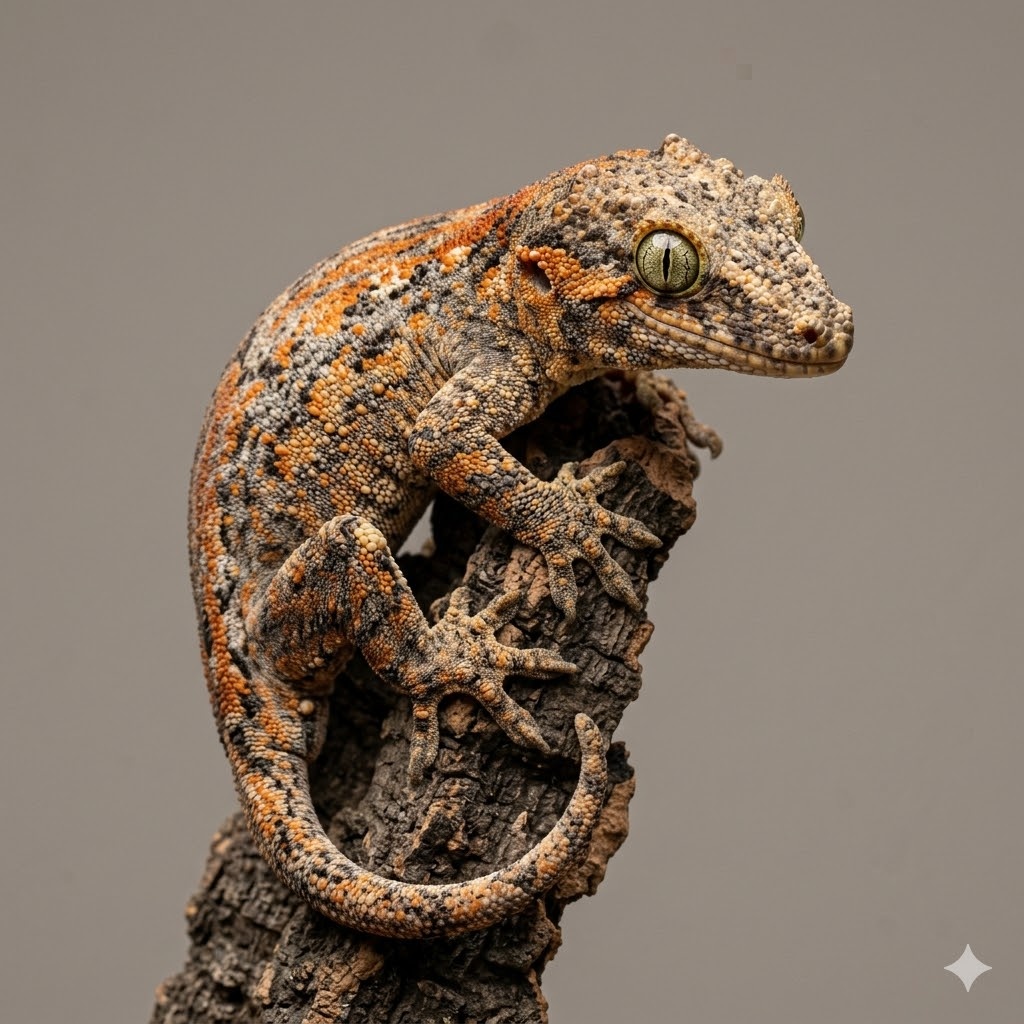
The Gargoyle Gecko (Rhacodactylus auriculatus) is a hardy, docile, low-maintenance arboreal gecko from New Caledonia and an excellent close relative of the popular crested gecko. Named for the bumpy cranial ridges that resemble small horns, the gargoyle gecko thrives at room temperature, eats a convenient prepared diet, and tolerates gentle handling - making it one of the best reptiles for new and busy keepers alike.
Natural History
Wild range: the southern forests and scrublands of New Caledonia, a group of islands in the South Pacific. Arboreal and nocturnal, sheltering in trees and shrubs by day and foraging at night. Notable among geckos as an opportunistic predator that will eat other small lizards in the wild, alongside insects and fruit. Tolerates a relatively wide range of conditions, which underpins its reputation for hardiness.
Appearance
Adults 20-25 cm total length including tail, 35-55 g. Sexes are similar in size.
Colour and pattern are highly variable: shades of grey, brown, orange, and red in striped, blotched (mottled), and reticulated patterns. Bumpy cranial knobs give the species its name. Like its relatives, the gargoyle gecko can drop its tail, but unlike crested geckos it regrows the tail.
Temperament & Handling
Calm and tolerant, generally accepting gentle, brief handling once settled. They can be a little jumpy, so handle low over a soft surface and allow the gecko to walk hand-to-hand. They lack the strong adhesive grip people expect, so support them carefully. Avoid grabbing the tail, which can drop under stress and then regrow.
Enclosure
Minimum: 45 × 45 × 60 cm tall for one adult. Larger preferred. A vertically oriented glass or PVC terrarium suits this arboreal species.
Provide:
- Plenty of climbing branches, cork bark, and broad-leaved foliage (live or artificial).
- Substrate that holds humidity, such as a bioactive soil mix or paper for simpler setups.
- Vertical surfaces and cover for hiding and climbing.
- A shallow water dish, with misting as the main water source.
Heating & Lighting
- Ambient (day): 22-26°C; this species thrives at room temperature.
- Upper limit: keep below 28-29°C, as high heat is dangerous for New Caledonian geckos.
- Night: a natural drop to 18-22°C is beneficial.
- UVB: optional; low-output UVB can be provided for daytime cycling and is increasingly recommended, though many keepers maintain them without it given the prepared diet.
Humidity
Ambient 50-70%, peaking higher after misting and drying between. Mist once or twice daily to maintain humidity and provide droplets for drinking. Good ventilation between mistings prevents stagnant, overly wet conditions that cause respiratory problems.
Diet
Omnivorous. Conveniently fed on commercial diets:
- Staple: complete powdered crested and gargoyle gecko diet (mixed with water), which provides balanced nutrition.
- Occasional: gut-loaded, calcium-dusted insects such as crickets and dubia roaches for enrichment and extra protein.
- Avoid: wild-caught insects and citrus or high-oxalate fruits.
Feed the prepared diet a few times weekly, offering insects as a supplement. This convenient feeding regime is a major reason for the species' popularity.
Health & Lifespan
15-20 years.
Common concerns:
- Metabolic bone disease from inadequate calcium or D3.
- Overheating - a serious risk for this cool-climate species.
- Floppy tail syndrome and tail loss.
- Retained shed in low humidity.
- Mouth rot.
- Impaction from inappropriate substrate.
Pros & Cons
Pros:
- Hardy and beginner-friendly.
- Thrives at room temperature - often no heating needed.
- Convenient prepared diet.
- Tolerates gentle handling and regrows its tail.
Cons:
- Sensitive to high temperatures.
- Can be jumpy when handled.
- Needs regular misting for humidity.
- 15-20 year commitment.
Best Suited For
- First-time reptile owners.
- Busy keepers wanting a low-maintenance gecko.
- Apartment dwellers.
Not suited for homes that run hot without cooling, or owners wanting a reptile that craves frequent handling.
Gargoyle Gecko (Rhacodactylus auriculatus) - frequently asked questions
Are they good for kids?
Yes, for older children with supervision. They are gentle, though their jumpiness calls for careful handling low to a soft surface.
Do I need UVB?
Optional. Many keepers maintain them on the prepared diet alone, though low-output UVB is increasingly recommended for natural cycling.
How long do they live?
15-20 years with good care. Plan accordingly.
Do they regrow their tail?
Yes. Unlike crested geckos, gargoyle geckos can regenerate a dropped tail, though the regrown tail looks different.
Do they bite?
Rarely, and bites are mild. They are far more likely to leap away than to bite.
🧠 Test yourself: guess the reptile
Three clues from our quiz bank, each about another of our reptiles. Can you name them?
Clue 1.A hardy beginner snake, this powerful squeezer is known for occasionally eating tankmates of its own kind.
It's the King Snake / Milk Snake - read the full profile →
Clue 2.This docile orange-and-red North American constrictor is the most popular pet snake, named perhaps for the maize-like belly pattern.
It's the Corn Snake - read the full profile →
Clue 3.A relatively small, heavy-bodied constrictor, it can survive long fasts and may refuse food for weeks or months without harm.
It's the Ball Python - read the full profile →